The Islamabad MoU ceasefire lasted twenty-one days.
This is not a long time. It is, however, long enough for the parties to have used it as a pause — to regroup, resupply, re-evaluate, and then resume — which is exactly what both the United States and Iran have now done. President Trump has declared the ceasefire “over.” Iran has struck tankers in the Strait of Hormuz. The US has hit more than 170 Iranian military targets. The Doha technical talks channel remains theoretically open. Pakistan and Qatar are described as “working behind the scenes.”
The question worth asking, now that the ceasefire has collapsed, is not whether Pakistan’s mediation effort was well-intentioned — it was. The question is: what does Pakistan actually get from this, and what can it realistically deliver?
The mediation was worth something to Islamabad for three reasons. First, it changed the international conversation about Pakistan from “struggling economy seeking IMF bailout” to “indispensable broker in the world’s most dangerous conflict.” That shift had tangible benefits: easier conversations with Western capitals, a modicum of strategic respect from Gulf states watching from the sidelines, and a demonstration to domestic audiences that Pakistani diplomacy could operate at a global level.
Second, it gave Pakistan leverage. Being the channel that both Washington and Tehran would not otherwise have creates a dependency. Countries that control critical communication channels — especially when those channels are hard to replace — have something to trade.
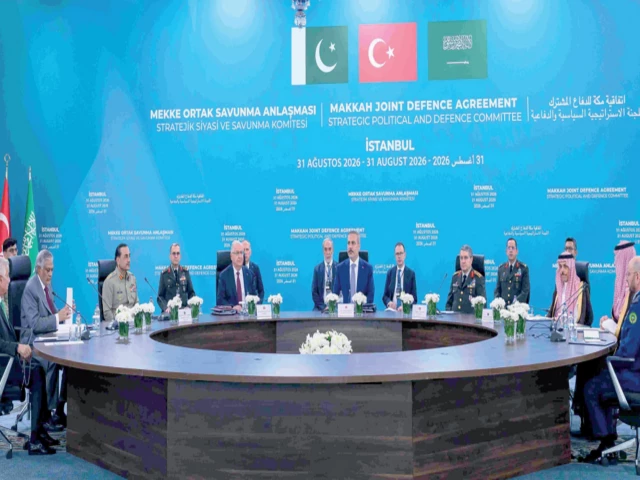
Third, it positioned Pakistan for whatever post-war order emerges in the Middle East. That order, whenever it crystallises, will require regional interlocutors. Being present in the architecture of the ceasefire ensures Pakistan is in those conversations.
None of this means the mediation could have stopped the war from resuming. A mediator’s power comes from its ability to offer both parties something they cannot get elsewhere. Pakistan could offer Iran a face-saving channel, an acknowledgement of Persian dignity, and a Muslim-majority state that had not sided with Israel or the United States explicitly. Pakistan could offer the US a back-channel through which Iran’s redlines were communicable without the humiliation of direct engagement. These services were genuinely useful — for a ceasefire. They were not sufficient to hold it.
A ceasefire fails when one or both parties decide that resuming fighting is preferable to the terms on offer. Iran attacked the tankers. The US responded. Neither decision was within Pakistan’s control. No mediator’s power extends to preventing parties from choosing war.
What Pakistan can do — and is doing — is keep the channel open. Qatar is doing the same. This matters because even a resumed conflict needs exit ramps. The Doha channel exists so that the next ceasefire, whenever it comes, has an established mechanism rather than requiring a new architecture to be built from nothing.
The mediator’s value, in other words, is not in the deal that holds. It is in being available for the deal after the deal that fell apart.
Twenty-one days is better than nothing. And the next time, someone will need to make the call.