
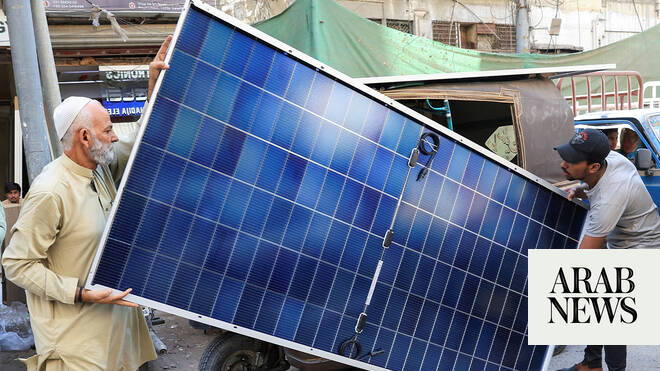
Pakistan’s rooftop solar boom has run headlong into the government’s tighter net-billing regime, and fresh capacity data released this week has intensified a debate over whether the new rules will push solar households off the national grid altogether.
The country has deployed 38 gigawatts of distributed solar by mid-2025, with 27 GW of that added in just two years, according to figures from the energy think tank Ember reported on 25 June. Distributed solar now supplies around 28 percent of the country’s electricity, rising to 32 percent once transmission and distribution losses are accounted for, the same data show. Roughly seven million households, about 18 percent of Pakistan’s 40 million homes, now own rooftop systems averaging 2.4 kW, while the shift has helped avoid more than USD 12 billion in oil and gas imports by February 2026 (GreentechLead, citing Ember).
That surge is colliding with a sharp policy reversal. In February, the National Electric Power Regulatory Authority (NEPRA) moved new rooftop consumers from net metering to a net-billing model, cutting the rate paid for surplus electricity exported to the grid from about Rs26 per unit to between Rs9 and Rs11 per unit (Dawn). Under net billing, exported units are no longer swapped one-for-one against imported units; instead, all grid electricity is charged at prevailing slab-based tariffs while exports are bought back at the lower revised rate (Profit by Pakistan Today).
The change has revived concerns about cost-shifting. As solarised consumers draw less from the grid, the system’s fixed costs are spread across fewer units, raising tariffs for the more than 90 percent of customers who have not gone solar, Dawn reported. Of Pakistan’s roughly 33 GW of solar deployment at the time, only about 6 GW was grid-connected and net-metered, with the remaining 27 GW sitting off-grid or behind the meter, the same analysis noted.
Critics warn the new rules could deepen, rather than ease, those strains. “A poorly designed net-billing policy can also accelerate defections from the grid,” analysts Manzoor Ahmed Alizai and Rimsha Rehan wrote in Dawn, arguing that if exporting electricity yields little value during high-demand evening hours and fixed charges keep rising, solarised households may install oversized solar-plus-storage systems “and end their reliance on the grid altogether.” Sizing caps tightened from a 1:1.5 to a 1:1 ratio risk worsening grid challenges rather than resolving them, they added.
Facing public backlash, the government partially walked back the change. Power Minister Sardar Awais Leghari directed all distribution companies, including K-Electric, to process net-metering applications submitted up to 8 February under the older, more favourable terms (Arab News). The reprieve covers 5,165 pending applications representing about 250.8 megawatts of capacity, the report said. “All electricity distribution companies, including K-Electric, will provide the net-metering facility for applications submitted up to February 8,” a ministry statement said (Arab News).
For consumers signing up after the cutoff, the economics are markedly weaker, with payback periods expected to lengthen and a five-year licence validity for new prosumers replacing the previous seven-year term (Profit by Pakistan Today). With battery prices falling and grid tariffs climbing, the central question hanging over the power sector is whether NEPRA’s effort to protect utility revenues will instead accelerate the exit it was meant to prevent.



