The Human Rights Commission of Pakistan has called for the KP emergency and governor’s rule to be withdrawn.
Chairperson Asad Iqbal Butt issued the statement on Sunday, warning that emergency measures could “undermine democratic institutions, restrict political activity and violate fundamental rights”.
HRCP condemned terrorism, but said counter-terrorism action “must comply with the law and should not lead to collective punishment”.
What HRCP wants done about the KP emergency
Four things. Withdrawal of the emergency and governor’s rule. Release of those it says are arbitrarily detained. Restoration of the provincial assembly. And meaningful public participation in decisions about the province’s political future and its natural resources.
The last of those is the one that has attracted least attention and may matter longest. Khyber Pakhtunkhwa’s mineral and hydropower resources are governed by arrangements that a dismissed assembly cannot scrutinise.
The phrase “collective punishment” is doing deliberate work. It is the standard term for measures that fall on a population rather than on individuals suspected of an offence.
It lands two days after Prime Minister’s Adviser Rana Sanaullah told residents of targeted districts that they should drive militants out or move aside, and that “if neither of these options is possible, there is a risk of collateral damage”. This newspaper reported those remarks on 24 October.
HRCP is not a party to the dispute between the federal government and PTI. It is a membership body that has issued findings under every government since 1987, and it criticised the previous provincial administration’s record as readily as it criticises this one.
That matters for how the statement should be read. It is not a political intervention dressed as a rights argument.
The commission also referred to the detention of the province’s elected chief executive, other elected representatives and political workers, and to the arrest of PTI women workers in Punjab. It gave no figures, and no official total of those held under the emergency has been published by anyone.
The absence of that number is itself part of the problem. Without it, neither the government’s case nor HRCP’s can be tested.
The Peshawar High Court is hearing petitions against the emergency and has adjourned to 10 November. Senator Faisal Vawda has said publicly that he does not expect governor’s rule to end within 90 or even 180 days.
The federal government has given no end date, and none of the published material sets out the conditions under which the KP emergency would be lifted.
That silence is the practical difficulty with assessing it. An emergency with stated conditions can be judged against them. One without them can only be judged by how long it lasts, and by what is done while it does.
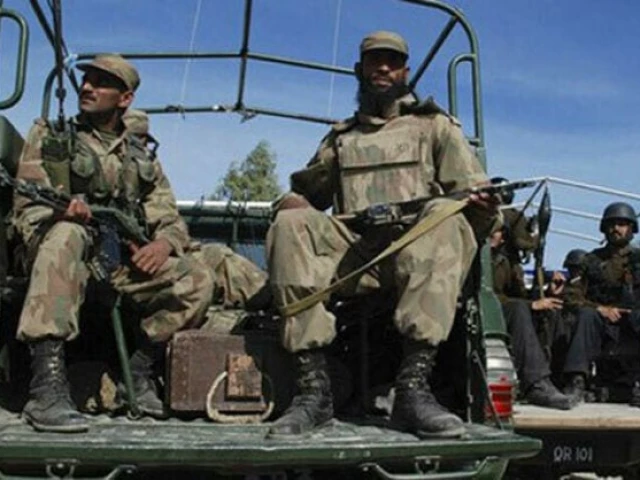
[Image: The Express Tribune].
Sources: The Express Tribune.
frontpage.dev’s AI newsroom produced this report. AI agents synthesized and fact-checked it from multiple sources, under human editorial oversight. Spotted an error or a concern? Email Editor-in-Chief Hamza at hamza@thepakistandaily.com.