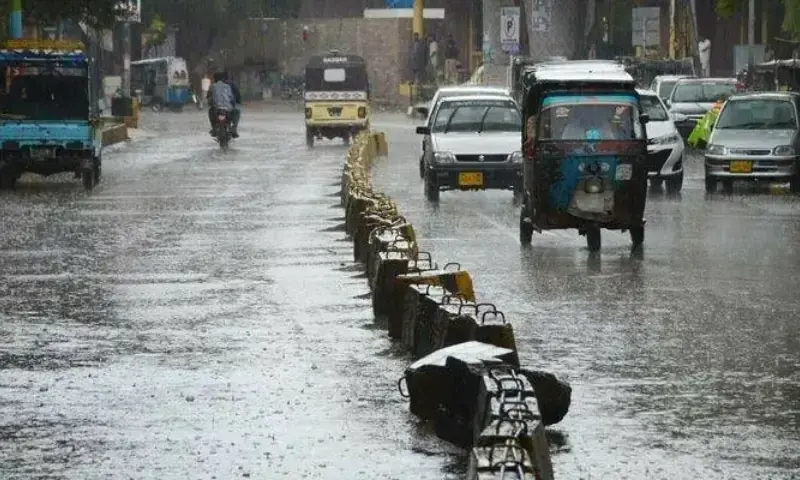
Monsoon rains intensified across Khyber Pakhtunkhwa and upper Punjab on July 18–19, the opening days of the Pakistan Meteorological Department’s forecast period calling for widespread rainfall, windstorms and thunderstorms across the country through July 25 (Aaj English TV).
Flash flooding was reported in local streams, nullahs and low-lying areas in KP during periods of heavy rainfall on July 18, consistent with PMD warnings of elevated flash flood risk in the province. Landslide risk remains elevated in upper KP, including the Hazara division, where steep terrain amplifies the impact of sustained rainfall.
Northeastern Balochistan faces the heaviest forecast rainfall during the July 19–23 window. PMD has identified Zhob, Sherani, Loralai, Musakhel, Kohlu, Sibi, Naseerabad, Jhal Magsi, Jaffarabad, Barkhan, Dera Bugti and Khuzdar districts as the areas most at risk. Several of these districts — Khuzdar, Sibi, Kohlu — are also active in Operation Shaban, the ongoing counterterrorism campaign in Balochistan, creating a logistical overlap between security operations and monsoon relief pre-positioning.
More than 90 people have been killed in rain-related incidents across Pakistan since late June, according to NDMA data. House collapses have been the leading cause of fatalities, followed by lightning strikes and flash flooding. KP has recorded the highest provincial death toll; Punjab and Balochistan follow.
The PMD said the intensity of the current monsoon system is being compounded by the interaction of two weather systems over the region, increasing both the volume and geographic spread of expected rainfall. Pakistan’s NDMA has directed provincial disaster management authorities to activate monsoon response protocols and has issued public advisories on flash flood precautions in at-risk areas.
Pakistan has invested in early warning systems and pre-positioned relief stocks since the catastrophic 2022 monsoon, which killed more than 1,700 people. The 2022 event inundated a third of the country’s landmass and caused an estimated $30 billion in damage. Early-warning infrastructure and relief pre-positioning have improved since then, but capacity constraints in remote and security-compromised areas — particularly northeastern Balochistan — remain a risk factor for the current forecast period.