
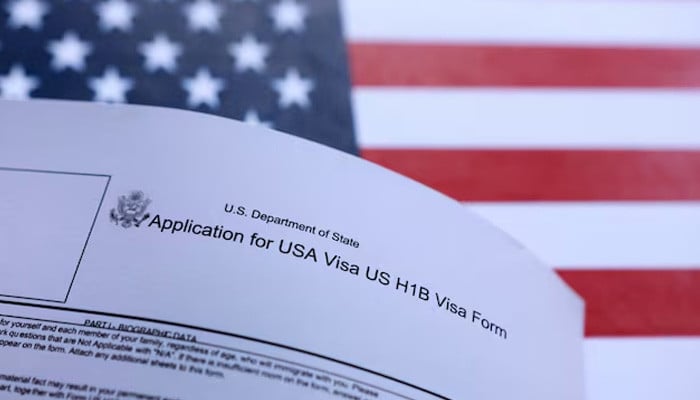
A US judge has struck down the Trump administration policy suspending the issuance of immigrant visas to applicants from 75 countries, including Pakistan, ruling that it exceeded the statutory authority of Secretary of State Marco Rubio (Geo News).
US District Judge Jeannette Vargas, sitting in Manhattan, ruled on Friday that the policy announced by the State Department in January was “patently unlawful” and ran contrary to federal immigration law.
The reasoning
The judge’s finding rests on a specific point of statutory design: federal immigration law explicitly strips the secretary of state of authority over consular officers’ processing of immigrant visas.
“The Policy, which categorically prohibits the issuance of immigrant visas based upon the nationality of the applicant, represents a direct abrogation of this statutory scheme,” she wrote.
The objection is therefore not principally that the policy was discriminatory in effect, but that the official who issued it had been denied that power by Congress.
Who it affected
The suspension, which took effect in January, covered applicants from a wide span of countries: Latin American states including Brazil, Colombia and Uruguay; Balkan nations including Bosnia and Albania; the South Asian states of Pakistan and Bangladesh; and many countries across Africa, the Middle East and the Caribbean.
The State Department had said applicants from those countries were “at a high risk for becoming a public charge and recourse to local, state and federal government resources in the United States” — a rationale applied to entire nationalities rather than to individual applicants.
The department did not immediately respond to a request for comment on the ruling.
What it means for Pakistani applicants
Immigrant visas are the route to permanent residence, most commonly through family sponsorship. For eight months, Pakistani applicants in that queue have been unable to have their applications issued regardless of individual circumstances.
The ruling removes that bar. It does not by itself clear the resulting backlog, and the administration has the option of appealing.
The decision lands the same week the National Assembly was told that at least 21,951 Pakistanis had been deported from Gulf states by March 1 — a reminder that for most Pakistani migrants, the consequential immigration decisions are taken in Riyadh and Dubai rather than Washington.



