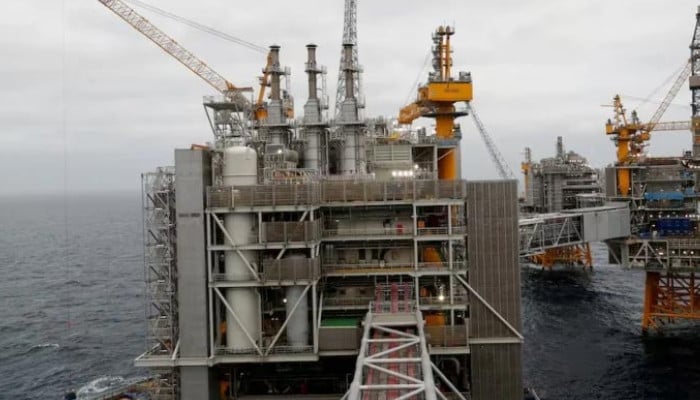
Turkish Petroleum will soon begin offshore drilling in Pakistan’s territorial waters, Petroleum Minister Ali Pervaiz Malik has said, describing the operations as opening the way to significant foreign investment in the energy sector (Geo News).
Speaking at a press conference in Lahore, Malik set out the arithmetic that makes exploration urgent. Pakistan imports around 90 per cent of its energy requirements. Domestic oil production stands at roughly 70,000 barrels a day against demand of about 500,000 — a gap of some 430,000 barrels filled by imports every day, and the reason each turn in the Gulf conflict moves the country’s import bill.
The Turkish entry follows five petroleum concession agreements signed by the Turkish Petroleum Overseas Company — three offshore and two onshore — with about $300 million in exploration spending expected and two seismic survey vessels due on the offshore Indus Block-C later this year.
Malik said Prime Minister Shehbaz Sharif and Chief of Defence Forces Field Marshal Asim Munir had commissioned a leading international company to prepare a comprehensive roadmap for the energy sector, to be presented to the national leadership in the coming months.
He said the flow of circular debt had been halted and that work was under way to clear liabilities inherited from previous administrations, announced that LPG tenders would open on Monday, and said arrangements had been made to issue new gas connections.
On the Makkah defence agreement, Malik called it a matter of national pride and said Pakistan had emerged as a net security provider in the region, arguing that Saudi economic weight, Turkish technology and Pakistani defence capability together would contribute to regional stability.
He said the Iran-US conflict had produced unprecedented increases in crude and product prices, and that the government had maintained uninterrupted supply and tried to shield consumers from the full impact — a claim being contested on the streets, with Jamaat-e-Islami blockading highways over fuel prices and the petroleum levy, and goods transporters on indefinite strike over the same costs.