
PARIS:
Tiktok abound with viral video accusing recognized brands of luxury secrets in China so that they can be sold at prices.
But while these “revelations” are false, behind them there is a good greasy machine for the sale of fake goods that make the most of the confusion surrounding commercial invoices.
Chinese content creators depicting themselves as workers or subcontractors in the luxury business claim that Beijing has raised confidentiality clauses to local subcontractors as a way of responding to the huge increase in duties imposed on China.
They say that this Chinese decision, whose AFP has found no trace, authorizes them to reveal the hidden submarine of luxury products in China.
They encourage western consumers to buy directly from the sites that sell these goods, which do not carry logos or labels, but are said to have the same quality and design as expensive prototypes.
Prices are tempting, reducing from $ 38,000 for a luxury bag to $ 1,400.
The trademarks aimed – including Hermes, Chanel and Louis Vuitton, whose goods are produced in Europe and the United States according to their websites – refused to respond to AFP questions about the claims made in these viral videos.
But for Jacques Carles, head of French luxury and design, a counseling management, the idea that luxury brands will build goods in China is simply “irrational”.
“It would be a suicide, if there were evidence – and there is no – it would be the end. These brands are not stupid,” he told AFP.
While Tiktokers show the ability of Chinese workers, presented as the small hands behind the big luxury names, “these fake laboratories do not respect all the stages required in the production process,” he said.
‘Creating doubt’
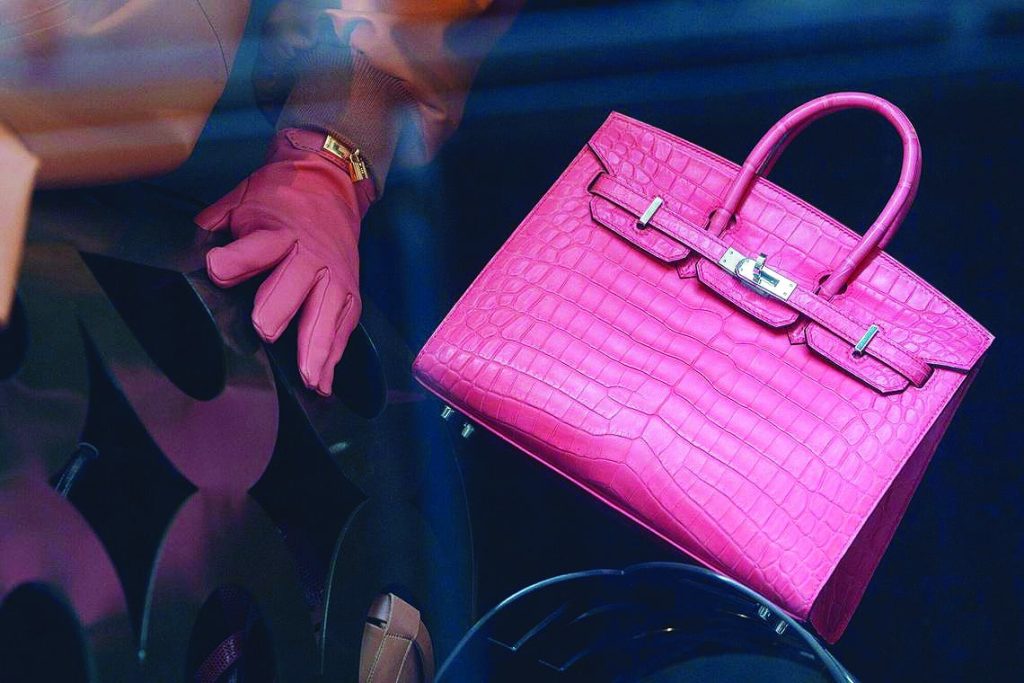
Carles cited the example of Hermes Birkin bag, which requires the production of “hundreds of working hours”.
He said that clip manufacturers on the internet were “with the creation of doubts”, really looking to “open an opportunity … to shift their reserves” of fake goods.
“It is a viral campaign that is spreading on social networks (and) difficult to deal with,” he said.
The luxurious brands chose to remain silent and to “face the phenomenon with contempt”, which was a mistake in his view, he added.
The accusation that the luxury products that were officially manufactured in Europe actually became secret in China “makes no sense”, was agreed by Michel Phan, luxury marketing professor at Emlyon Business School in France.
It rejects the argument that was made to Tiktok that this was a Chinese response to US commercial invoices.
“The damage to European luxury brands will not change anything (for) the US government because they are not related to these brands,” he said.
“All online videos reporting that luxury brands make their products in China and then put the” made in france “label before selling them.
“It is illegal to do so and no brand will take the risk of catching it (sic).”
The E -Commerce Department at the Ministry of Commerce in China said in a statement: “Any misleading marketing, violation or fake activities” by entities present as subcontractors for established brands “will immediately refer to law enforcement services”.
‘I am so sucker’
Comments on viral clips, which are illustrated by internet users and not from the video creators themselves, show that the message echoes.
“I’m so annoyed. I paid the top price!” said one in a video comment.
“I am so sucker,” another said.
Some leave comments asking the names of the “luxury products” in China from which they can buy the coveted items in cheap.
Meanwhile, Chinese sellers also sell luxury fake products directly to Tiktok, with links to their websites. These Tiktok Live Reels gather hundreds of views each.
They show a series of shelves full of luxury objects, all numbered.
“DHL Delivery, which are identical to those in the stores.
Internet users are invited to scan a QR code or click on a link to complete their purchase via WhatsApp or PayPal.
AFP has found a rating of similar living foods, which was released at the same time in English and French, suggesting that the main goals are internet users in Europe and the United States.
China is regularly accused of being the leading producer of fake goods in the world.
Some estimates indicate that 70 to 80 percent of all lice are manufactured there.
In the European Union states and in several other countries there are major penalties for the market for counterfeit.
In France, this could mean three years in prison and a fine of 300,000 euros ($ 340,600).
Customs authorities can also seize falsified goods and improve the buyer the equivalent of the real value of the items.
The EUIPO intellectual property office (EUIPO) states that the costs of falsification of the European 16 billion euros per year, with clothes, cosmetics and game sectors being the worst affected. AFP
a href=”https://tribune.com.pk/story/2542657/tiktok-videos-exploit-trade-war”>Source link



