October 25, 2026
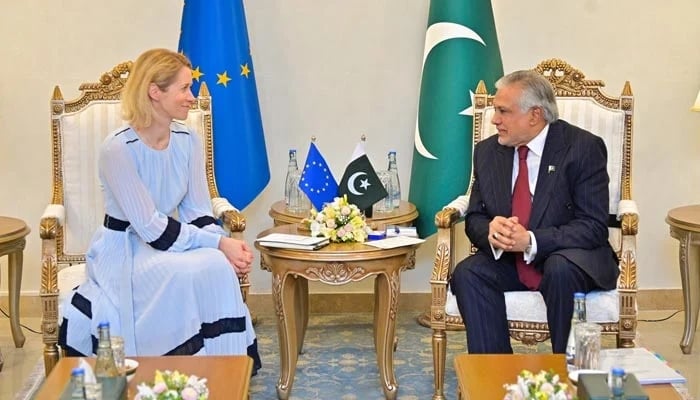
Pakistan to Seek Fresh GSP+ Status From January 2027
The current framework expires in December 2026, with a grace period to December 2028. Officials say qualifying will require hectic lobbying and stricter compliance.

October 25, 2026
The current framework expires in December 2026, with a grace period to December 2028. Officials say qualifying will require hectic lobbying and stricter compliance.
August 21, 2026

The court said Shifa. The government says it went to PIMS, because of a security situation it attributes to the very party that wanted the order carried out. Aflatoon on compliance that arrives at five in the morning and at a different address.
July 17, 2026

The European Commission has flagged significant compliance shortcomings in Pakistan's implementation of its GSP+ obligations ahead of the 2027 preferential trade review, saying Pakistan has "regressed in a number of areas" including enforced disappearances, media freedom, blasphemy law misuse and anti-terrorism legislation that permits detention without meaningful judicial oversight. Pakistan receives approximately €732 million in annual EU tariff concessions under the GSP+ framework and must reapply under stricter criteria from 2027.

Sargodha: The Regional Commissioner of the Federal Revenue Council (FBR) Sargodha, Azmat Mehmood Hayat Ranjha, stressed on Saturday that traders are the backbone of Pakistan’s economy and that no country can work effectively without a strong tax system. Facing a ceremony at the Sargodha Chamber of Commerce and Industry, Ranjha emphasized the importance of tax compliance, stating that all developed countries are maintained by taxpayers’ money. “Pakistan also motivates those who fulfill their tax liabilities,” he noted. “Civilized societies operate with laws and regulations and economic transparency is essential in every sector.” It was emphasized that sustainable economic growth is
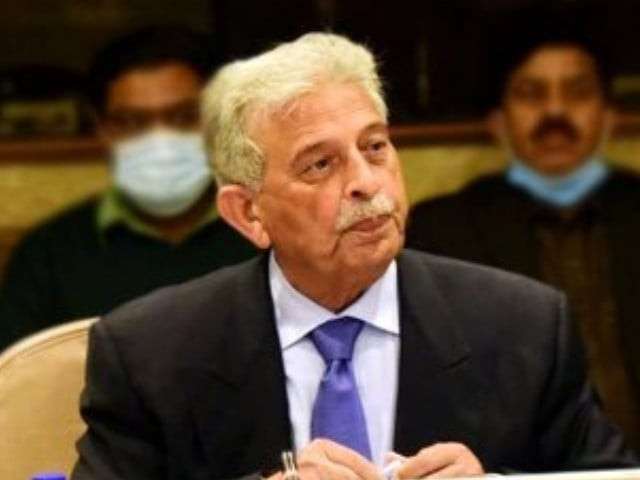
Islamabad: Federal Minister of National Food Food and Research Rana Tanveer Hussain has reiterated that compliance with health and SPS regulations is a key principle of international trade in agricultural products. “These rules are not a wording, it is the salvation of our export system, the safeguarding of food safety, public health and ecosystem biosafas,” the minister said in a statement published Wednesday. Responding to the instructions, the Department of Plant Protection (DPP), which works at the Ministry of National Food Safety, has taken initiatives between rice, maize, citrus and mango sectors to ensure compliance with SPS standards. During the
LAHORE: The Lahore Chamber of Commerce and Industry (LCCI) has expressed deep concerns over the high fees levied for e-compliance under SRO 428(I)/2024. In a letter to Prime Minister Shehbaz Sharif, LCCI President Kashif Anwar highlighted the additional burden these charges are putting on the already distressed business community. Anwar pointed out that businesses in Pakistan face serious economic challenges such as inflation, rupee depreciation, high energy costs and high interest rates. He expressed deep concerns over the exorbitant charges reported by the sole licensee for e-invoicing systems integration with the Federal Board of Revenue (FBR) vide order SRO 428(I)/2024
Islamabad: Imports of wheat, along with other agricultural products, fall under the Sanitary and Phytosanitary (SPS) regulation. The SPS Agreement, an international treaty under the World Trade Organization (WTO), expressly recognizes the authority of governments to protect human, animal and plant health based on scientific principles. These measures mainly focus on quarantine and biosecurity protocols to protect human, animal and plant life from the risks associated with pests, diseases, additives, toxins and contaminants in food and feed. Consequently, ensuring compliance with SPS regulations becomes a critical aspect of recent wheat imports, requiring the cooperation of both importing and exporting countries
LONDON: Formula 1’s governing body announced a compliance investigation on Tuesday, prompting a furious response from the sport’s owners, top team Mercedes and one of motorsport’s oldest women. The storm erupted when the FIA issued a surprise statement saying it was looking into reports that the team boss had received confidential information from an employee of the commercial rights holder. Although the manager was not named, the media identified him as Mercedes’ Toto Wolff, whose wife Susie heads the all-female F1 academy and reports to Formula 1 chief executive Stefano Domenicali. “The FIA is aware of media speculation centering on
 Editor — Hamza Azhar Salam · Write to us with suggestions or tips

October 26, 2026
The Pakistan Daily

October 26, 2026
Frontpage.dev

Frontpage.dev