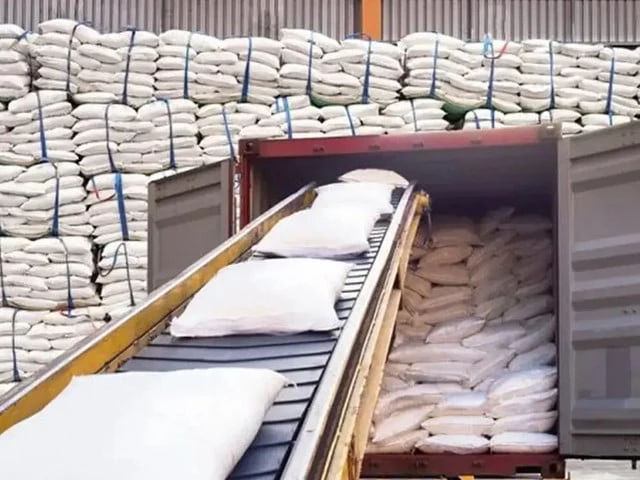
Pakistan’s sugar mills are again pressing the government to allow exports, a demand that has reopened a politically charged debate barely a year after the last export round triggered shortages, record prices and a costly reversal into imports.
In a letter sent to Deputy Prime Minister Ishaq Dar on 31 May, the Pakistan Sugar Mills Association (PSMA) argued that the country is sitting on a surplus and should be permitted to ship it abroad, according to The Express Tribune. The association put domestic stocks at 7.9 million metric tonnes against annual consumption of about 6.6 million tonnes, leaving a claimed surplus of roughly 1.3 million tonnes that it says could earn close to US$500 million in foreign exchange, the paper reported.
PSMA contends that exports are needed to relieve financial strain on mills. “Mills cannot service bank loans. Farmers are waiting for payments,” PSMA chairman Chaudhry Zaka Ashraf told The Express Tribune. The same case was put to the government in PSMA’s submission, which argued that shipments would “ease financial pressure on sugar mills, enable loan repayments and clear pending dues owed to sugarcane growers,” as reported by Food Business MEA.
The push has been met with scepticism inside government. A Ministry of Commerce official said authorities suspect that around 300,000 tonnes of imported sugar may have been folded into the stock figures the mills submitted, according to The Express Tribune — a concern echoed in Food Business MEA’s account, which quoted the official as saying officials “suspect that around 300,000 metric tons of imported sugar may have been included in the reported stock numbers.”
Officials’ caution is rooted in recent experience. After exports were cleared in 2024, retail prices climbed from about Rs140 per kilogram to Rs190, touching Rs210 at one point, before the government and industry agreed to cap the ex-mill rate at Rs165 per kilogram, The Express Tribune reported. The episode forced an emergency import plan of 750,000 metric tonnes to refill the domestic market, the paper noted.
That reversal is now visible in the trade data. Pakistan’s sugar imports surged 7,906 per cent in the first seven months of the current fiscal year, rising to $17.46 million between July 2025 and January 2026 from $211,800 in the same period a year earlier, The Nation reported. January 2026 alone accounted for $23.4 million in imports, a 46.38 per cent jump on the previous month, the paper said.
The latest export demand also lands against the backdrop of an accountability probe. The National Accountability Bureau is investigating alleged corruption in the sector, with a referral originating from the Public Accounts Committee centring on the alleged misappropriation of 5,365 metric tonnes of sugar involving a private mill and officials of the Trading Corporation of Pakistan, The Nation reported. The bureau estimates the loss to the national exchequer at about Rs960 million, according to the paper. The allegations have not been proven, and the named parties have not been convicted.
Regulators have long flagged competition concerns in the sector. The Competition Commission of Pakistan imposed a Rs44 billion penalty on PSMA in 2021 and has scheduled cartelisation hearings involving more than 80 sugar mills, The Express Tribune reported.
For consumers, the worry is the familiar pattern. “When international prices become more attractive, mills tend to prioritise exports, which reduces local supply and drives prices upward,” a wholesale trader told Food Business MEA. With 91 mills operating nationwide, per the same report, the government’s decision on the surplus claim will test whether it can break the surplus-to-shortage cycle that has dogged the commodity.