
The country has agreed to achieve a 60% share of renewable energy, but is demotivating under the influence of IPPs
Islamabad:
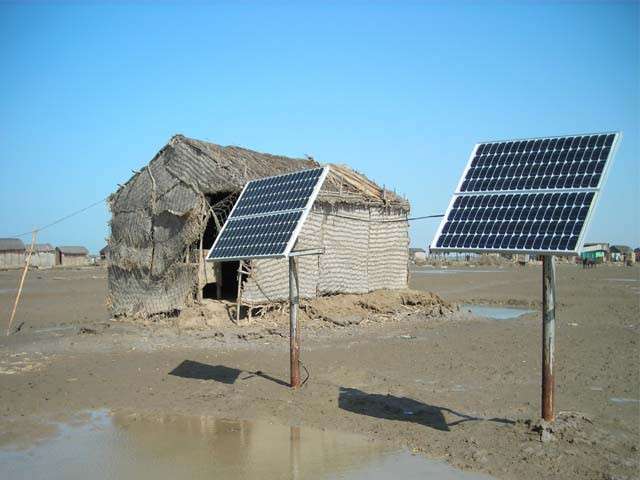
Pakistan has a solar energy potential of 40 gigawatts, according to the World Bank. This can help increase the share of solar energy to 60% in the energy mix by 2030.
Historically, Pakistan has depended on fossil fuels, especially oil and natural gas, to generate electricity. However, due to advances in solar technology and increased supply, low prices have shifted the energy mix paradigm more towards renewables in recent years. Therefore, the government has developed the net metering policy, also referred to as net energy metering (NEM), which is actually an electricity charging method that allows consumers to generate their own energy to sell to the power company. It includes customers with solar panels that transfer the excess electricity they generate to the grid and receive credits from the utility company on their electricity bill. When solar panels produce more electricity than they consume, the excess power flows back into the grid.
The government has approved the Alternative and Renewable Energy Policy for 2019, offering incentives and support for renewable energy businesses. However, challenges remain in the implementation of the National Electricity Policy 2021, which was endorsed by the Council of Common Interests in February 2021.
Reports suggest that the government plans to reduce the price of solar power exported to the national grid from Rs 21 per unit to Rs 11 per unit, sparking widespread criticism. This is in sharp contrast to the tariff of Rs 60 per unit for power generated from fossil fuels.
The installed solar net metering capacity has increased to 3,000 megawatts. Pakistan Bureau of Statistics (PBS) data shows that in 2020, fossil fuels accounted for about 63% of total electricity generation, followed by hydropower at 29%, nuclear power at 5% and renewable energy at about 3%. The proposed solar rate cut is believed to be influenced by independent power producers (IPPs), who fear a loss of revenue with the rapid growth of solar installations, potentially at the expense of consumers. In particular, regulatory bodies such as the National Electricity Regulatory Authority (Nepra) are seen as favoring IPPs over consumers and solar grid users.
Rising demand for solar panels has disrupted the government’s capacity payment plan amid fears that IPPs will lose business. While the government argues that the current rate allows consumers to recoup the cost of installing solar panels within 18 months, IPPs are pushing to extend this payback period to 10 years. Globally, the Sustainable Energy for All (SE4All) initiative aims to achieve universal access to modern energy by 2030 and double the share of renewable energy and energy efficiency gains. Consequently, there is a rapid transition towards renewable and alternative energy sources for electricity generation.
The revised EU Renewable Energy Directive increases its binding renewable energy target for 2030 to a minimum of 42.5%, up from the previous 32%, with the ambition of reaching 45% of total energy from renewable sources, almost doubling the existing share. Similarly, other advanced countries are also committed to increasing the share of renewables in their energy mix by 2030.
Sustainable Development Goal 7 (SDG-7) supports “affordable, reliable, sustainable and modern energy for all” by 2030, with three key goals underpinning this effort to ensure universal access to affordable, reliable and modern energy services. Pakistan has ratified the United Nations Framework Convention on Climate Change (UNFCCC) and adopted SDG-7 to align with global efforts to combat climate change and transition away from traditional fossil fuels and other carbon-intensive energy sources. To achieve the Nationally Determined Contributions (NDC) target, Pakistan aims to transition to 60% renewable energy sources and achieve 30% electric vehicle penetration by 2030. In addition, Pakistan plans to ban coal imports and expand nature-based solutions.
Solar net metering stands out as a rapidly growing sector, offering consumers the opportunity to tap into their own resources for energy production. Through such initiatives, Pakistan can fulfill its commitments under the Paris Agreement, UNFCCC and SDG-7.
Considering the above national and global commitments, leveraging net metering facilities can significantly help in fulfilling Pakistan’s obligations under UNFCCC and Paris Agreement. Hence, reducing the unit price of solar energy from Rs21 to Rs11 could undermine the transition to renewable energy. The irony is that Pakistan is committed to achieving a 60% renewable energy share but is derailing under the influence of IPPs. The world is moving fast towards renewable energy, with Australia offering three hours a day of free solar power to citizens and the EU already meeting renewable energy targets well ahead of its 2030 deadline.
The government should work with the public to promote solar energy instead of hindering it. Renewable energy sources such as solar, wind, biomass and biogas are highly sustainable and can help reduce the bill of oil and natural gas imports for electricity generation.
A comprehensive review is warranted, which will include input from market experts and the Department for Climate Change, as well as consultation with solar consumers. It is important to assess the broader national and global dynamics before making unilateral decisions.
This approach will help fulfill Pakistan’s international obligations and safeguard the interests of citizens.
The author is an expert on climate change, forestry and the environment
a href=”https://tribune.com.pk/story/2579935/solar-against-fossil-fuel-led-energy-generation-dilemma”>Source link



