
By Aflatoon
Today is Youm-e-Istehsal. Seven years since the fifth of August 2019, when India revoked Article 370, stripped Jammu and Kashmir of its special constitutional status, and split it into two union territories administered from Delhi.
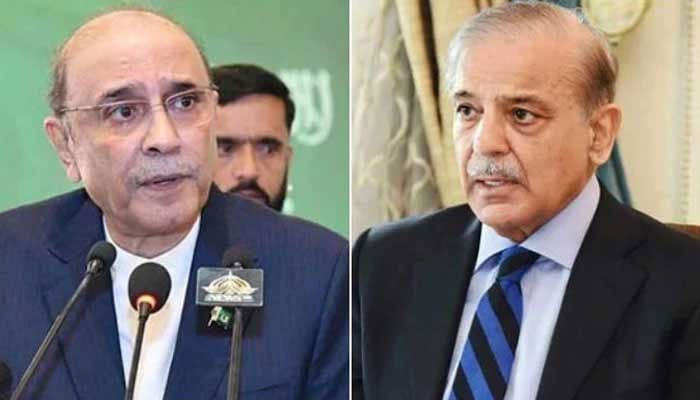
The president has issued a message. The prime minister has issued a message. The armed forces have reaffirmed their support. Every one of those statements is, as far as I can judge, sincere, and the substantive complaint in them is correct: a disputed territory’s status was altered unilaterally, against Security Council resolutions, without asking the people who live there.
I have no quarrel with any of it. I want to write about the timing, because the calendar has arranged something this week that I do not think anyone planned.
—
While we mark seven years of Kashmiris in Srinagar not being consulted, Kashmiris in Muzaffarabad are voting.
The second phase concluded on Sunday. Two constituencies held over for weather voted on Tuesday — Noreen Arif took LA-27 by 298 votes, which is the kind of margin that makes a democracy feel real. Poonch votes on the tenth. It is, procedurally, a functioning election, with returning officers and recounts and a genuine contest.
And it is being conducted under conditions I have spent two weeks describing in this paper. A civil rights movement banned under anti-terrorism law in June. Around thirty dead in the unrest that followed. A party worker killed on polling day. The largest opposition party boycotting. Sixteen thousand eight hundred police brought in from four provinces because the territory’s own arrangements were not thought sufficient. Three phases rather than one, because there were not enough soldiers to secure all three divisions at once.
Both of these things are Kashmir. Both are happening this week.
—
Here is the part I keep returning to.
The Joint Awami Action Committee was proscribed on the fifth of June. What it had been demanding, before the ban, was the abolition of the twelve seats in the Legislative Assembly reserved for Kashmiri refugees — people displaced from the other side, settled in Pakistan, voting in constituencies that exist because the dispute exists.
Those twelve seats are, in a sense, the physical form of our national position on Kashmir. They say: the territory is one thing, the people displaced from it retain a claim on it, and the assembly here holds a place for them until the question is settled.
A movement in Azad Kashmir asked for those seats to go. It argued, roughly, that the people who actually live in the territory should elect the assembly that governs the territory, and that seats held on behalf of a future settlement are seats not held on behalf of present constituents.
That is not an unreasonable argument. It is also, from Islamabad’s point of view, an argument that quietly dissolves the claim the seats embody.
The movement was banned. The seats voted on Sunday.
—
I am not equating the two situations, and I want to be explicit about that, because the equation is the cheap move and it is also false. Nobody in Muzaffarabad has had their constitutional status revoked by fiat from a foreign capital. There is an assembly. There are elections. There is a press that can print this column.
What I am saying is narrower. It is that a country making a case about self-determination is, this week, also demonstrating what it does when self-determination is raised inside its own arrangements — and that the two are visible on the same page of the same newspaper, on the same day.
Anybody arguing our case in a foreign capital this week will be asked about Rawalakot. It is not an unfair question. It is the question.
—
The strongest version of our Kashmir position has never been that we govern our part perfectly. It has been that the people of the territory were promised a say and never got one, and that a promise is a promise regardless of who is embarrassed by it.
That argument survives our imperfections. It does not survive us pretending they are not there.
Seven years, and three phases. We should be able to hold both.
—
Aflatoon is a satirist and observer of the Pakistani condition. His column, Intellectual Voices, appears in The Pakistan Daily.



