On the sixteenth of September, Pakistan’s ambassador told the United Nations Security Council that his country would “respond in self-defence, as and when needed and in accordance with international law.” He cited more than four thousand seven hundred deaths in three years from groups based in Afghanistan, and said the Taliban had failed to act.
I wrote at the time that saying this at the UN before acting is how a state builds the legal ground it intends to stand on.
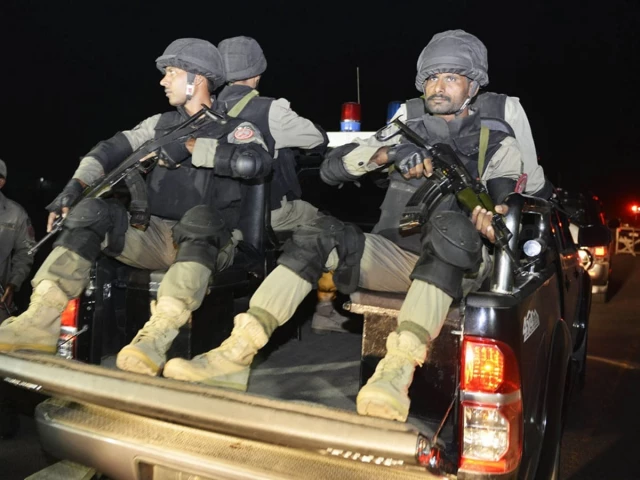
On the eighteenth, a vehicle bomb opened the gate of the Kohat Police Lines during Friday prayers and seven gunmen went in behind it. Twenty-one people were killed, fifteen of them policemen. The claim came from a group whose leader lives in Afghanistan.
On the nineteenth, six soldiers died in Hangu.
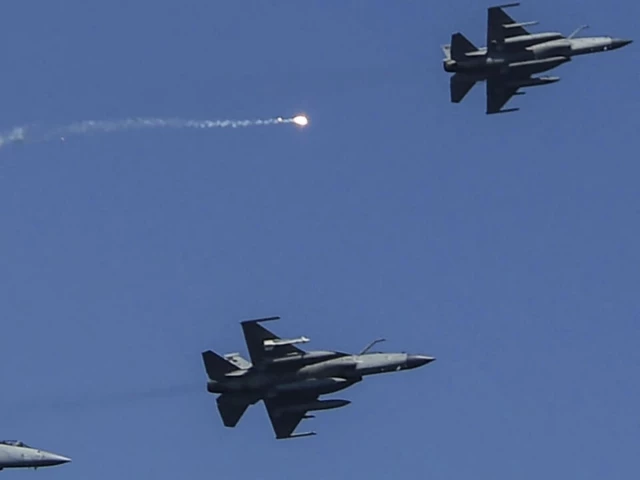
By the twenty-first, the government was announcing calibrated air strikes against hideouts near the Afghan border. Three targets destroyed, including what it describes as a training facility for suicide bombers. Twenty-eight killed there, nine in ground operations, thirty-seven in all, and — the announcement is careful about this — no collateral damage.
Five days from doctrine to ordnance.
—
I want to take the legal argument seriously, because it is not frivolous and because most commentary will either ignore it or treat it as a formality.
Article 51 of the Charter preserves the inherent right of self-defence against armed attack. It was written with states in mind. The extension Pakistan is invoking — that it reaches a non-state group operating from a territory whose government is unwilling or unable to suppress it — has been argued by the United States over Syria, by Turkey over Iraq, by Israel, by Colombia, by others. It is contested, it is not fringe, and it is the only available legal theory for what happened this week.
Its weakness is that it is self-judging. A state decides for itself that a neighbour is unwilling or unable, decides for itself that the threat is imminent, and decides for itself what is proportionate. There is no forum that rules on any of this in advance, and by the time anyone rules, the aircraft have returned.
That is not an argument against Pakistan having acted. Fifteen policemen were killed at Friday prayers and the claim came from across a border. It is an argument for knowing exactly what we are relying on, because the same doctrine is available to everyone — including to the state on our eastern border, which has used a version of it against us and will again.
—
Now the sentence in the announcement that deserves the most attention, and it is the one nobody will quote.
The strikes were “against hideouts and safe havens of terrorist organisations” in “the border region”. Not “in Afghanistan”. Not “inside Afghan territory”.
Those formulations are not accidents. They are the difference between an operation conducted on one’s own side of a line and an act that engages another state’s sovereignty. A government that had struck inside Afghanistan and wished to say so would say so; a government that had not would also, presumably, say so plainly.
We have been given the ambiguous version, and I do not know which it is. Neither does Parliament, which has not been told. The Taliban had not responded when this was written, and their silence is its own small piece of evidence, though I would not build much on it.
—
There is a second claim I keep returning to: that maximum precautions were taken and no collateral damage occurred.
That may be entirely true. Precision munitions exist, and a state that has just lost fifteen policemen has every operational reason to hit what it aimed at.
But consider who is in a position to check. The strikes were in a border area where independent journalism is effectively impossible, on targets nobody has located, against people nobody has named, and the assessment of whether civilians died has been produced by the organisation that conducted the strikes.
I am not alleging that civilians died. I am pointing out that the sentence “no collateral damage occurred” currently carries exactly as much weight as the word of the party with the greatest interest in it being true — and that this is a structural problem, not an accusation.
Thirty-seven is also a precise number for an event nobody outside the armed forces witnessed.
—
What follows from this is not that Pakistan should have absorbed Kohat without response. A state that will not act after fifteen of its policemen are killed at prayer is teaching its adversaries something worse.
What follows is that the country has crossed into a phase it should name honestly. Pakistan has now articulated a cross-border self-defence doctrine at the Security Council and acted on it within the week. That is a policy, not an incident. It will recur, because the group that claimed Kohat is still in Afghanistan and the conditions that produced Kohat have not changed.
A policy of that kind belongs in Parliament — not the targeting, not the intelligence, but the doctrine. Under what circumstances will Pakistan strike across this border? What does it consider proof of Afghan unwillingness? What ends it?
We are, this month, a country whose defence minister says we are bound to Saudi Arabia by an eternal agreement, whose military spokesman says we are there, whose interior minister flies to Tehran, and whose aircraft are now over the western border region. Each of those was announced separately. None has been debated.
The ambassador said self-defence “as and when needed”. The needing is being determined somewhere, and it is not in the National Assembly.
[Image: The Express Tribune]