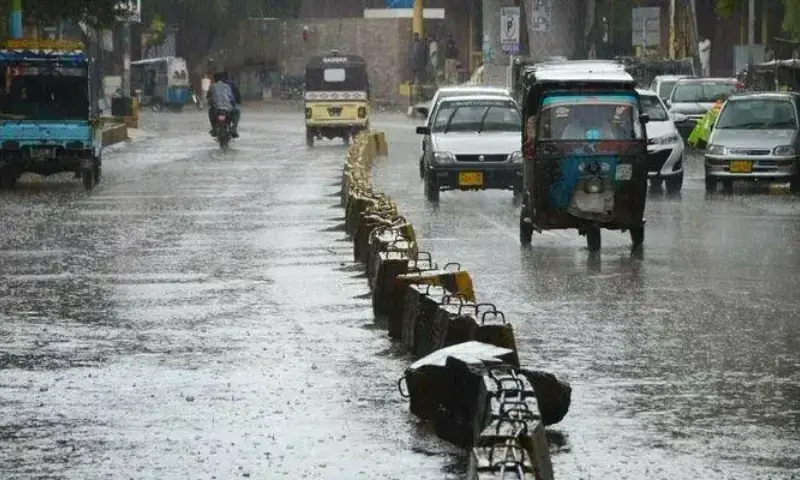
The Pakistan Meteorological Department on July 17 forecast a sustained period of widespread monsoon rainfall, windstorms and thunderstorms across the country from July 18 through July 25, raising flash flood risk across multiple provinces (Aaj English TV).
In Khyber Pakhtunkhwa, flash flooding is likely in local streams, nullahs and low-lying areas during periods of heavy rainfall, with landslide risk elevated in upper KP including the Hazara division. Heavy rainfall in northeastern Balochistan — specifically in Zhob, Sherani, Loralai, Musakhel, Kohlu, Sibi, Naseerabad, Jhal Magsi, Jaffarabad, Barkhan, Dera Bugti and Khuzdar districts — is forecast from the evening of July 19 through July 23.
The PMD said the monsoon system’s intensity is being compounded by the interaction of two weather systems over the region, increasing both the volume and geographic spread of expected rainfall.
Cumulative toll and capacity pressures
At least 90 people have been killed in rain-related incidents since late June, with 88 houses damaged and 163 livestock killed according to NDMA data. The monsoon casualty toll typically rises steeply in July and August as the main monsoon trough moves across the country.
The forecast period coincides with several competing pressures on NDMA’s relief capacity. Operation Shaban, now in its thirteenth day, continues to require security logistics support across multiple Balochistan districts — the same province facing the heaviest rainfall forecast from July 19. The AJK unrest has disrupted communications and road access in some mountainous areas that would also face elevated flash flood risk. Pre-positioning of relief stocks in affected areas before the heavy rainfall window is therefore more logistically complex than in a normal monsoon season.
The NDMA has issued alerts and directed provincial disaster management authorities to activate monsoon response protocols. Pakistan has invested in pre-positioning and early warning systems since the catastrophic 2022 floods, but capacity constraints in remote and operationally complex areas remain.