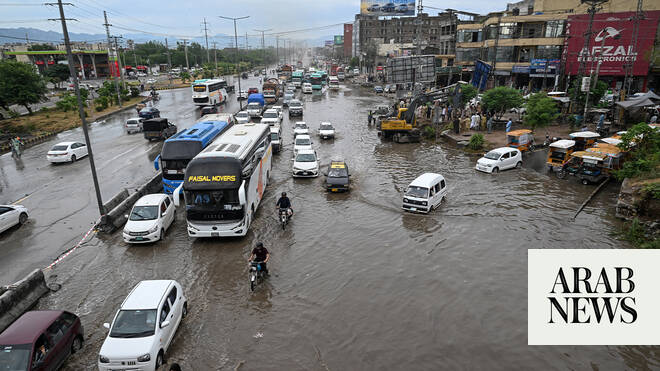
Pakistan’s National Disaster Management Authority reported that seventeen people have been killed and 41 injured across the country since the onset of monsoon rains on June 26, with fatalities spread across Khyber Pakhtunkhwa, Balochistan, and parts of Punjab (Arab News). Disaster management teams have been deployed to high-risk districts, but the heaviest phase of the season is considered to be still ahead.
The Pakistan Meteorological Department forecast the country’s first organised monsoon spell of the year running from July 1 through approximately July 6, driven by a deep low-pressure system over the Arabian Sea combining with westerly weather disturbances and elevated temperatures across the interior. The PMD warned of heavy to very heavy rainfall, windstorms, thundershowers, flash floods, river erosion, debris flows, urban flooding in Islamabad, Rawalpindi, Peshawar, Lahore, and Faisalabad, and damage to roads, bridges, and irrigation infrastructure (Business Recorder).
Glacial lake outburst flood risk is elevated in the north, where the combination of soaring temperatures and monsoon precipitation is accelerating melt. Pakistan has more high-altitude glaciers than any country outside the poles, and GLOF events have caused recurring infrastructure and agricultural losses in Gilgit-Baltistan and upper KP.
Scale of historical exposure
Pakistan’s 2022 monsoon season remains the reference point for catastrophic risk: over 1,700 people were killed, 33 million displaced or directly affected, and more than $30 billion in economic damage was recorded — one of the most destructive climate events in the country’s history. Subsequent seasons have been less severe but have continued to produce significant casualties and crop losses, particularly in Balochistan’s flash-flood-prone river valleys and the Indus floodplain.
Climate scientists have linked the intensification of Pakistan’s monsoon variability to rising Indian Ocean sea-surface temperatures. The government has invested in early warning systems and province-level NDMA capacity since 2022, but many of the underlying vulnerabilities — informal construction on floodplains, inadequate drainage in major cities, degraded levees — remain unaddressed.