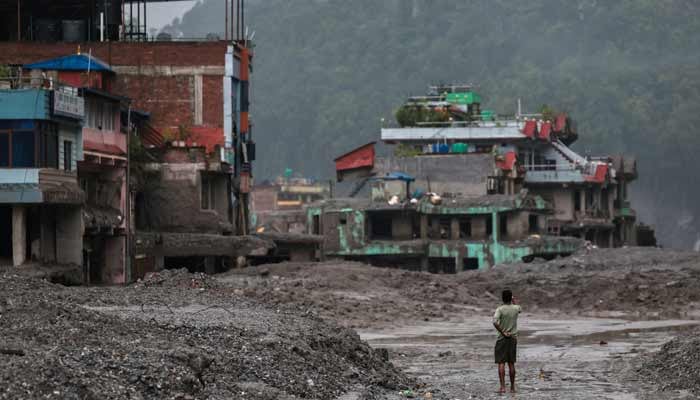
Nepal halted its search for flood victims on Saturday because of rain and fog, and said it needs $4 billion to $5 billion to rebuild and foreign specialists to do the jobs its own agencies cannot (Geo News/Reuters).
Finance Minister Swarnim Wagle gave Reuters the reconstruction figure and called it an initial estimate: “This is just an estimate. Loss and damage is being assessed.”
The toll, three days on
The Pakistan Daily reported 162 dead on Thursday and corrected that to at least 490 on Friday. Both are now far behind.
Nepal’s National Disaster Risk Reduction and Management Authority put the toll at 626 in a 10am bulletin on Saturday, with 4,451 rescued and 101 injured in hospital (Kathmandu Post). China reports seven dead in Tibet, up from three. That makes 633 — the number AFP is using (Dawn).
Nepal Police had recovered 616 bodies by 6am, and the district breakdown reconciles exactly: 233 in Chitwan, 158 in Nawalparasi East, 48 in Gorkha, 47 in Nawalparasi West, 45 in Dhading, 41 in Nuwakot, 31 in Tanahun, 13 in Rasuwa. Only four of the 233 bodies recovered in Chitwan have been identified, the district security committee says, and authorities began burying the other 229 on Saturday because decomposition had made visual identification impossible; DNA samples are being taken and each body tagged with a steel identification plate before burial (Kathmandu Post).
The missing number has moved most
NDRRMA now lists 2,426 unaccounted for in Nepal — against the 977 it published on Friday. Reuters puts Tibet’s Gyirong county at at least 558 missing; AFP says 554. Either way the cross-border figure is close to 3,000. Reuters says at least 540 of the missing are foreigners, many of them Hindu pilgrims from India.
What Nepal is actually asking for
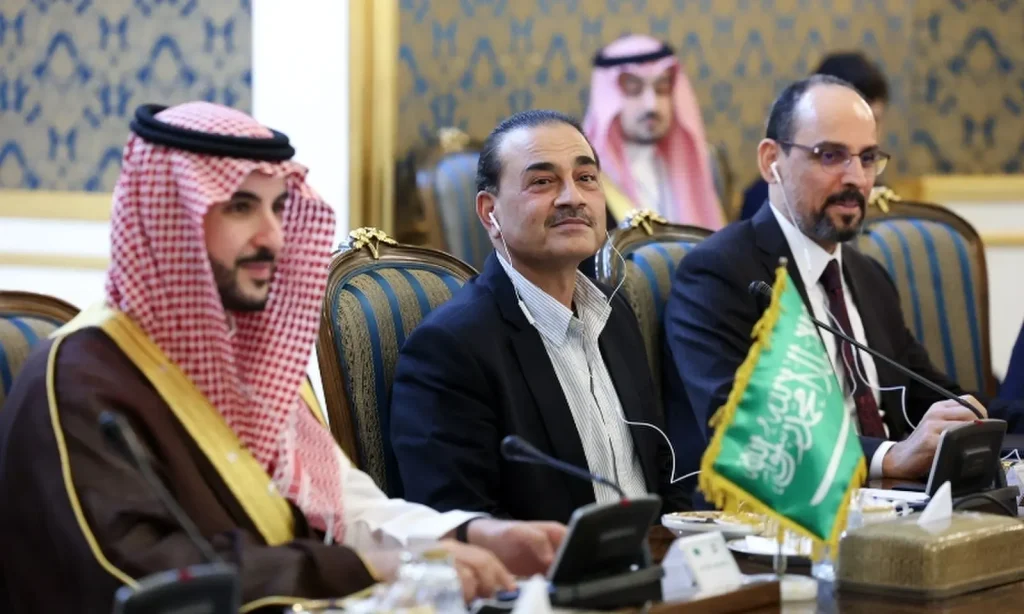
Foreign Minister Shisir Khanal told Reuters Nepal does not want help with search and rescue. It wants tunnel extraction, restoration of transport and communication where bridges are gone, body identification, DNA testing and longer-term body storage.
Nepal had refused foreign rescue teams outright on Wednesday. Diplomatic pressure from countries with missing nationals reversed that within a day, and India, China and South Korea have been cleared to send tunnel and forensic experts (Kathmandu Post). More than 12 countries — including Pakistan, the US, UK, Japan and Turkey — have offered aid; Nepal will take money and medical teams, and is resisting the rest (OnlineKhabar).
India has flown in three planeloads, about 60 tonnes of relief, and is sending a tunnel rescue team, medics, disaster-response personnel and prefabricated bridges (Express Tribune/Reuters). China has called for international rescue cooperation without saying what it is sending.
The tunnels
Nepal’s energy ministry says a special operation is under way at Upper Trishuli 3A, where the cable tunnel into the underground powerhouse is buried and Army and technical teams are using excavation equipment to clear it. Army spokesman Raja Ram Basnet said crews opened an exit point on Friday and brought out four people. Which project that was is not settled: OnlineKhabar quotes him placing it at Upper Trishuli 3A, while the Kathmandu Post places the same Friday rescue at the Rasuwa Hydropower Project intake tunnel (OnlineKhabar). Elsewhere along the corridor the Army has rescued 254 people from Upper Trishuli-1 and 18 from Langtang Khola, while sites including Rasuwagadhi and Chilime remain unreached, their tunnels filled with mud (Kathmandu Post).
A correction. The Pakistan Daily reported on Friday that about 100 workers were trapped in the Upper Trishuli 3A tunnel. That was wrong, and the error was ours: the “more than 100” is the Ministry of Energy, Water Resources and Irrigation’s count of people trapped inside tunnels across all the flood-hit projects, not at 3A. For 3A itself, Dirgahyu Kumar Shrestha, acting managing director of the Nepal Electricity Authority, put the number out of contact at the underground powerhouse at 40 to 45 on Saturday; the Kathmandu Post reported 35 still inside the 3A tunnel on Friday (Kathmandu Post, Kathmandu Post). Shrestha’s own “more than 100” refers to Rasuwagadhi, a different project.
Independent power producers say 934 people at 11 projects are unaccounted for. The energy ministry’s own preliminary figure is more than 1,000.
The lake The Pakistan Daily reported on Friday as having breached is still there. Reuters says it began overflowing into Nepal’s Lhende Khola and Trishuli rivers, briefly halting rescue work that day, rather than emptying. It is one of two upstream of the flood zone that Nepal is monitoring, and an official told Reuters that flood risk will persist until both fully drain. One is shrinking, Xinhua says; a Chinese geohazards expert warns it may be unstable, and that more than 100 glacial lakes nearby could go the same way.
Corrections, 30 August 2026: this story was published under the headline “Nepal Seeks $4bn–$5bn and Tunnel Experts as Flood Toll Hits 633”. The $4–5 billion was Finance Minister Swarnim Wagle’s estimate of reconstruction cost, not a sum Nepal asked anyone for, and the headline has been changed. The standfirst said Nepal had suspended its flood search in rain and fog; the search was continuing, and bad weather had prevented a medical evacuation. Australia was named among the countries cleared to send tunnel and forensic experts; it was not — India, China and South Korea were. And the Friday rescue of four workers is placed by OnlineKhabar at Upper Trishuli 3A but by the Kathmandu Post at the Rasuwa Hydropower Project; the text now reflects that the two accounts differ.