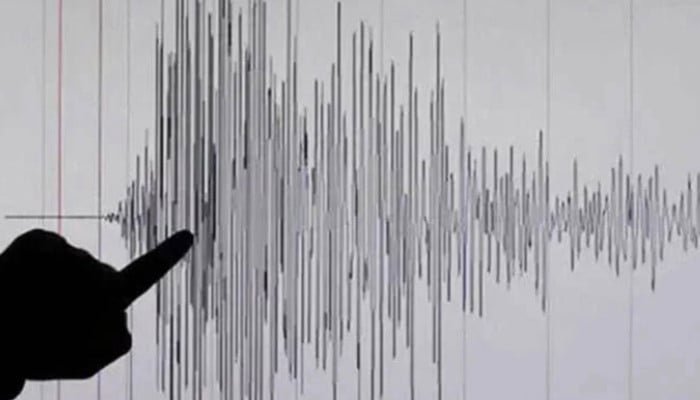
Magnitude 2.9 Earthquake Felt Across Parts of Karachi
A 2.9-magnitude earthquake was felt in parts of Karachi on Friday evening, with the Pakistan Meteorological Department putting the epicentre within the city and the depth at 10 kilometres. There were no immediate reports of casualties or damage.
By Frontpage.devAugust 1, 2026 · 4:33 am PKT · 1 min read
(Geo News)
A 2.9-magnitude earthquake was felt in different parts of Karachi on Friday, according to the Pakistan Meteorological Department (Geo News).
The department said the earthquake struck at 6:01pm, with its epicentre located within the port city and a depth of 10 kilometres.
There were no immediate reports of casualties or damage.
A tremor of this magnitude is minor and would ordinarily pass without comment. What makes it notable in Karachi is the combination of a shallow depth and an epicentre inside a densely built city of more than 20 million, much of it constructed without seismic design and a great deal of it added informally.
Karachi sits near the junction of the Indian and Arabian plates and has recorded periodic low-magnitude activity, including a sequence of small tremors in recent years that prompted the Met Office to install additional monitoring.
The city’s exposure is a function of building stock rather than seismicity. Structural failure has been the leading cause of monsoon deaths nationally this season, and the same construction practices that let roofs fall in heavy rain are what would matter in a larger event.