
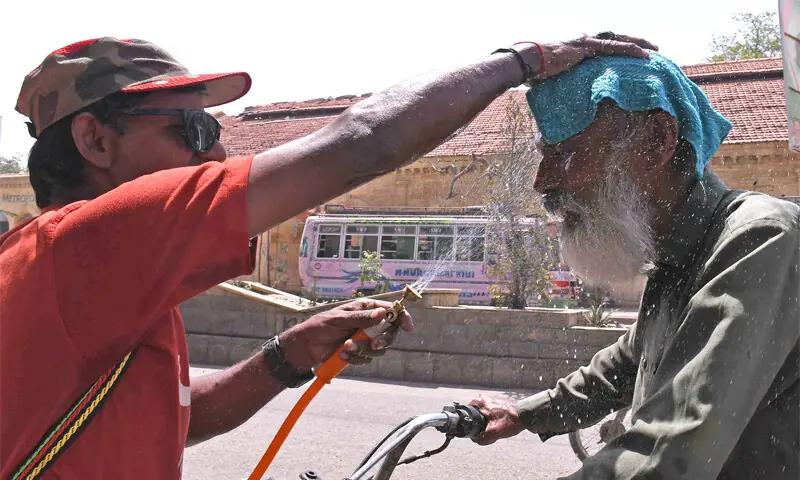
Karachi endured its hottest day in eight years in early May, with at least 10 people found dead across the city as the mercury climbed to 44.1 degrees Celsius — the highest reading recorded in the metropolis since 2018, when the city last touched 46°C. The temperature was 7.8 degrees above the normal May average of 36.3°C for the city.
All 10 bodies were recovered from streets across Karachi, in areas including Manghopir, Gulshan-i-Hadeed, Defence Phase-VIII, Boat Basin, Liaquatabad, Surjani Town and North Karachi, according to charity ambulance services. Of those, four were initially recovered from the streets while others died after being shifted to hospitals, rescue officials said. Seven of the deceased remained unidentified, and charities noted that several of the victims appeared to be drug users.
Official accounts diverged sharply from those of humanitarian organisations. Police Surgeon Dr Summaiya Syed stated that no bodies were received in the medico-legal sections of hospitals for autopsy, contradicting the charity tallies. Some reports placed the toll as high as 10, while others recorded eight fatalities.
Sindh Chief Minister Syed Murad Ali Shah expressed regret over the loss of lives and directed the city administration to identify the deceased and trace their heirs. He urged residents to avoid unnecessary outdoor exposure and adopt precautionary measures during the heat. The chief minister also sought a detailed report on the fatalities reported in Manghopir and Gulshan-e-Hadeed, where some deaths were linked to substance abuse.
The heat was compounded by failures in the city’s basic services. K-Electric imposed excessive load-shedding running beyond 16 hours in some areas, while water shortages persisted across the metropolis even as temperatures peaked. The breakdowns fuelled public anger: in Azizabad and other localities, residents — including men, women and children — staged protests against prolonged outages, chanting slogans against K-Electric and blocking roads in several places.
The utility has rejected claims of excessive cuts, saying no area faces outages exceeding 10 hours and that supply is suspended in some pockets owing to non-payment of bills. Karachi’s electricity demand exceeds 3,600 megawatts against a supply of roughly 2,900MW, leaving a shortfall of around 700MW.
The Pakistan Meteorological Department had earlier signalled that temperatures would begin to decline after the early-May peak, with the possibility of renewed rises later in the month. Those warnings proved accurate: by mid-June, Karachi was again gripped by hot and humid conditions, with the actual temperature at 37°C but the feels-like reading hitting 49°C amid 56 per cent humidity. The Met Office forecast maximum temperatures of between 40°C and 43°C through to June 12, warning that night-time temperatures would also rise.
Officials repeated advisories urging residents to avoid direct sunlight between 10am and 4pm, stay hydrated, and exercise extra caution for children, women and senior citizens. For a coastal city of more than 20 million where humidity routinely pushes the heat index well above recorded temperatures, the recurring combination of extreme heat, hours-long power cuts and water scarcity has turned each summer into a test of survival.



