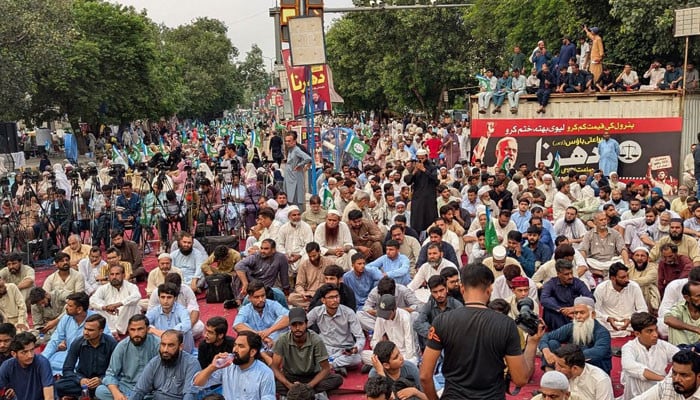
Jamaat-e-Islami’s nationwide sit-ins against the petroleum levy, inflation and electricity bills entered a fourth consecutive day (Geo News).
Supporters have been camped outside the Punjab Chief Minister’s House in Lahore and the governor houses in Karachi, Quetta and Peshawar since August 16.
Mall Road in Lahore has been closed on both tracks, disrupting traffic and inconveniencing commuters — the point at which a sit-in stops being a demonstration and becomes a standing cost to the city, and the point at which such protests have historically been cleared.
Senior JI leader Liaquat Baloch told the Lahore sit-in that the federal government had failed to deliver in more than two years. “The rulers are not ready to give up luxuries and protocol,” he said.
The party has demanded petrol at Rs225 a litre and abolition of the petroleum levy, and emir Hafiz Naeem ur Rehman has said the sit-ins mark the beginning of a protest movement that could escalate into a broader anti-government campaign.
The government has moved on prices, though not on the levy. Diesel was cut by Rs32.63 to Rs363.06 after refineries agreed to cap their crack spread at $41.5 a barrel against an international margin near $68 — but petrol rose Rs2.97 to Rs337.51 in the same revision, and the petroleum levy was not reduced. Reporting on the levy’s exact level diverges, with the diesel figure cited between Rs77.28 and Rs80 in recent revisions.
The levy raised a record Rs1.567 trillion in 2025-26, up 29 per cent, and underpinned a fiscal deficit of 2.6 per cent of GDP, the lowest since FY03.