
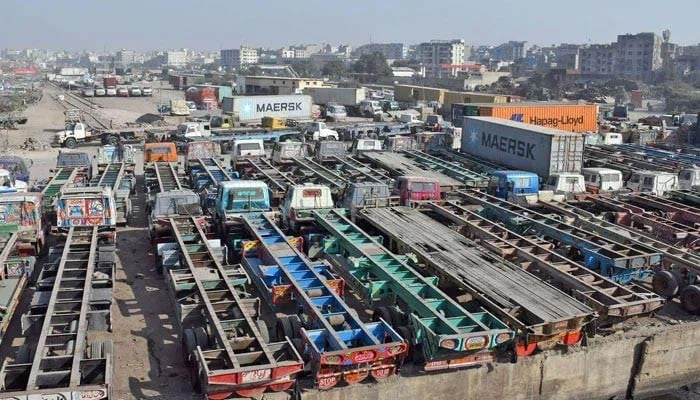
The All Pakistan Goods Transport Alliance has suspended its nine-day nationwide strike for 40 days after the federal and Sindh governments gave assurances on its main demands (Geo News; The News; ARY News).
Six of the alliance’s eight demands have been accepted, with committees formed to address the remaining two. The alliance said the suspension was in the wider national interest.
Alliance president Malik Shahzad Awan announced the decision at a joint press conference alongside Sindh Governor Nehal Hashmi, Karachi Mayor Murtaza Wahab and Federal Minister for Communications Abdul Aleem Khan.
He was careful about the wording. “We are not ending the strike — we are postponing it,” Awan said, adding that if the assurances were not implemented the alliance could protest again.
The concession that matters most is on the pricing mechanism. Awan said Aleem Khan had given assurances that petroleum prices would be revised every 15 days or monthly rather than daily — the single demand that had kept container operators and inter-provincial trucks off the road after smaller carriers settled. Transporters have argued throughout that daily revisions make it impossible to quote a price for a multi-day haul.
Aleem Khan also undertook that a committee would be formed to review and reduce toll taxes, and that 10-wheeler trucks would be allowed appropriate weight limits. The Sindh government gave assurances on parking. Awan said some issues had already been resolved and others would go to cabinet, with committee meetings continuing.
Governor Hashmi framed the settlement against the wider conflict, saying the regional situation was extraordinary and its economic effects were being felt worldwide, and that the prime minister and the Field Marshal were working to ensure the benefits of recent developments reached the public. “Both sides agreed that they are ready to make every sacrifice for the country,” he said.
The strike began on August 8 over diesel costs, daily pricing, the withholding tax on cargo transporters and tolls. It fractured mid-week when the Pakistan Transport Council called its own stoppage off after 15 associations signed an agreement, and oil tankers withdrew after OGRA accepted a 7 to 8 per cent freight increase — leaving container trailers and heavy trucks out alone.
The All Pakistan Textile Mills Association had warned that export containers, imported cotton and locally procured cotton were all stranded, with mills holding low stocks at the end of the season.
Whether the fuel-pricing assurance survives is the open question. The daily mechanism is tied to the petroleum levy that delivered a record Rs1.567 trillion last fiscal year and underpinned a fiscal deficit of 2.6 per cent of GDP, and no notification changing it has yet been issued.



