
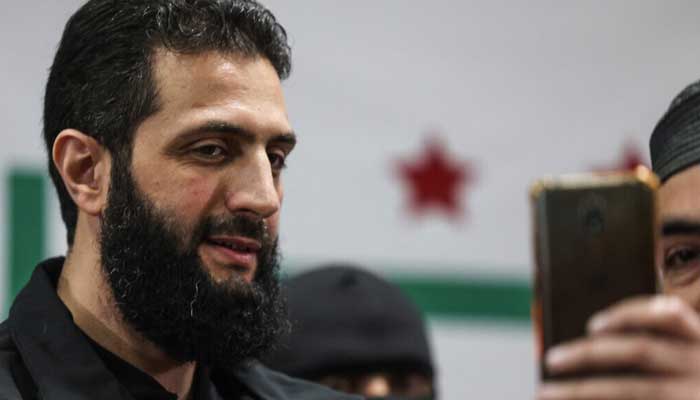
BEIRUT: As al Qaeda’s franchise commander in the Syrian civil war, Abu Mohammed al-Golani was a shadowy figure kept out of the public eye, even as his group became the most powerful faction fighting President Bashar al-Assad.
Today, he is the most recognizable of Syria’s triumphant rebels, having gradually risen to prominence since severing ties with al-Qaida in 2016, renaming his group and emerging as the de facto leader of rebel-held northwestern Syria .
The transformation has come since rebels led by Golani’s Hayat Tahrir al-Sham (HTS), formerly known as the Nusra Front, swept across the nation and declared they had ousted Assad on Sunday after capturing the capital Damascus.
Golani has played a leading role in the takeover, sending messages aimed at reassuring Syrian minorities who have long feared the rebels.
“The future is ours,” he said in a statement read on Syrian state television, urging his fighters not to harm those who throw down weapons.
As rebels entered Aleppo, Syria’s largest city before the war, at the start of their drive towards Damascus, a video showed Golani in military fatigues giving orders over the phone, reminding fighters to protect people and bar them from entering houses.
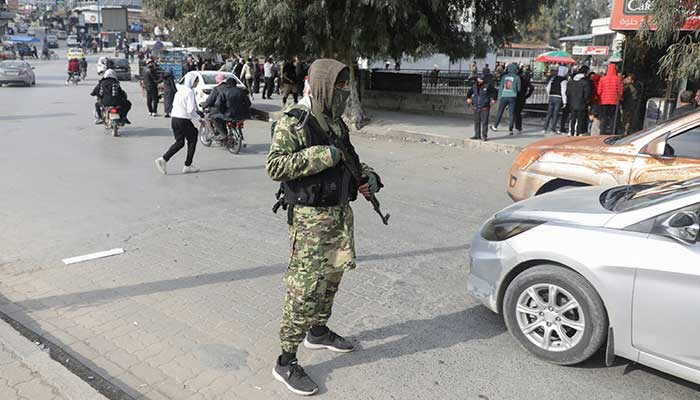
He visited Aleppo’s citadel accompanied by a fighter waving the flag of the Syrian revolution: once shunned by Nusra as a symbol of defection, but recently embraced by Golani in a nod to Syria’s most mainstream opposition.
“Golani was smarter than Assad. He rebuilt, reinvented himself, made new allies and went all out with his charm” against minorities, said Joshua Landis, a Syria expert and head of the Center for Middle East Studies at the University of Oklahoma. .
PR effort?
Aron Lund, a partner at think-tank Century International, said Golani and HTS had clearly changed although they still remained “pretty hard-line”.
“It’s public relations, but the fact that they’re participating in this effort shows that they’re no longer as rigid as they once were. Old-school al-Qaeda or Daesh would never do that,” he said.
Golani and the Nusra Front emerged as the most powerful of a host of rebel factions that emerged in the early days of the uprising against Assad a decade ago.
Before founding the Nusra Front, Golani had fought for al-Qaeda in Iraq, where he spent five years in a US prison. He returned to Syria as the insurgency began, sent by the leader of the Daesh group in Iraq at the time — Abu Omar al-Baghdadi — to bolster al-Qaeda’s presence.
The US designated Golani a terrorist in 2013, saying al-Qaida in Iraq had tasked him with overthrowing Assad’s rule and imposing Islamic sharia law in Syria, and that Nusra had carried out suicide attacks that killed civilians and supported a violent sectarian vision.
Turkey, the main foreign backer of the Syrian opposition, has labeled HTS a terrorist group, while supporting some of the other factions fighting in the northwest.
Golani gave his first media interview in 2013, his face wrapped in a dark scarf and showing only his back to the camera. Talking to you Al Jazeeracalled for Syria to be governed under sharia law.
About eight years later, he sat down for an interview on the US Public Broadcasting Service’s FRONTLINE program, facing the camera and wearing a shirt and jacket.
Golani said the designation of terrorism was unfair and that he opposed the killing of innocent people.
He described how the Nusra Front had expanded from the six men who had accompanied him from Iraq to 5,000 within a year.
However, he said his group had never presented a threat to the West. “I repeat — our involvement with al Qaeda has ended, and even when we were with al Qaeda we were against conducting operations outside of Syria, and it is completely contrary to our policy to conduct foreign action.”
Messages to minorities
Golani fought a bloody war against his old ally Baghdadi after Daesh tried to unilaterally subdue the Nusra Front in 2013. Despite its ties to al-Qaeda, Nusra was seen as more tolerant and less harsh in its dealings with civilians and other groups rebels compared to Daesh.
The group was subsequently beaten out of territory it held in both Syria and Iraq by a range of adversaries, including a US-led military alliance.
As Daesh crumbled, Golani consolidated HTS’ grip on the northwestern Syrian province of Idlib, establishing a civilian administration called the Salvation Government.
The Assad government considered HTS to be terrorists, along with the rest of the rebels.
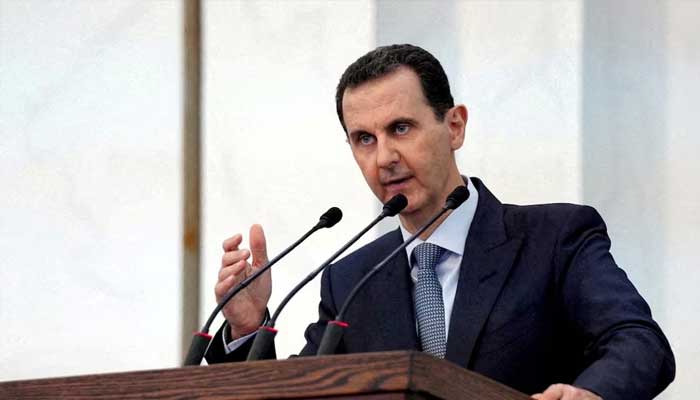
The HTS leadership has issued statements seeking to reassure Alawites and other Syrian minorities. A statement urged the Alawites to be part of a future Syria that “does not recognize sectarianism.”
In a message to residents of a Christian town south of Aleppo, Golani said their properties would be protected and safeguarded, urging them to stay in their homes and reject the Syrian government’s “psychological warfare”.
“He’s really important. The main rebel leader in Syria,” Lund said.
He said HTS had demonstrated “logistical and governance ability” by ruling its own territory in Idlib for years.
“They adopted the symbols of the wider Syrian uprising … which they now use and try to claim the revolutionary legacy — that ‘we are part of the 2011 movement, the people who rose up against Assad.’
a href=”https://www.geo.tv/latest/578557-former-al-qaeda-chief-abu-mohammed-al-golani-led-overthrow-of-syrias-assad”>Source link



