
From Gul-e-Dawoodi nurseries to women-led micro-enterprises, experts call for strategic support
PESHAWAR:
From wedding garlands and festive bouquets to ceremonial showers for honored guests, the fragrant blooms of Pakistan’s gardens touch every corner of everyday life. Flowers are also the raw material for perfume, essential oil and decorative exports, making them a versatile and economically valuable resource.
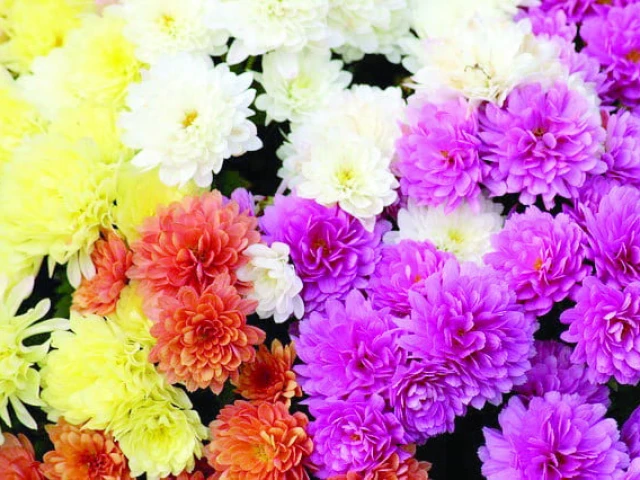
Amidst this rich floral culture, 28-year-old plant seller Qadir Shah tends to rows of young Gul-e-Dawoodi saplings glistening under the mild winter sun at a small nursery in Tarnab, Peshawar’s floriculture hub.
Qadir, who inherited the family business, is busy watering, trimming and preparing thousands of plants ordered by educational institutions – including schools, colleges, universities – and public offices across Khyber Pakhtunkhwa for December’s Gul-e-Dawoodi fairs.
With the annual flower show at the historic Islamia College Peshawar just around the corner, Qadir and his two assistants have little room for pause. “All the ordered stock will be ready by the end of this month,” he says, removing the dirt from his hands. “We are even importing Gul-e-Dawoodi saplings from Pattoki, Kasur district, to meet the winter demand.”
For Qadir, who inherited the business from his father, floriculture is not just a source of income, but a legacy of colour, determination and hope. Rising transportation costs, rising worker wages and factory losses due to adverse weather conditions have cut deeply into profits, he noted.
“If floriculture is declared as an industry, it would change everything positively in KP,” he said. “The province has huge potential for this vital sector. It can empower women and youth and help Pakistan tap into the multi-billion dollar global flower markets.”
Experts agree that Pakistan’s soil and climate are among the best in the world for ornamental plants. However, floriculture remains one of the most overlooked agricultural sectors in the province.
Dr Abdul Rauf, Director General Agriculture Research KP, explained that floriculture includes not only the cultivation of ornamental plants but also their marketing 1 from cut flowers and live plants to essential oils, perfumes and medicinal by-products.
“In Pakistan, most flowers bloom in winter when Europe and Central Asia are under snow,” he said. “This gives us a natural competitive advantage and our government needs to capitalize on it.”
The returns are impressive for many small farmers. While crops like potatoes or cherries earn Rs 80,000-100,000 per kanal, flowers can fetch Rs 1.5-2 million per kanal – a potential economic windfall often overlooked by policymakers.
Global demand for cut flowers is growing 10-15% annually. However, despite larger arable land, cheaper labor and favorable climate, Pakistan has not captured even a fraction of this market. “Improved production technology and coordinated policies could change this,” Dr. Rauf emphasized.
Dr Muhammad Naeem, former Chairman of the Department of Economics at the University of Peshawar, said horticulture can transform rural economies, especially as traditional crops consume over 90% of the country’s fresh water resources. “Flowers require significantly less water than sugarcane or rice and offer higher yields per acre,” he said. “For small farmers, this is a game changer.”
He added that floriculture creates employment opportunities in value-added products such as perfumes, essential oils and natural dyes, which can absorb women and youth into the workforce.
However, despite these advantages, the sector remains largely informal and underfunded in KP. Farmers face volatile prices and high spoilage due to inadequate cold storage and transportation. Many growers lack the technical support to meet market demands or fight plant diseases.
This challenge is particularly visible in Pattoki and Kasur, home to Pakistan’s largest flower market. Most growers are small-scale and do not have the capital to build climate-resistant greenhouses or adopt drip irrigation systems. “Climate change has made traditional agriculture more dangerous,” Dr Naeem added. “Floriculture offers resilience, but smallholder farmers need to be supported to withstand climate shocks.”
Experts stress the need for targeted political action. Integrating horticulture into provincial agricultural strategies, incentivizing private investment in cold chains and creating public-private partnerships can dramatically boost yields and quality.
Strengthening extension services and providing specialized training can help growers meet global export standards. Digital platforms can connect them directly to buyers, cutting out middlemen and increasing profits.
“Pakistan is at a crossroads,” Dr Naeem said. “We can continue to depend on low-value, water-hungry crops or diversify into high-value, climate-resilient industries such as floriculture.”
In Nowshera, 32-year-old Sumbal Riaz built her own small flower business from her home. “I started with just a few pots,” he said. “Now I earn a substantial income.” The young plants of Gul-e-Dawoodi are taken to Tarnab, where they quickly die out during the winter.
Subal urges the KP government to provide interest-free loans to help women entrepreneurs expand. “With a little support, many women can get back on their feet,” she said.
Muhammad Diyar Khan, Project Director of Billion Trees Forestation Project, said the KP government supports climate resilience and youth entrepreneurship through such initiatives. “Green jobs have already been provided to thousands of women and youth,” he said. “Floriculture can become another powerful avenue for sustainable livelihoods.”
From Peshawar to Kasur and from Swat to Thatta, Pakistan’s natural environment provides the canvas of a thriving floriculture industry waiting to blossom. With strategic support, rural communities may soon grow not just flowers, but a more prosperous future.
a href=”https://tribune.com.pk/story/2578092/floriculture-poised-for-bloom”>Source link



