
Sindh’s 1.8% drop may raise fuel prices by over Rs 3 per litre, directly affecting consumers
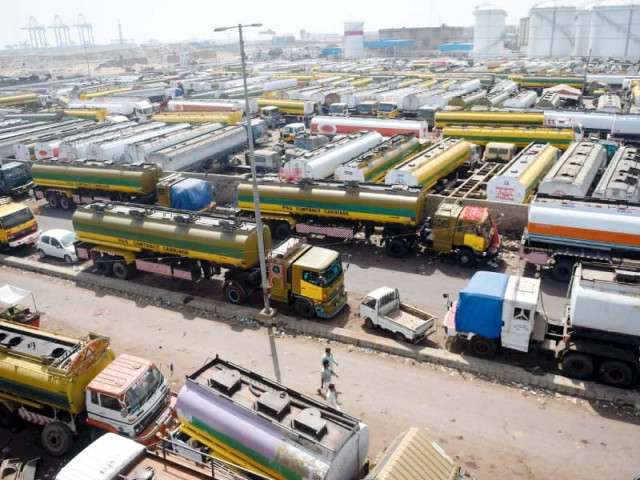
Oil tankers parked at a port terminal in Karachi. PHOTO: AFP
The imposition of the 1.8% Sindh Infrastructure Development Cess by the provincial government has delayed the clearance of oil products at Karachi port, raising fears of a nationwide fuel supply shortage.
A 1.8% drop could increase the cost of petroleum products by more than Rs 3 per litre. Enforcing this withdrawal will directly affect consumers even though fuel prices are regulated.
The Oil Companies Advisory Council (OCAC) has written to Sindh Chief Minister Murad Ali Shah alerting him to the situation. According to OCAC, cargoes of petroleum products currently being unloaded, as well as vessels docked at ports, require immediate customs clearance.
The letter said that the Pakistan State Oil tankers – MT Islam 2 and MT Hanifa – are docked and awaiting customs clearance. He added that the oil stocks at the Keamari Oil Terminal are running out and the two vessels docked at the Karachi Port Trust (KPT) must be cleared by customs immediately.
“Only after customs clearance can the continuity of the oil supply chain across the country be ensured.”
The letter warned that if Wafi Energy’s oil cargo and Parco’s crude oil cargo arriving at KPT on Tuesday were not cleared, the problem would intensify. The implementation of the Infrastructure Development Sanitizer has exposed the downstream oil industry to serious financial and operational risks.
According to OCAC, the agricultural season is underway and under these conditions, there is a risk that the supply chain of petroleum products across the country will stop. Even after the problem is resolved, it may take up to two weeks for normal service to be restored.
OCAC urged the government to take immediate notice of the matter and address the crisis on an urgent basis.
Meanwhile, the Petroleum Marketing Association of Pakistan (OMAP) also warned that the 1.85% infrastructure development requirement and mandatory bank guarantee requirement could disrupt oil imports across the country.
In a letter addressed to Energy Minister Ali Pervez Malik, OMAP President Tariq Wazir Ali urged the federal government to immediately intervene and work with the Sindh government to avert an impending fuel crisis.
Ali warned that the Sindh government’s new policy poses a “serious threat” to the national oil supply chain. He warned that if the condition of the bank guarantee is not withdrawn, Pakistan’s oil imports could face severe disruptions, potentially leading to a nationwide shortage of petrol and diesel.
He added that oil marketing companies are already under heavy financial pressure due to delays in sales tax refunds, foreign exchange losses and low profit margins.
The new bank guarantee requirement, he said, could freeze working capital and make it impossible for companies to continue importing oil. The association warned that imposing the shutdown could delay oil imports at the Karachi port, leading to possible fuel pump depletion across the country.
OMAP appealed to the energy minister to hold direct discussions with the Sindh government and the Federal Board of Revenue to ensure that oil imports continue smoothly and that the nation is spared a fuel crisis.
“This issue requires urgent attention,” Ali stressed. “If timely measures are not taken, the country may face a severe fuel shortage, affecting both the economy and industry,” he added.
Representing all registered oil trading companies in Pakistan, OMAP reaffirmed its commitment to work with the government, but warned that without swift federal intervention, the situation could escalate into a full-blown energy crisis.
The Sindh government is yet to respond to a request for comment.
a href=”https://tribune.com.pk/story/2573298/nationwide-fuel-shortage-feared-as-sindhs-new-cess-stalls-oil-at-karachi-port”>Source link



