
.
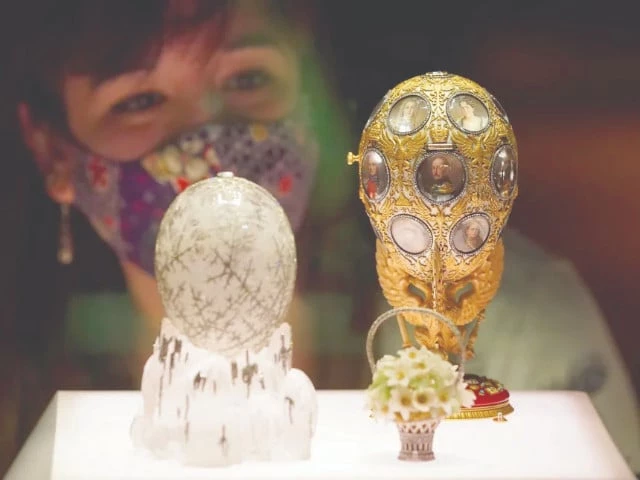
The famed 1913 ‘Winter Egg’ returns to the auction block in December, offering what experts believe may be one of the last opportunities for private collectors to secure a genuine Imperial Faberge masterpiece as global availability continues to shrink sharply.
Created for Russia’s imperial family and long regarded as one of the most extraordinary works of Peter Carl Faberge’s St Petersburg workshop, the egg is expected by Christie’s to fetch £20 million, with experts citing its rarity and exquisite craftsmanship.
The jeweler was one of only 50 Imperial Eggs commissioned between 1885 and 1916 by Tsars Alexander III and Nicholas II. With seven now missing and the vast majority owned by museums, only a few remain in private ownership, intensifying competition each time one hits the market.
Faberge expert Kieran McCarthy said only three eggs could realistically be obtained today, making this sale particularly significant. He described them as treasures whose rarity continues to increase, with private individuals often reluctant to part with their collections.
Christie’s believes that the estimate reflects both the reputation of the work and its special artistry. Carved from pure quartz and studded with thousands of small diamonds, the egg looks like a frozen object surrounded by frost and gently melts under the fantastic light of spring, creating an impression that collectors appreciate.
As with all Imperial Eggs, the creation hides a surprise within its shell. This example features a hanging basket of wooden anemones, carved from quartz and mounted on garnet-toned jade stems, symbolizing the first flowers of Russia’s early spring.
Its design is attributed to Alma Pihl, one of Faberge’s few female designers, whose inspiration reportedly came from frosting designs in a workshop display case. Although quartz is not a precious material, its fragility made its transformation into an egg a challenging artistic achievement.
The egg’s history was equally dramatic, passing from the imperial court to Soviet sales after the revolution, before entering British collections and disappearing for almost two decades. It reappeared in 1994, twice breaking auction records, and remained unseen on the market for over twenty years.
The current geopolitical climate, with tariffs affecting US imports and sanctions limiting sales linked to Russia, complicates predictions of its next destination. However, experts agree that its importance warrants strong interest from global institutions and private collectors seeking a rare surviving emblem of imperial craftsmanship.
a href=”https://tribune.com.pk/story/2579792/faberges-winter-egg-prepares-for-auction”>Source link



