
By Aflatoon
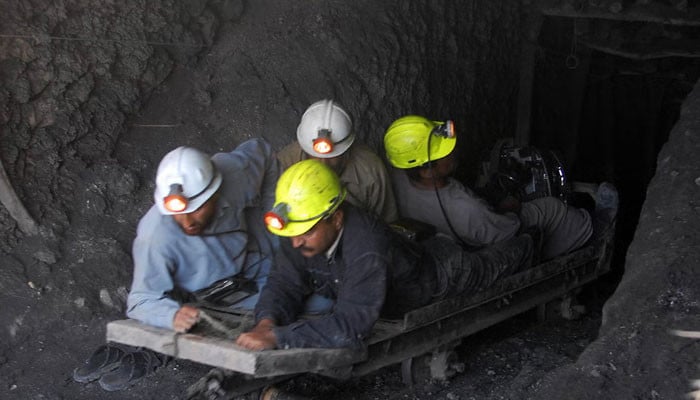
Forty-two men went into a coal mine in Balochistan. Thirty-four of them have not come out alive.
The mine owner says a methane explosion caused the collapse. That may well be right, and the chief minister has asked for a report, and there will be an inquiry, and I hope it is a good one.
But there is a sentence in the reporting that I have not been able to put down. The owner confirmed that all those trapped were residents of Shangla district in Khyber Pakhtunkhwa.
All of them. From one district. Roughly seven hundred kilometres from the hole they died in.
—
Shangla is a mountain district. It is poor, it is beautiful, and it exports men. If you have followed Pakistani mining disasters for any length of time you will have noticed the name before, because it appears with a regularity that has stopped being a coincidence and become a fact about the country.
The arrangement works like this. Balochistan has the coal. Balochistan does not, for the most part, supply the labour that digs it. The labour comes from Shangla, and from a handful of similar districts, on seasonal contracts, through intermediaries, and lives in camps near the pit.
So a man from a village in the Hindu Kush travels the width of the country to work underground in a province where he does not speak the language, has no family, cannot vote, and is not counted in the local population. When he dies, his body is taken to Quetta, and then it goes home.
Six other labourers were found dead in Balochistan this week too — abducted, then killed. Four from Punjab, two from Khyber Pakhtunkhwa. Different cause entirely, and I do not want to blur them together. But I notice the same sentence structure appearing again: the dead were from somewhere else.
—
I want to be careful here, because there is a version of this argument that patronises the men involved. Nobody is tricking anyone. A man from Shangla takes mine work in Balochistan because it pays better than anything available in Shangla, and he is an adult making a calculation about his family’s income. That is not exploitation in itself; it is what labour markets do, everywhere.
The problem is what the distance does to accountability.
A workforce that is local has a relationship with the place it works in. It votes there. It knows the inspector’s cousin. Its widows can walk to the provincial assembly. There is a thin, imperfect, but real thread connecting a dangerous workplace to somebody who has to face an electorate.
A workforce imported from seven hundred kilometres away has none of that thread. The men who die are not constituents of the government that regulates the mine. Their families grieve in a different province, on a different news cycle, in a language the provincial press does not publish in. The political cost of the thirty-fourth death is paid, if it is paid at all, in Shangla — where there is no mine to regulate.
That is not a conspiracy. It is just a gap. But safety regulation is enforced by pressure, and where there is no pressure there is, reliably, no enforcement.
—
The JUI-N spokesman said something plain this week that is worth repeating: thousands of miners have died in accidents like this over the years.
Thousands. Over years. In an industry that is not large.
We know what prevents methane explosions. Ventilation, gas monitoring, limits on how many men are underground at once, and inspectors who arrive unannounced and are not related to anybody. None of this is advanced technology. It is nineteenth-century engineering and twentieth-century administration, and we have neither reliably.
What we have instead is an inquiry, announced within hours, by a chief minister who is genuinely, I am sure, appalled.
—
I have read the sentence about Shangla several times now and what strikes me is how little it was made of. It appeared as a detail of identification — where to send the bodies. It is in fact the whole architecture of the thing, stated in one clause.
Forty-two men from one district, under the ground in another province, in a mine regulated by a government none of them can vote for.
Thirty-four did not come out.
—
Aflatoon is a satirist and observer of the Pakistani condition. His column, Intellectual Voices, appears in The Pakistan Daily.



