
From pre-dawn drills to subsidized stadiums, a new generation is saving six-century-old Kunqu from the brink
NANCHANG:
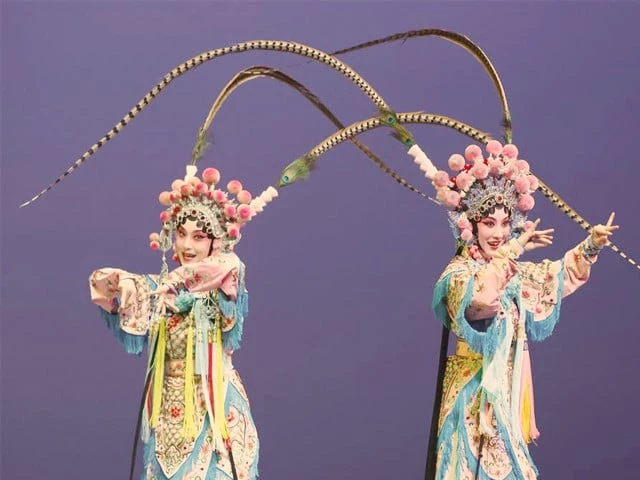
Centuries-old Kunqu opera is finding fresh energy in eastern China, where a new generation of performers embraces the demanding art form with discipline and heart, determined to keep a 600-year-old tradition alive on the modern stage.
For 22-year-old student Zou Yu at Fuzhou Vocational Technical College in Jiangxi province, the day begins at 5am, followed by eight uninterrupted hours of training covering basic skills, body movement, singing practice and disciplined stage rehearsals.
Her commitment comes at a price. Three years ago she fell on her face while trying to reverse, tearing her cheekbone and bleeding badly, but she refused to give up the course despite her parents’ fears and pleas.
She recalled being shocked the first time she watched ‘The Peony Pavilion’, saying its beauty was worth protecting for life, a belief that cemented her when her family urged her to give up the punishment routine.
Written in 1598, the same year as Shakespeare’s Romeo and Juliet, Tang Xiangzu’s drama follows Du Linyang, a young woman who dreams of love with the scholar Liu Mengmei, and helped define Kunqu, which Unesco listed as an intangible heritage in 2001.
This rigor grows out of love for the art and out of urgency. Around 2010, officials in Fuzhou warned of a looming talent gap, with the average age of performers over 48 and less than 10% of actors under 30.
The city responded in 2016 with an innovation project focused on new opera courses at Fuzhou Vocational Technical College, designed to train artists for local troupes and rebuild the artistic pipeline from the classroom to the professional stage.
Between 2017 and 2024, the city allocated 6.8 million yuan, about $966,000, to support the program, sending 198 graduates to troupes and raising the rate of new trainees in Fuzhou to about 40 percent.
Veteran performer Tang Guangming says the new generation is finally taking the stage. Local authorities now commission private troupes to stage free performances, including 190 in the Linchuan district alone last year, supported by a government budget of ¥665,000.
Zhu Xudong’s troupe felt the change. When it began performing in the historic Wenchangli district in 2021, ticket prices discouraged older fans, but subsidies now allow grandparents and new parents to attend, babies balanced on their knees.
Residents call the performances an uplifting cultural celebration. Zhu says his only goal is to share Fuzhou’s deep theater culture and ensure it is promoted by the students who are now confidently stepping into leading roles.
In 2016, a live production titled “Dreaming of the Peony Pavilion” turned the streets of Wenchangli into a flowing stage, using immersive sets and technology in 12 locations. As of 2018 it has attracted over 450,000 viewers, many discovering Kunqu through short videos.
Young performer Zhou Zhiqian insists that opera is not a sunset industry, arguing that videos, short clips and immersive experiences help traditional theater speak to audiences growing up on phones, while maintaining the precision and poetry that define Kunqu.
a href=”https://tribune.com.pk/story/2584387/chinas-ancient-opera-finds-a-young-heartbeat”>Source link



