
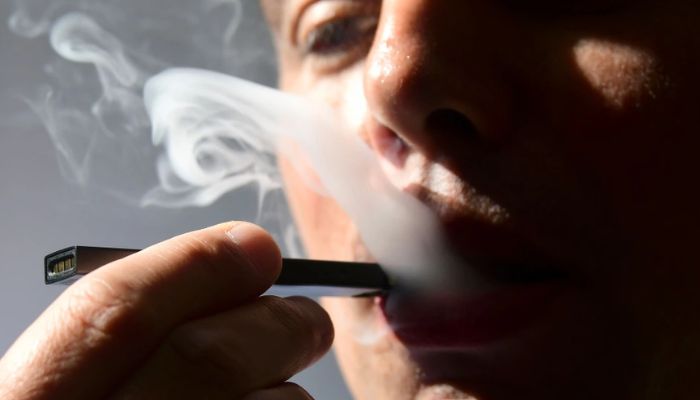
BRUSSELS: Hugely popular with young people for their dizzying array of flavors including apple, watermelon and cola, it’s time for disposable e-cigarettes in Belgium – the first EU country to ban them.
From January 1, the sale of single-use vapes will be banned in Belgium, an effort to protect the health of young people as part of a national anti-tobacco plan.
The European Union aims to achieve a smoke-free generation by 2040, reducing the smoking population of the 27-nation bloc from around 25% now to less than 5% of the total.
Some EU countries plan to accelerate this deadline.
Vapes are often promoted as less harmful than smoking traditional tobacco products.
They attract younger users with their colorful packaging and the promise of mouth-watering flavors and the benefit of avoiding that unpleasant smoke smell on the fingers.
But since e-cigarettes still contain nicotine, which is highly addictive, critics fear they could be a potential stepping stone to more traditional tobacco products.
“The problem is that young people start using vapes without always knowing their nicotine content, and nicotine is addictive,” said Nora Mallard, spokeswoman for the Alliance for a Tobacco-Free Society in Belgium.
“We have young people who say they wake up in the night to take a puff,” he said AFP. “It’s very worrying.”
Belgium prides itself on reacting quickly to the dangers of single-use e-cigarettes, which came on the market more than five years ago.
In 2021, the federal government submitted a proposal to the European Commission, the EU’s executive arm, to ban single-use vaping.
The commission, which must give its approval for any sales ban, gave Belgium the green light in March 2024, paving the way for a national law to come into force.
France has received EU approval for a similar ban.
Once in force, the French law will ban the production, sale and free offering of vaping, with fines of 100,000 euros ($104,000) for any violations.
Ecological disaster
Health authorities in France and Belgium say chronic nicotine consumption is particularly harmful to teenagers’ brains and could encourage the use of other drugs.
An EU study in 2023 found that the majority of e-cigarette users chose a rechargeable vape, but disposable versions were popular among 15- to 24-year-olds.
Easy to use and advertised everywhere on social media, disposable vapes are also attractive for their low cost.
At five or six euros, a single-use vapor is half the price of a pack of 20 cigarettes. Some allow up to 9,000 puffs, the equivalent of more than 300 cigarettes, according to experts.
Many tobacco shops in Brussels run out of disposable e-cigarettes, as refilling is impossible.
“I don’t understand why vaping is banned and not tobacco, which is also dangerous,” said one young user, Elias Ratby. AFP.
Others welcome the ban.
“I think it’s good to stop selling it,” Yona Bujniak said in central Brussels.
“There are a lot of young people who start out without necessarily thinking about the consequences,” he said.
Opponents also point to the “ecological disaster” caused by single-use vaping.
When seeking EU approval for its ban, Belgium argued that the single-use plastic vaporizer with the lithium battery is usually thrown away within five days of purchase.
In contrast, the rechargeable versions can last about six or seven months.
a href=”https://www.geo.tv/latest/582481-belgium-becomes-first-eu-country-to-ban-disposable-e-cigarettes”>Source link



