
The announcement marks the inclusion of Italian opera alongside other famous Italian practices such as pizza making and alpine summit climbing
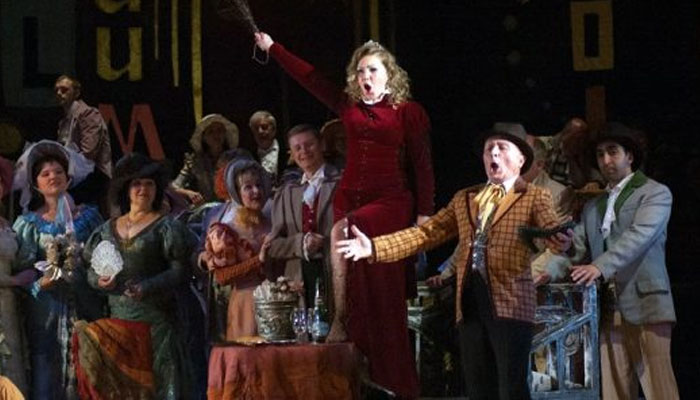
Unesco, the United Nations’ cultural agency, has granted heritage status to Italian opera singing, recognizing the four-century-old art form as part of its Intangible Cultural Heritage.
The announcement marks the inclusion of Italian opera alongside other famous Italian practices such as pizza-making and alpine summit climbing.
The origins of Italian opera go back to the late 1500s and early 1600s in Florence, where it flourished at the court of the Medici family. Characterized by intricate plots, elaborate sets and virtuoso singing, it has become a symbol of global excellence.
Italy’s Culture Minister Gennaro Sangiuliano celebrated the decision, saying: “This is an official confirmation of what we already knew: opera singing is a world excellence.”
Unesco described Italian opera singing as a “physiologically controlled mode of singing” that enhances vocal power in acoustic spaces such as auditoriums and churches.
Art promotes collective cohesion and socio-cultural memory and serves as a means of free expression and intergenerational dialogue.
The recognition comes on the eve of the traditional opening of the 2023-24 season at the La Scala opera house, an important moment in the world of opera. Claudio Monteverdi, an Italian composer of the 16th and 17th centuries, is considered the first great opera composer.
Italy boasts around 60 operas, a world record, with opera singers such as Luciano Pavarotti achieving stardom. Italian soprano Carmela Remigio expressed the emotional significance of the opera’s entry into humanity’s heritage, stating, “The song fades as you listen to it, but it touches you deeply.”
Unesco, at a meeting in Botswana focusing on the preservation of cultural heritage, also recognized various customs and traditions worldwide. These include Peruvian ceviche, rickshaw painting from Bangladesh, ceramic crafts from Uzbekistan and handloom weaving from the Ivory Coast, among others.
The Peruvian government welcomed ceviche’s inclusion, recognizing the people involved in its creation, from artisanal fishermen to farmers and chefs.
a href=”https://www.geo.tv/latest/522050-why-was-italian-opera-singing-awarded-unescos-cultural-heritage-status”>Source link



