
New rule allows US border agents to photograph non-citizens at all points of entry and exit across the country
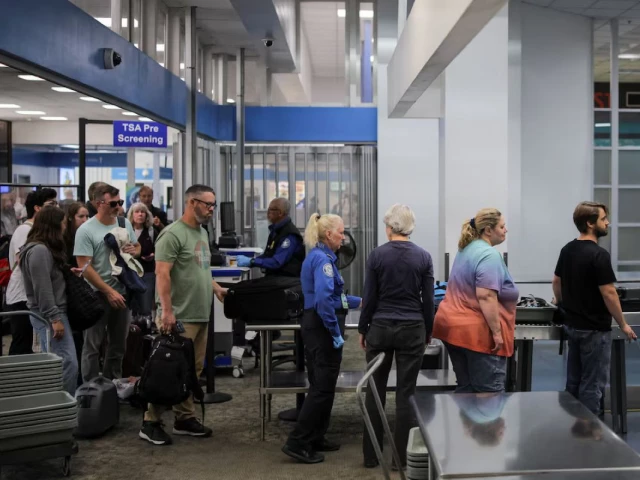
Travelers go through a Transportation Security Administration (TSA) security check at Hollywood Burbank Airport during the first day of a partial US government shutdown in Burbank, California, U.S., October 1, 2025. PHOTO: REUTERS
The United States will expand the use of facial recognition technology to track non-citizens entering and leaving the country in an effort to combat overstaying and passport fraud, according to a government document released Friday.
A new regulation would allow US border officials to require non-citizens to be photographed at airports, seaports, land crossings and other points of departure, expanding a previous pilot program.
Under the regulation, which will take effect on December 26, US authorities could also require the submission of other biometrics, such as fingerprints or DNA. It allows border authorities to use facial recognition for children under 14 and seniors over 79, groups currently exempt.
Read more: Six dead in US strike on suspected Venezuelan drug boat in Caribbean
The tighter border rules reflect a broader effort by US President Donald Trump to crack down on illegal immigration. While the Republican president has boosted resources to secure the US-Mexico border, he has also taken steps to reduce the number of people overstaying their visas.
The growing use of facial recognition at US airports has raised privacy concerns among watchdog groups worried about government overreach and misidentification. A 2024 report by the US Civil Rights Commission said tests showed facial recognition systems were more likely to misidentify blacks and other minority groups.
The Congressional Research Service estimated in 2023 that about 42% of the 11 million immigrants living in the United States illegally had overstayed their visas.
Read also: Trump warns Israel it will lose US support over West Bank annexation
Congress passed a 1996 law that mandated the creation of an automated entry-exit system, but it was never fully implemented. U.S. Customs and Border Protection already uses facial recognition for all commercial air entries, but only records exits at certain locations, the regulation says.
CBP estimates that a biometric entry-exit system could be fully implemented at all commercial airports and seaports for both entry and exit within the next three to five years.
a href=”https://tribune.com.pk/story/2574039/us-to-expand-facial-recognition-at-borders-to-track-non-citizens”>Source link



