
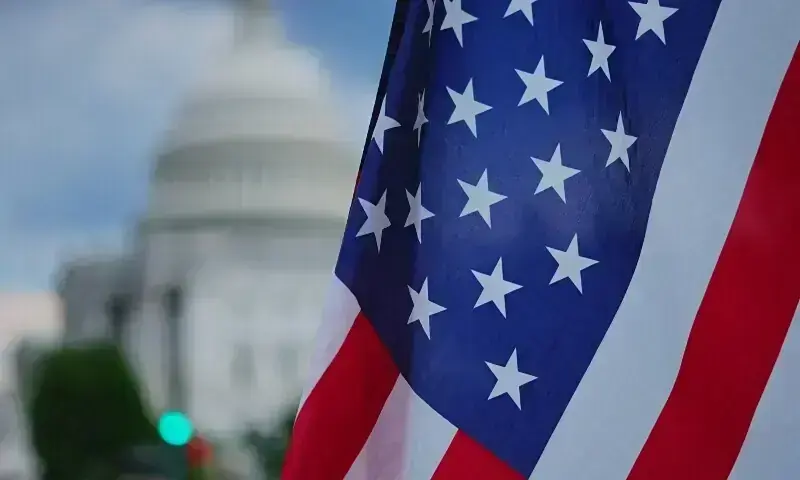
Voting in the US midterm elections has begun, with North Carolina the first state authorised to send out ballots — and with the rules governing them still in litigation (Dawn).
Another 18 states are due to start distributing ballots around 45 days before election day on 3 November.
What is being contested
A March executive order from President Donald Trump would require states to supply voter lists through a federal postal portal and put individual barcodes on ballot envelopes, with the US Postal Service empowered to reject mailings that fail its standards.
A federal judge has extended a temporary block on those restrictions.
Why the judge acted
A whistleblower alleged the postal verification system was “rushed, chaotic, and fundamentally flawed”.
The mechanism that follows is the part worth understanding: under the proposed rules, a single barcode failure could cause an entire batch — thousands of ballots — to be rejected. That is not a marginal error rate. It is a design in which one scanning fault disenfranchises a precinct.
What is at stake
Republicans hold narrow congressional majorities. A Cornell University forecast gives Democrats an eight-in-ten chance of taking the House, projecting a 226-209 Democratic majority.
Mail ballots have skewed Democratic in recent US cycles, which is the context in which both the executive order and the litigation are being read.
The position as it stands
Ballots are going out under existing state rules while the block holds. If the block is lifted mid-cycle, states will be part-way through distributing ballots under one set of requirements and asked to finish under another — the scenario election administrators have warned about, and one that has not been tested at national scale.
No final ruling has been issued.
[Image: Reuters via Dawn]



