
- The report stresses the need for speedy restoration of law and order.
- Turk says the transition to Bangladesh can ensure good governance.
- “Accountability for breaches is key to the future,” he says.
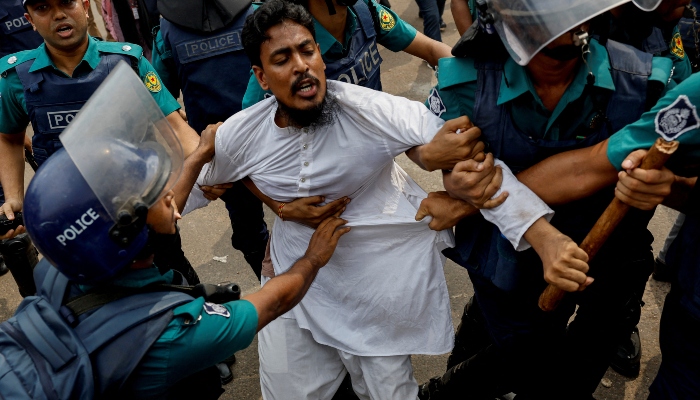
GENEVA: After more than a month of violence in Bangladesh in the wake of anti-government protests, the United Nations said on Friday there were “strong indications” that Bangladeshi security forces used “unnecessary force” in dealing with a student uprising in ousted Prime Minister Sheikh Hasina.
Hasina, 76, fled to neighboring India by helicopter last week as protesters flooded the streets of Dhaka in a dramatic end to her 15-year rule.
More than 450 people were killed in the weeks of protests that led to her ouster on August 5.
Hasina’s government has been accused of many abuses during its 15 years in power, including mass detention and the extrajudicial killing of political opponents.
“There are strong indications, warranting further independent investigation, that the security forces used unnecessary and disproportionate force in their response to the situation,” the UN human rights office said in a preliminary report.
“The alleged violations included extrajudicial killings, arbitrary arrests and detentions, enforced disappearances, torture and ill-treatment, and severe restrictions on the exercise of freedom of expression and peaceful assembly.”
The report emphasized the need for the rapid restoration of law and order and the need to prevent further loss of life, violence and reprisals.
The interim government replacing Hasina, led by Nobel laureate Muhammad Yunus, has called on UN investigators to investigate the violent “atrocities” that accompanied her ouster.
Yunus, 84, returned from Europe last week to lead an interim administration facing the monumental challenge of guiding democratic reforms.
UN human rights chief Volker Turk said the move to Bangladesh was an opportunity to ensure governance is anchored in rights and the rule of law.
“The future transition presents a historic opportunity to reform and revitalize the country’s institutions, to restore fundamental freedoms and political space, and to involve everyone in Bangladesh in building the future,” he said.
“Accountability for violations and justice for victims are key to the way forward and should be accompanied by a national healing process,” he said.
a href=”https://www.geo.tv/latest/559526-un-says-strong-indications-bangladesh-security-forces-used-unnecessary-force”>Source link



