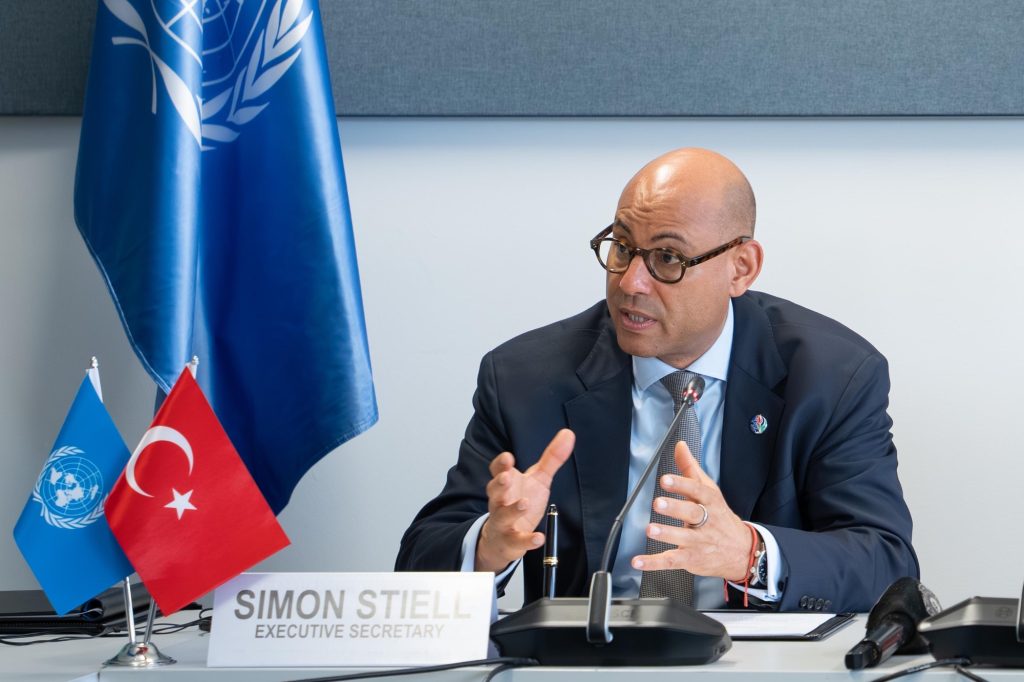
BONN, Germany – June 18, 2026— UN Climate Change Executive Secretary Simon Stiell has called on countries to intensify efforts to address climate change, warning against delays and political divisions as the UN June Climate Meetings (SB64) concluded in Bonn, Germany.
Speaking at the closing session on Thursday, Stiell acknowledged that significant differences remain among parties but said negotiators had made meaningful progress in several key areas over the ten-day conference.
He highlighted advances on the Just Transition Work Programme, saying delegates had taken important steps toward turning commitments on a just transition into practical outcomes for workers and communities. Progress was also reported on Action for Climate Empowerment (ACE), aimed at strengthening public participation and societal engagement in climate action.
Stiell welcomed announcements under the COP31 Action Agenda, including new targets on electrification, city resilience, energy efficiency, and waste management. He emphasized that formal negotiations and the Action Agenda are complementary tracks that must both deliver tangible results at COP31.
Despite the progress, Stiell expressed concern over ongoing geopolitical tensions affecting climate negotiations. He warned against attempts to revisit previously agreed decisions, renegotiate established targets, or weaken existing commitments under the Paris Agreement.
“All Parties must be comfortable and confident in restating our existing global commitments,” he said, referring to pledges made during the first Global Stocktake, commitments related to the 1.5°C temperature goal, Loss and Damage funding, the $300 billion climate finance target, the broader $1.3 trillion financing framework, and efforts to triple adaptation finance.
The UN climate chief also criticized what he described as a “you-first” approach in negotiations, where some groups refuse to move forward unless others act first. He cautioned that such tactics risk creating deadlock at a time when accelerated implementation is urgently needed.
Looking ahead, Stiell called on governments to involve ministers in resolving the most difficult issues during the intersessional period before COP31. He stressed the importance of leadership from Türkiye and Australia, as well as continued support from Azerbaijan, Brazil, and Ethiopia.
The Executive Secretary also noted that the UN Climate Change Secretariat is examining ways to improve the efficiency of the climate process. A group of independent experts has submitted recommendations, and a summary of their proposals will be released in the coming weeks.
Thanking delegates, observers, and UN staff for their efforts throughout the conference, Stiell concluded with a reminder that climate action requires cooperation rather than competition.
“As we work to protect eight billion people from the climate crisis, it is cooperation—not fierce competition—that we need,” he said.
The Bonn Climate Conference serves as a key milestone on the road to COP31, with negotiators expected to continue discussions in the months ahead on climate finance, adaptation, mitigation, and implementation of existing commitments.