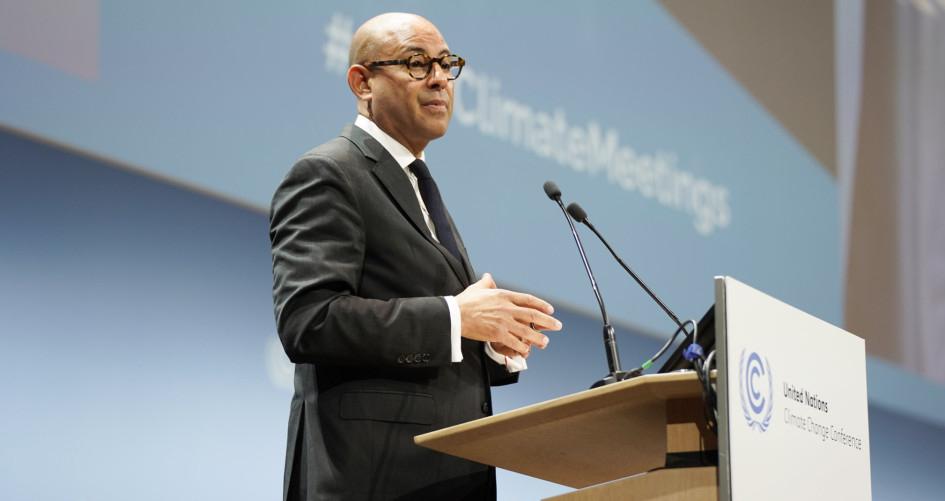
UN Climate Change Executive Secretary Simon Stiell has emphasized that the United Nations’ UN80 reform initiative is designed to strengthen coordination and efficiency across the UN system while preserving the authority of countries under the UN climate process.
Speaking during a briefing at the UN June Climate Meetings in Bonn on Tuesday, Stiell described UN80 as a modernization effort launched by UN Secretary-General António Guterres to mark the 80th anniversary of the United Nations. The initiative seeks to make the UN system more efficient, cohesive, and responsive to current global challenges amid growing demands and limited resources.
https://unfccc.int/news/un-climate-chief-remarks-at-un80-briefing
“UN80 is not just about reforms to address inefficiencies,” Stiell said. “It’s also a huge opportunity to make the UN system more cohesive, more streamlined and nimble, so together we can work with member states and others to deliver far more real-world impact.”
Addressing concerns about potential changes to the climate negotiations process, Stiell stressed that UN80 will not alter the legal foundations of the UN Framework Convention on Climate Change (UNFCCC) or the Paris Agreement.
“It is not a mechanism by which the primacy and ownership of the Parties to the Convention and Paris Agreement is going to be altered,” he said. “UN80 does not change the Convention, the Paris Agreement, or the authority of Parties.”
Stiell highlighted that climate multilateralism has already produced significant progress, noting that projected global warming has been reduced from levels exceeding 4 degrees Celsius to the mid-2-degree range. He also pointed to a major milestone achieved last year when renewable energy surpassed coal as the world’s largest source of electricity generation.
However, he acknowledged that substantial ambition and implementation gaps remain, driven by factors such as insufficient political will and inadequate climate finance.
As part of the reform process, Stiell is co-chairing Work Package 27 (WP27) alongside UNEP Executive Director Inger Andersen. The workstream focuses on improving coordination among UN agencies involved in environmental and climate-related activities.
According to Stiell, WP27 aims to strengthen coherence, reduce fragmentation, improve access to knowledge and data, and help countries receive more coordinated implementation support.
He stressed that the initiative is not intended to merge climate action into broader environmental programs but rather to improve collaboration across the UN system.
“The climate crisis is increasingly a whole-of-government, whole-of-economy challenge affecting every sector of society,” he said.
Work Package 27 currently involves approximately 29 UN entities and seeks to address connections between climate change and issues such as economic growth, jobs, public health, and international peace and security.
Stiell outlined three guiding principles for the workstream: respecting existing mandates and institutional autonomy, ensuring reforms are guided by science and support countries on the ground, and making the UN system easier for member states to navigate.
Recommendations emerging from WP27 and other UN80 workstreams will be submitted to the Secretary-General for consideration. Stiell noted that the proposals remain in draft form and are still under consultation with UN management.
The UN80 initiative includes more than 30 work packages and is expected to shape future efforts to improve coordination and effectiveness across the United Nations system while supporting countries in addressing increasingly complex global challenges, including climate change.