

- Bill to add $ 3.4 trillion to US debt for a decade.
- It contains many of Trump’s top domestic priorities.
- Dem Jeffries sets a record with a challenging 8 -hour, 46 -minute speech.
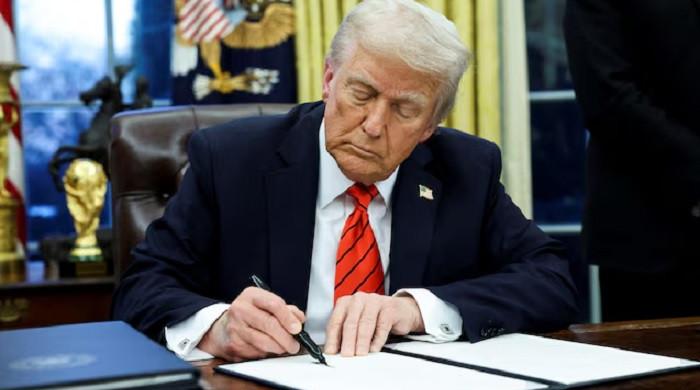
US President Donald Trump will sign the huge tax and bill that defended Friday at 5 pm (Et) -3 am Saturday (PST), the White House said on Thursday.
Trump’s tax legislation cleared its final obstacle to Congress, USA on Thursday, as the Republican -controlled House of Representatives narrowed a huge package that would fund its domestic agenda and push for millions
The 218-214 vote is equivalent to a significant victory for the Republican president, who will finance the suppression of immigration, will make the 2017 tax cuts and deliver new tax reliefs he promised during his 2024 campaign.
It also cuts health and food cleaning programs and zero from dozens of green energy motivation. It will add $ 3.4 trillion to the Nation’s $ 36.2 trillion debt, according to the Congress’s non -profit budget agency.
Despite Trump’s party concerns about the price of the 869 -page bill and its impact on healthcare programs, in the end only two of the 220 Republicans of the House voted against him after an overnight stay. The bill has already cleared the Republican controlled Senate with the narrowest possible margin.
The White House said Trump will sign it in the law at 5 pm ET (2100 GMT) on Friday, on July 4th Day holiday.
Republicans have said the legislation would reduce taxes for Americans throughout the spectrum of income and push economic growth.
“This is fuel of jet fuels for the economy and all boats are going to increase,” said Mike Johnson’s speaker.
Every Democrat in Congress voted against him, blasted the bill as gifts for the rich who would leave millions of uninsured.
“The focus of this bill, the justification for all cuts that will harm everyday Americans is to provide huge tax reliefs for billionaires,” said Democratic leader House Hakeem Jeffries in a 46 -minute history.
Trump continued pressure throughout, Cajoling and threatening legislators as they pushed them to finish the job.
“For the Republicans, this should be an easy voting yes. Laughing!” He wrote in the social media.
Although about twelve Republicans of the House threatened to vote against the bill, only two ended up doing it: Brian Fitzpatrick of Pennsylvania, a center and Thomas Massie of Kedaki, a conservative who said he did not cut enough.
Marathon weekend
Republicans fought to meet Trump’s July 4th deadline, worked last weekend and holding discussions over the House and Senate all night. The bill passed the Senate on Tuesday with a 51-50 vote in what he saw Vice President JD Vance vote for the vote.
According to the CBO, the bill would reduce tax revenue by $ 4.5 trillion over 10 years and reduce spending by $ 1.1 trillion.
These spending cuts are largely derived from Medicaid, the health program covering 71 million low -income Americans. The bill will tighten registration standards, establish a job requirement and tighten a funding mechanism used by states to boost federal payments – changes that will leave about 12 million people uninsured, according to the CBO.
Republicans added $ 50 billion to health providers for agricultural health to deal with concerns that these cuts will force them not to attempt.
Non -profit analysts have found that richest Americans will see the greatest benefits of the bill, while people with lower incomes will effectively see their income as security cuts will offset their tax cuts.
The increased debt load created by the bill will also transfer effective money from younger to older generations, analysts say. Moody’s downgraded US debt in May, citing growing debt and some foreign investors say the bill makes US public bonds less attractive.
The bill increases the US debt ceiling by $ 5 trillion, preventing the prospect of a short -term short -term. However, some investors are concerned that debt protrusion could limit financial incentives to the bill and create a long -term risk of higher borrowing costs.
On the other hand of the book, the bill attributes increases in taxes that were due to hit most Americans at the end of this year, when Trump 2017’s individual and tax cuts had to expire. These cuts are now permanent, while tax reliefs for parents and businesses are expanding.
The bill has also set new tax relief for income, overtime, elderly and car loans, fulfilling the promises of the Trump campaign.
The final issue of the account includes more important tax cuts and more aggressive healthcare cuts than the original version that the house spent in May.
During the Senate discussions, Republicans also threw a provision that would have banned state -level regulations on artificial intelligence and a “counterparty tax” in foreign investment that caused alarm on Wall Street.
The bill is likely to appear clearly in the 2026 interim elections, when the Democrats hope to re -establish at least one Congress Chamber. Republican leaders argue that tax reliefs of the bill will lose the economy before then and many of the benefits are not scheduled to start until these elections. Polls show that many Americans are worried about the cost of the bill and their impact on people with lower incomes.
a href=”https://www.geo.tv/latest/612293-trump-to-sign-massive-tax-cuts-debt-boosting-bill-friday-after-narrow-house-win”>Source link



