The nationwide goods transport strike has fractured rather than ended, with smaller carriers returning to work while the heavy vehicles that matter most to trade stay off the road (Dawn).
The Pakistan Transport Council has called off its strike after negotiations with the government, with representatives of 15 goods transport associations signing the agreement. Oil tankers separately withdrew after the Oil and Gas Regulatory Authority accepted their demand for a 7 to 8 per cent increase in freight charges.
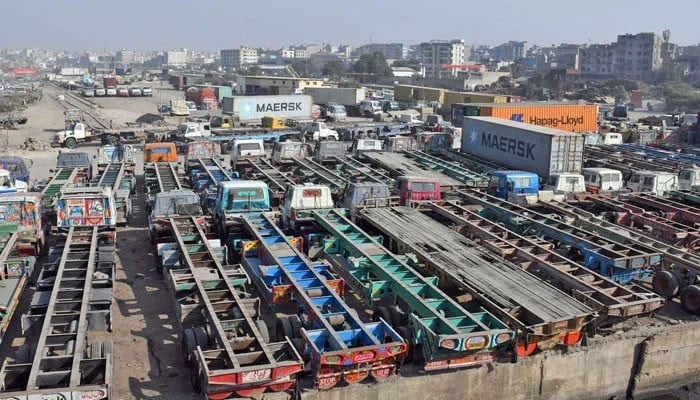
Container trailers and inter-provincial trucks have not moved. “The smaller goods carrier vehicles have called off the strike, but the large vehicles that move between provinces and carry heavy loads are still off the roads,” said All Pakistan Goods Transport Owners Association President Muhammad Owais Choudhry. Edible oil tankers are also still out.
Container operators say their key demands have not been met.
That split is the whole picture. The government has settled with the groups whose grievances could be met by administrative concessions, and not with the group whose central demand — an end to the daily revision of diesel prices — would require unwinding a pricing mechanism the Fund programme and the levy collection both rest on.
What the Pakistan Transport Council secured is instructive: no toll tax increases for one year, removal of additional toll plazas, implementation of automated toll systems, and release of vehicles against bank guarantees under SRO 1619. Real, concrete, and all of it about tolls and procedure rather than fuel.
Communications Minister Abdul Aleem Khan heads the special committee formed by the prime minister to negotiate, and had earlier directed authorities to address complaints about weighing stations.
Effects persist at Karachi Port and Port Qasim, where the Transport Council has announced restoration efforts but the continued absence of container and heavy truck operators means disruption is not over. The All Pakistan Textile Mills Association has warned that export containers, imported cotton and locally procured cotton are all stranded, with mills holding low stocks at the end of the season.
The container operators’ outstanding demands include replacing daily diesel price revisions with monthly ones, restoring toll rates to their June 1, 2024 level, and cutting the withholding tax on cargo transporters from 7 per cent to 2 per cent.
The strike began on August 8.