
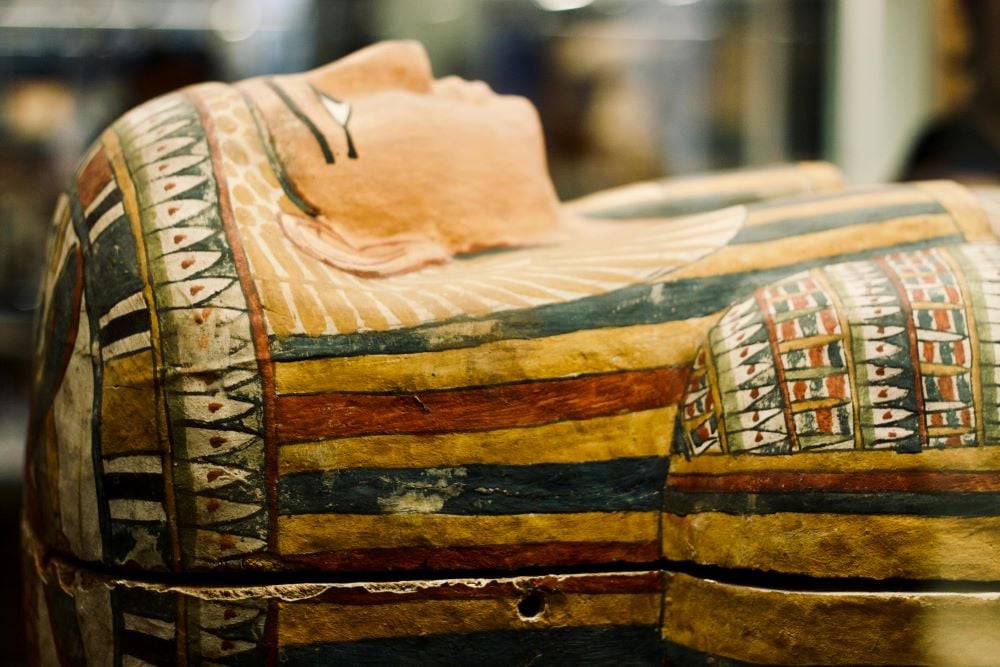
When one thinks of mummies, the first image that comes to mind is often a preserved corpse with a mold, decomposed smell. But recent research has revealed a stunning twist: well -preserved Egyptian mummies emit truly pleasant aromas.
Cecilia Bembibre, director of research at the University of London’s Sustainable Heritage Institute, led a group of scientists who studied the odors of ancient Egyptian residues. They found that the smell of mummified bodies was “woody”, “spicy” and “sweets”, with flowers of notes that may come from pine and breeders resins used during the tap procedure.
The study, published Thursday in Journal of the American Chemical SocietyHe analyzed the odors from nine mummies, some of which were over 5,000 years old, were stored at the Egyptian Museum in Cairo. The researchers used a chemical analysis and a group of human sniffers to evaluate the smell profile, surprising the team with the pleasant results.
Bembibre explained that the fragrance played an important role in ancient Egyptian mummification practices. Oils, candles and balm were used not only to maintain the body but also to ensure the safe journey of spirit to life after death. The pleasant fragrances were associated with purity and deity, while the unpleasant scents were considered indications of corruption.
In their attempt to understand these ancient fragrances, the researchers avoided invasive sampling methods and instead were based on modern technical means to measure the air molecules released from mummies. They confirmed that the perfumes came from the mummies themselves, and not from disintegration or external infectious agents. “We were quite anxious that we could find notes on disintegrated bodies, but that wasn’t the case,” said Matija Strlič, a chemistry professor at the University of Ljubljana, adding that the museum environment favored the mummy.
The innovative approach to the study could provide information on the social class of mummies based on their profiles, providing valuable information on curators and archaeologists. Strlič believes that the findings could be applied to the preservation of other collections of museums, making it a significant discovery in heritage preservation.
While the research has revealed interesting information, Barbara Huber, a postdoctoral researcher at the Max Planck Institute of Geohropology in Germany, noted that the smells found today are not the same as those from the time of mummification. Over thousands of years, natural processes such as evaporation and oxidation have changed the original smell profiles.
However, Huber acknowledged the importance of this research to understand how compounds in the mummies can either maintain or degrade their remains, helping to protect these priceless objects for future generations.
Looking forward, researchers hope to develop a “smell” that will recreate the smells they detect, reinforcing the museum’s experiences for future visitors. “Museums have been called white cubes, where you notice remotely,” Bembibre said. “By adding the sense of odor, we can deal with history in a more experiential and meaningful way.”
a href=”https://tribune.com.pk/story/2528564/study-finds-pleasant-scents-emanating-from-ancient-egyptian-mummies”>Source link



