
Islamabad:
The Pakistan and the International Monetary Fund (IMF) were unable to complete the second review talks within the deadline due to “pending issues” on the timetable of the Diagnostic Evaluation Report and Corruption Diagnostic Evaluation Report.
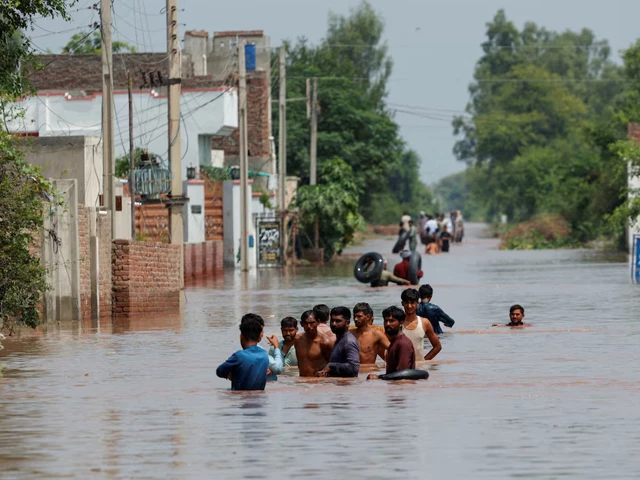
Officials said Pakistan estimates that total financial losses from last year’s floods in the RS744 billion, while IMF rating was about 585 billion Rs, with tax losses even lower.
According to the negotiators, other unresolved issues included the consequences of these revised flood estimates on the primary target of the surplus budget and the impact of the upward revision on the rate of GDP growth of the last budgetary year on the projected revenue.
On the same day, the revision had to be finalized, the Ministry of Planning convened a meeting of the National Account Committee, which approved a revised 3.04% increase for the latest use. Employees said the revision would further reduce the tax ratio to GDP for this period, which means that the Federal Revenue Council (FBR) would now require additional efforts to achieve this year’s 11% of the GDP revenue target.
The IMF mission returned to Washington on Thursday without announcing a personnel-level agreement to present Pakistan’s case to the IMF Executive Council for two costs approval of $ 1.2 billion in separate programs.
“The IMF team and the authorities will continue their policy discussions in order to settle any exceptional issues,” said Iva Petrova, head of the IMF mission, in a statement issued by the world lender.
Sources reported that due to the absence of fiscal evaluation of flood damage and Pakistan’s insistence on the downward revision of targets, the staff level agreement could not be announced. They said the IMF was ready to adjust the goals, but linked it to the final assessment of these damage.
The Ministry of Planning showed financial losses of 744 billion RS in the IMF.
The IMF said during the negotiations that he was ready to re-examine the objectives during the next review of the program and until then the Pakistani authorities would have to adhere to the agreed objective for the July-December period of this year, the sources added.
The IMF’s statement added that his team, led by IVA Petrova, visited Karachi and Islamabad from September 24 to October 8 to conduct discussions on the second review under the widening installation (EFF) and the first review of the RSF and RSF.
“The IMF mission and the Pakistani authorities made significant progress towards reaching an agreement at the level of staff in the second review in the context of extensive 37 -month regulation in the context of the extensive installation of mutual funds and the first review of the 28 -month regulation and the resistant installation.”
“The implementation of the program remains strong and widely aligned with the authorities’ commitments,” he added.
However, the IMF did not fully use the word aligned, as the government could not support its words so as not to grant new tax concessions and implement reforms to state -owned enterprises.
The tax collection remained another weak area and the two sides were discussed downward revision of the target. The IMF also called for the Public Sector Development Program by 300 billion Rs to offset the impact of financial losses and the lower tax collection.
The IMF’s statement further emphasized that significant progress was made in discussions in several areas, including maintaining fiscal integration to strengthen public finances, while providing the necessary flood recovery support and ensuring that inflation remains resistant to its SBP.
However, both Prime Minister Shehbaz Sharif and Finance Minister Muhammad Aurangzeb have repeatedly asked the Central Bank to reduce interest rates, according to the two.
The IMF said that the restoration of energy viability of the energy sector by applying regular duties and cost reduction reforms was also significant.
Sources reported that one of the issues was the target of reducing circular debt to the power department, which insisted that the 505 billion Rs would be added more to the flow of debt against the IMF’s desire to reduce losses to RS200 billion.
The IMF said progress was made to promote structural reforms to reduce state footprint, strengthen governance and transparency, promoting a more competitive business environment and liberated markets of basic products.
Productive discussions were also held on the agenda of authorities’ reforms to enhance climate durability, including completing reform measures under the RSF, the global ender said.
The IMF team also expressed its sympathy to those affected by recent floods.
Governance report
Sources reported that one of the pending issues was the publication of the evaluation report of government and corruption. The original deadline for the publication of the report was at the end of July, and its implementation plan had to be published by the end of October.
Both sides were negotiating mid -November for the publication of the report in mid -December to publish the implementation plan, sources added. If there is consensus on these dates, the staff level agreement will be announced soon, the sources have added.
In the diagnostic report of governance and corruption, the IMF had recommended measures to enhance judicial integrity, addressing the conflict of interest and improving performance and service. The global lender has also advised the Federal Council of Ministers, the Supreme Judicial Council and the Provincial Supreme Courts through their respective governments to publish annual reports.
Reports should list the steps taken to strengthen judicial integrity, including statistics on complaints received, the disposal of complaints and actions taken.
To strengthen the judicial integrity, the IMF informed Pakistan “reinforces the integrity and provisions of conflict of interests for all judicial staff and revision and increasing transparency around payments and grants to judicial staff”.
The report also emphasized that the recognition of politically exposed persons remained heterogeneous and there were inadequate red flag that could detect the abuse of the public office in Pakistan.
The report further stated that reports of reports to regulatory authorities often did not clearly have clarified about corruption specifics and risk indicators. Sources reported that the IMF was of the view that despite the guidance of trading reports and red flag indicators for various areas and typologies, reference institutions have limited access to typologies that reflect the common methods of legalizing corruption receipts.
GDP growth
The government has approved on Wednesday a 5.7% economic growth rate for the last quarter of the previous financial year, on the rear of 20% industrial production growth, which everyone believes are badly suffering due to strict economic conditions.
This has changed many cases of the IMF program and authorities now need more time to revise the consequences of the sources.
NAC approved a 5.7% growth rate for April-June quarter, compared to only 2.8% in the previous quarter, according to data released by the Pakistan Office of Statistics (PBS) after the NAC meeting.
a href=”https://tribune.com.pk/story/2571622/imf-talks-stall-over-flood-loss-dispute”>Source link



