

- Higher invoices may affect global supply chains and inflation.
- Several major commercial partners ensure reduced tariffs.
- Invoices increase US federal revenue, most sectoral duties.
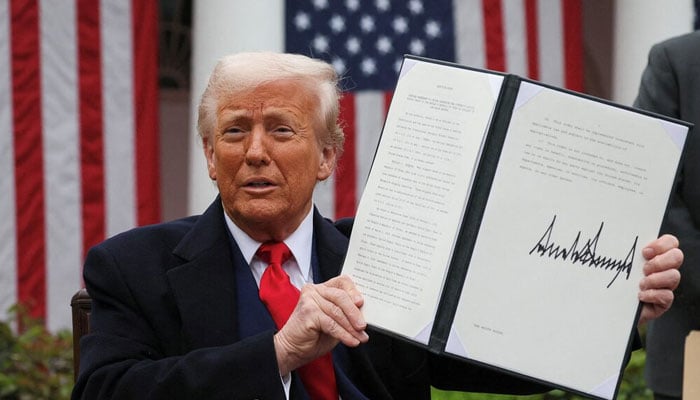
President Donald Trump’s highest pricing rates from 10% to 50% in dozens of commercial partners began on Thursday, testing his strategy for shrinking US trade deficiencies without huge disorders in global supply chains, higher inflation.
The American Customs and the Border Protection Service began collecting the highest invoices at 12:01 am. EDT (0401 GMT) after weeks of anxiety about Trump’s final invoices and frantic negotiations with major commercial partners who sought to reduce them.
Goods loaded on ships linked to the US and during the transportation before midnight may enter lower duties before October 5, according to a CBP announcement to the loaders issued this week. Imports from many countries had previously undergone a basic 10% introductory duty after Trump stopped higher rates announced in early April.
But since then, Trump has often modified its invoice, slap, some countries with much higher rates, including 50% for goods from Brazil, 39% from Switzerland, 35% from Canada and 25% from India. It announced a separate 25% invoice on Wednesday on Indian goods that will be imposed on 21 days on the markets of Russian oil in South Asia.
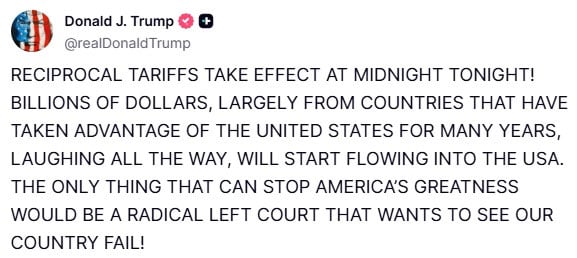
“Mutual invoices come into force at midnight tonight!” Trump social social told Truth just before the deadline.
“The billions of dollars, mainly from countries that have exploited the United States for many years, laughing all the way, will start flowing into the US.
Eight major commercial partners representing about 40% of US trade flows have reached framework agreements for commercial and investment concessions in Trump, including the European Union, Japan and South Korea, reducing their basic rates to 15%.
Britain won 10%, while Vietnam, Indonesia, Pakistan and the Philippines secured interest rates to 19%or 20%.
To another position as mentioned by AFPTrump said “billions of dollars in invoices” were now running in the US after August 7th for the implementation of new duties.
“It’s midnight !!! Billions of dollars in invoices are now flowing,” he said.
“For these countries, they are less inflatable news,” said William Reinsch, a senior associate and commercial expert at the Washington Strategic and International Studies Center.
“There will be some rearrangement of the supply chain. There will be a new balance.
Countries with punitive high duties, such as India and Canada, “will continue to fight trying to correct it,” he added.
Trump’s order has clarified that all the goods that have been decided to be transferred from a third country to avoid the highest US invoices will be subject to an additional 40% import task, but its administration has issued a few details on how these goods will be identified.
Trump’s 31 July pricing order imposed more than 10% on 67 commercial partners, while the percentage was kept at 10% for those who are not reported. These import taxes are a part of a multilevel duty strategy that includes sectoral invoices based on national security in semiconductors, medicines, cars, steel, aluminum, copper, timber and other goods. Trump said on Wednesday that microchips could reach 100%.
China is in separate pricing and will face a possible increase in duties on August 12, unless Trump approves an extension of a previous truce after talks last week in Sweden.
She has said that she can impose additional invoices on the markets of China’s Russian oil, as she seeks to push Moscow to end her war in Ukraine.
Invoices increase prices
Trump has offered a huge increase in federal revenue from import tax collections, which are ultimately paid by companies that import goods and consumers of the finished products.
The highest rates will add to the total, which reached a record of $ 27 billion in June. US Finance Minister Scott Bessent said US duties could exceed $ 300 billion a year.
The move will drive the average US duties to about 20%, the highest in a century and from 2.5% when Trump assumed duties in January, the Atlantic Institute is estimated.
Data from the Department of Trade released last week showed more evidence that invoices began to drive US prices in June, including home furniture and durable home equipment, recreational goods and motor vehicles.
The costs of Trump’s invoice war are increasing for a wide range of companies, such as Bellweethers Caterpillar, Marriott, Molson Coors and Yum Brands. Overall, world companies that have reported profits so far this quarter are considering a hit of about $ 15 billion in profits in 2025, Reuters“World pricing trackers shows.
a href=”https://www.geo.tv/latest/617702-trumps-higher-tariff-rates-hit-goods-from-major-us-trading-partners”>Source link



