The standing committee backed the government’s proposal to impose a 17% tax on high-efficiency irrigation equipment. PHOTO: REUTERS
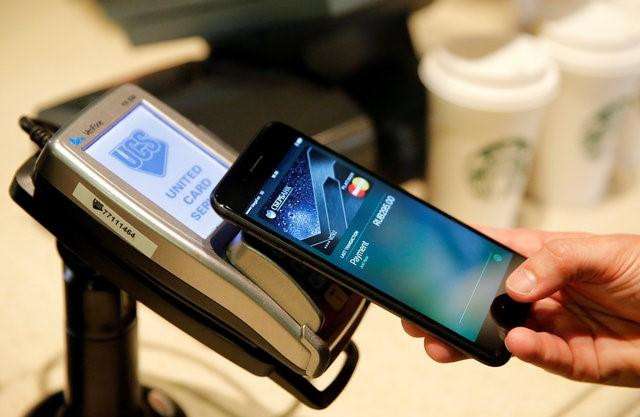
The government is drawing up a comprehensive legal package to amend existing laws and empower local governments and provincial authorities to mandate the availability of digital payment solutions to businesses and retailers as part of its push towards a cashless economy.
According to Treasury sources, a draft legal package is being developed to amend the Payment Systems and Electronic Funds Transfer Act, 2007 to make it mandatory for all businesses to offer at least one digital payment method – including QR code facilities. The proposed amendments would also empower local governments to ensure compliance and enforcement.
Capital Development Authority (CDA) and Islamabad Capital Territory (ICT) statutes and regulations are also being revised to mandate and enforce the availability of digital payment acceptance solutions in all business and retail outlets within their jurisdiction.
Similarly, provincial governments will be required to amend their respective laws, rules and regulations – or enact new digital payments laws – to make the availability of digital payment systems mandatory for retailers and service providers operating in their regions.
In the interim, local governments and regulatory authorities have been instructed to issue notifications mandating the installation of digital payment acceptance facilities at retail outlets under their jurisdiction.
Sources said Sui Southern Gas Company (SSGC) and Sui Northern Gas Pipelines Limited (SNGPL) have already started printing Raast QR codes on their consumer bills. The two utilities together serve 10.74 million customers, with total annual receipts of Rs 384.91 billion. So far, more than 21,400 consumers have paid their gas bills through Raast QR codes, amounting to Rs 51.8 million in payments.
Similarly, 10 out of 11 electricity distribution companies (DISCOs) have started printing Raast QR codes on all consumer bills, except credit bills. The remaining DISCO – Tesco – has also signed the Raast deal to enable QR. To date, more than 27,900 consumers have paid their electricity bills using Raast QR codes, amounting to Rs 128 million in transactions.
The combined consumer base of all DICOs stands at 35 million, with annual collections of around Rs 4 trillion. On August 21, 2025, training sessions were held for utility companies in collaboration with State Bank of Pakistan (SBP) and Karandaaz.
National Database and Registration Authority (NADRA) has launched Raast QR payments at its service centers and mobile app. A total of 949 NADRA centers nationwide have been enabled for Raast QR payments and the feature has also been integrated into the PAK ID app, which currently has 10.7 million users.
Raast QR codes are now printed on QMatic service tokens to enable quick and easy payments. As a result, cashless transactions at NADRA facilities have grown significantly, increasing from 66% to 76% by October 2025. Since August 15, more than 161,334 transactions have been made through Raast.
Raast QR payments currently account for 10% of all cashless transactions and 13% of daily applications processed through the PAK ID mobile app, which is also integrated with Raast and other digital payment platforms. The total annual potential for digital collections through this system is estimated at Rs 28.47 billion, with a consumer base of around 27.2 million.
Islamabad has already taken the lead by enforcing digital payments at retail outlets. According to the CDA-administered area, the Directorate of Municipal Administration has required all businesses operating with commercial licenses to offer digital payment options.
A Merchant Buyout Committee has been established to periodically review progress and ensure implementation. CDA has also mandated the display of Raast QR codes for digital payments at all retail outlets in Islamabad.
To date, a total of 38,819 retail outlets have been enabled through partner banks to accept payments via Raast QR codes. CDA has engaged several banks to facilitate this process, with 12 banks currently participating in the initiative.
a href=”https://tribune.com.pk/story/2575304/govt-to-amend-laws-to-enforce-digital-payment-solutions”>Source link