
LAHORE:
Calls are growing for the government to create special value-added zones and marble parks to transform Pakistan’s gem and marble industry, which remains largely informal despite its significant natural wealth. Industry representatives warn that without modern processing facilities, load shedding and long-term export-focused reforms, Pakistan will continue to lose billions in potential revenue to regional competitors.
The appeal comes at a time when the global market for gemstones and related products is expanding rapidly. According to local industry estimates, the global market for precious and semi-precious stones was valued at around $1,040 billion last year, and the broader gemstone market will reach $3,136 billion in 2024-25. Forecasts show continued positive growth over the next decade. However, Pakistan’s share remains almost negligible despite having some of the best quality stones in the world.
Khadim Hussain, a board member of the Pakistan Stone Development Company, said the country was losing traditional revenue due to crude exports and informal trade channels. “If government and the private sector work together to add value, branding and improve access to global markets, we can significantly increase foreign exchange earnings and create new employment opportunities,” he said.
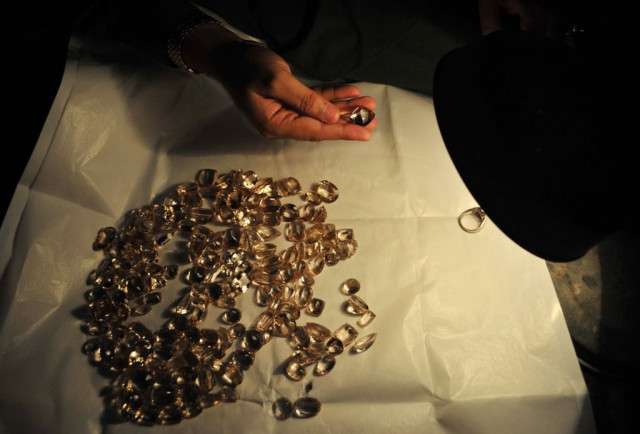
Pakistan is home to a variety of gemstones including emeralds, rubies, topaz, aquamarine, peridot, tourmaline, quartz, garnet and spinel. Major deposits are located in Swat, Gilgit-Baltistan, Hunza, Chitral, Neelum Valley and parts of Baluchistan. Swat emeralds, for example, are internationally known for their deep green color, while Hunza and Neelum rubies have a strong presence in regional markets.
Despite these resources, official gem exports remain extremely low, only a few million dollars a year, while a large volume of stones is believed to leave the country undocumented. Industry surveys indicate that Pakistan may be losing as much as $5 billion worth of rough stones each year to smuggling and under-reporting. Waste is another major issue. Outdated and unsafe mining methods result in the destruction of 40-50% of the gemstone material, significantly reducing the extractable volume.
Other stakeholders also said that now is the time for Pakistan to treat this industry as a serious matter and create a proper mechanism to add another foreign exchange avenue, which could raise up to tens of billions of dollars over time by adopting modern mechanisms.
“Most of our stones are exported in rough form and the real profit is captured by other countries who cut, polish and brand them,” said Sohail Raza, a gem dealer. “Without advanced machinery, trained manpower and internationally recognized certification, Pakistan cannot claim its rightful place in the global market.”
Raza added that buyers in Europe, East Asia and the Middle East are increasingly demanding traceability, certification and lab-tested grading, areas where Pakistan lags significantly. The establishment of accredited gem testing laboratories and a standardized certification system, he said, would immediately enhance credibility and price power in international markets.
Pakistan’s marble sector faces similar constraints. Although the country produces high-quality white, green, black and onyx marble, exports remain modest. Official figures show that marble exports hover around $32 million a year, well below chance. Industry players argue that with modern cutting and finishing facilities, Pakistan could tap into high-value architectural and luxury decoration markets globally.
Hussain emphasized that the creation of value-added zones and marble parks is essential for progress. Such zones will house slab cutting, polishing, processing and finishing facilities, all aligned with international export standards. He urged the government to reduce taxes and duties, particularly on cargo, which have become a major hurdle for exporters following the global escalation of shipping costs.
With Pakistan’s gemstone deposits receiving increasing attention from geologists and traders, Hussain added: “Unlocking the value from these natural resources requires modernization, formalization and strategic export planning, steps that could place Pakistan firmly on the global gemstone map and turn natural wealth into sustainable economic benefits.”
a href=”https://tribune.com.pk/story/2582060/gems-sector-seeks-value-addition”>Source link



