
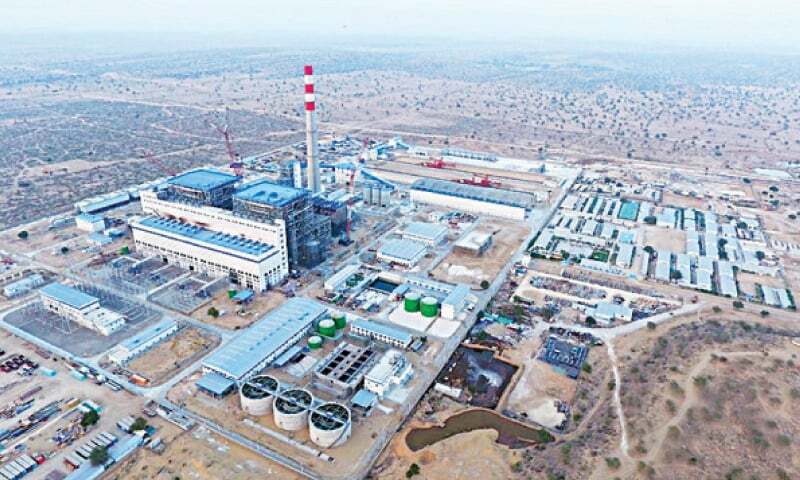
Pakistan’s push to replace expensive imported fuel with indigenous Thar coal has yielded an estimated $1.3 billion in foreign-exchange savings, the Sindh government says, as the province moves to lock in fresh investment in the vast Sindh coalfield.
At a meeting of the Thar Coal Energy Board chaired by Chief Minister Syed Murad Ali Shah, the province extended an 18 per cent internal rate of return (IRR) on equity for Thar coal mining projects until 31 December 2026, a measure intended to give investors financial certainty and help drive down per-tonne coal costs, according to Dawn. Energy Minister Nasir Shah said the extension would “sustain investor confidence and help reduce per-ton coal costs,” the paper reported.
The economic case rests on a stark price gap. Electricity generated from Thar lignite costs about Rs4.8 per kilowatt-hour, against roughly Rs19.5 per kWh for power produced from imported coal, Dawn reported. Thar-based projects have added more than 2,600 megawatts to the national grid since generation began in 2019, supplying what officials describe as affordable, locally sourced power.
The Thar coalfield holds an estimated 175 billion tonnes of lignite reserves, among the largest in the world, per Dawn. The board approved coal tariff determinations for the October–December 2024 and January–March 2025 periods, while reviewing new investment initiatives across the mine blocks.
“Thar coal has emerged as a cornerstone of our energy security,” Murad Ali Shah told the meeting, Dawn quoted him as saying. The chief minister has separately framed the resource as “central to Sindh’s development vision and Pakistan’s energy future,” according to The Nation.
A central plank of the strategy is moving coal cheaply out of the remote desert. The board reviewed progress on a 105-kilometre single-line railway from the Thar mines to New Chhor station, designed to link the coalfield to the national rail network and ultimately to Port Qasim near Karachi, The Nation reported. The Dawn report put the rail link at roughly 35 per cent complete, with completion targeted in 2026 as earthworks advance.
The rail connection is intended to underpin a wider conversion drive. Federal directives have called for switching imported-coal power stations — including Jamshoro, Sahiwal, Port Qasim and Hub — to cheaper Thar fuel, a shift that depends on reliable bulk transport from the mines to coastal and inland plants.
Production capacity is being scaled up to match. Sino Sindh Resources is developing a 7.8 million-tonnes-per-annum mine at Thar Block-I, Dawn reported, part of a broader effort to lift output across the blocks. The Sindh Engro Coal Mining Company (SECMC), which operates Block-II, says its Phase-III expansion is designed to take the block to a sustained 12.2 million tonnes of coal a year over three decades, according to SECMC.
The expansion is not without trade-offs. The rail corridor and continued mine growth have drawn scrutiny over water use in the arid Thar desert and the climate implications of building out new coal capacity even as Pakistan pursues renewables elsewhere. For the Sindh government, however, the calculus remains weighted toward energy security and balance-of-payments relief: every tonne of lignite burned at home is a tonne of fuel not bought in dollars on volatile global markets.
For now, the province is betting that guaranteed returns, falling generation costs and a long-delayed rail link will keep capital flowing into the desert — and keep imported coal off the books.



