
In Pakistan, tight monetary policy coincides with rising inflation due to supply shocks, undermining the interest rate signal
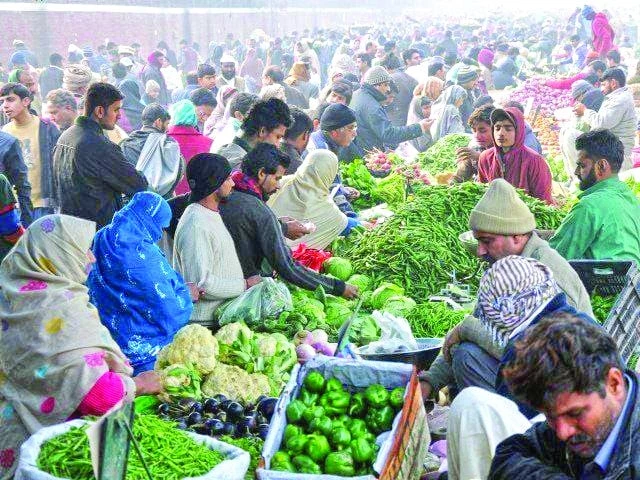
Market analysts warn that IMF-related measures in the upcoming 2026 budget—especially new taxes and adjustments to energy prices—could lead to a resurgence in inflation. PHOTO: FILE
MICHIGAN/KARACHI:
In August 2009, the State Bank of Pakistan (SBP) formally changed its monetary policy framework from monetary targeting to an interest rate-based monetary policy framework, known as the inflation-targeting-lite regime, by introducing the interest rate corridor (IRC).
In international systems, the adoption of the IRC would be a transitional move to the implementation of a flexible or full inflation targeting monetary policy framework, where the policy rate is used as the main tool to stabilize inflation expectations (Stone, 2003). Indeed, most inflation-targeting central banks put corridor systems in place not only to stabilize overnight rates but also to anchor those rates around a policy rate, thereby enhancing monetary policy transmission and policy signaling. This was in stark contrast to the case of Pakistan, where a substantial domestic literature and official SBP communication such as working papers, research paper and policy notes emphasize that the IRC was introduced as a means of reducing volatility in the weighted average overnight repo (repo) rate, which has weakened policy signaling and disrupted money markets (Mahmood, 201).
Moreover, SBP working papers and policy notes also document how liquidity shocks, often due to Treasury cash flows and foreign exchange operations, caused overnight rates to deviate from policymakers’ desired levels prior to 2009. a by-product of a smooth and coherent monetary system. Thus, the IRC was implemented in an economy where the macroeconomic conditions for controlling interest-rate inflation were partially established.
It would not be the runway design that is challenging, but the environment in which it operates. Inflationary trends in Pakistan are largely influenced by administered prices, particularly energy, university fees and controlled food items, which can be adjusted through fiscal adjustments but not through market forces. These discontinuous changes, which are often large and discrete, can undermine the relationship between the policy rate and measured inflation. Consequently, tight monetary policy coincides with rising inflation due to supply shocks, which undermine interest rate signaling.
Pakistan simultaneously experiences the constraints of the monetary policy trilemma. External imbalances and exchange rate pressures are persistent, often resulting in the balance of payments influencing monetary policy decisions. In practice, this leads to the phases where the interest rate is affected as much by external stability as by domestic inflation and output growth. As a result, liquidity shocks are generated from foreign exchange interventions that the IRC must absorb to stabilize the money markets. This reinforces the IRC’s role as a stabilizer of financial markets rather than an anchor of expectations.
Such limitations highlight why the inflation targeting regime, whether strict or flexible, has eluded it, even though it has been couched in terms of policy ambition in the SBP’s Vision 2016-2020. Demand-driven inflation, a flexible exchange rate and limited fiscal sovereignty are the key elements needed to set inflation targeting. However, these conditions are partially met in Pakistan, leading to a system where the objective of inflation targeting exists, but with a weak operational core.
In particular, this does not mean that Pakistan should abandon the interest rate corridor or adopt monetary targeting. Nor does it imply that inflation targeting should be adopted mechanically and that structural realities will be violated. The important step is to implement a transparent and flexible structure that highlights and recognizes Pakistan’s limitations and does not hide them.
This type of structural framework, whose primary medium-term objective should be price stability, and policy is exercised with clear secondary constraints, the most important of which are external stability and managed price shocks. The central bank announces a medium-term inflation rate, rather than a target point, with a particular focus on forecasts made public. This will ensure the transparency of the framework and strengthen the credibility reserve of the central bank. Temporary deviations are acceptable if explained. This framework would ensure that instead of hidden targets, exchange rate pressures, reserve adequacy and the risk premium are treated as setting variables. Decisions on policy rates have been explained as a trade-off between stabilizing inflation and external sustainability as a reminder of discretion with accountability. Credibility is based on transparency.
In this context, the role of policy rates is being redefined. It should no longer limit or relax demand or counteract inflation caused by supply mechanisms. Instead, it binds expectations in the medium term, limits spillovers and transfers commitment when the economy is under pressure. The interest rate corridor functions appropriately as a liquidity management tool, which ensures the smooth functioning of the market with functional control, without the pressures associated with the responsibility of macroeconomic credibility, on its own.
In the long run, this structure allows sequencing as opposed to being subject to shock treatment. Administrative pricing reforms, improved exchange rate flexibility, and reduced fiscal sovereignty may loosen constraints on monetary policy over time. Flexible inflation targeting then develops naturally, as a matter of adaptation rather than imitation. The introduction of IRC in Pakistan provides more of a general lesson: namely, business complexity cannot replace clarity of strategy.
By making its monetary framework and structural realities agree with each other and ensuring that the trade-offs are clear, the SBP can move closer to inflation targeting, not as an imported model, but as a nationally consistent policy regime.
Dr. Ateeb Syed is a visiting professor of economics at Grand Valley State University, Allendale, Michigan and Tayyaba Kamran is a research assistant at the Economic Growth and Forecasting Lab, IBA
a href=”https://tribune.com.pk/story/2586674/inflation-targeting-lite-strategic-transition-or-operational-stopgap”>Source link



