
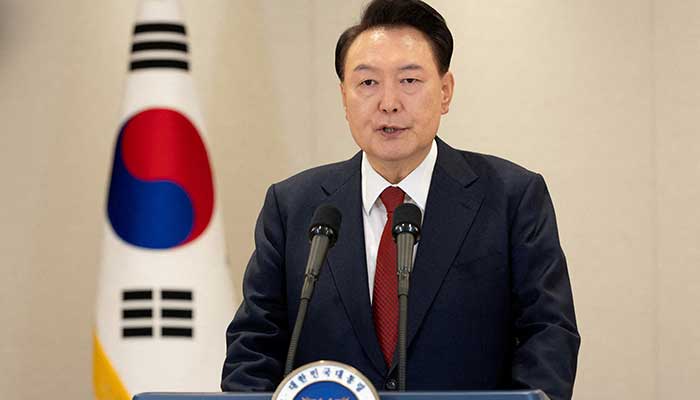
- 204 MPs vote for the censure, 85 are against.
- The prime minister becomes acting president after Yun’s impeachment.
- The Constitutional Court will decide on the removal of the president in six months.
SEOUL: South Korea’s parliament on Saturday successfully voted to impeach incumbent President Yoon Suk-yeol and suspend him from official duties over his short-lived attempt last week to impose martial law.
The motion was adopted after at least 12 members of Yun’s People’s Power Party joined the opposition parties, which control 192 seats in the 300-member national assembly, surpassing the two-thirds threshold required for impeachment.
The number of MPs who supported the impeachment was 204, with 85 against, three abstentions and eight invalid ballots.
Although suspended, Yoon remains in his post. Under the country’s constitution, Prime Minister Han Duck-soo, who was appointed by Yoon, takes over as president.
The Constitutional Court will decide whether to remove him sometime in the next six months.
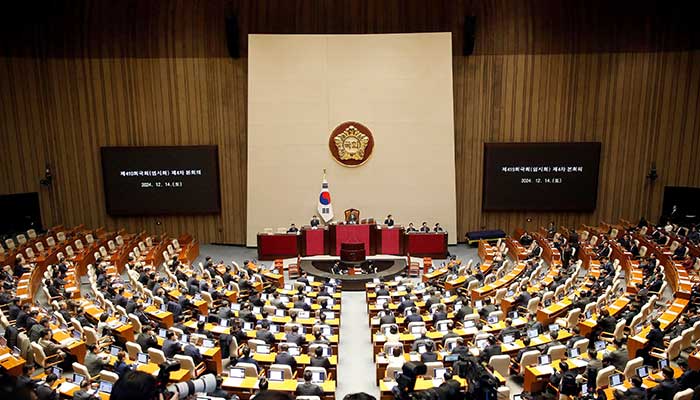
President Yoon is the second conservative president in a row to be impeached in South Korea. Park Geun-hye was removed from office in 2017.
The referral process, as stated by BBCit could take weeks and he would be removed from office if six of the nine council members vote to impeach him.
If Yun is removed from office, snap elections will be called within 60 days of the court ruling.
“The future of the Republic of Korea and our hope is in the hands of the people, our hope is strong. Thank you very much,” said South Korean speaker Woo Won-shik.
Today’s development comes after the first attempt to impeach the president failed earlier this week due to a boycott by his People Power Party.
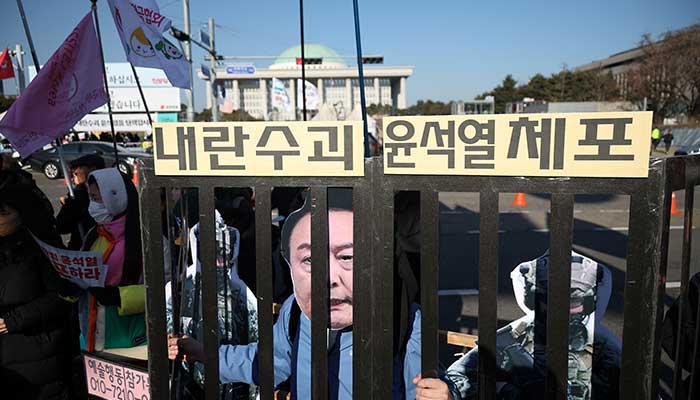
Meanwhile, reacting to the development, Prime Minister Duk-soo said he would do his best to run the government in a stable manner.
“My heart is very heavy,” the prime minister told reporters after the impeachment vote.
Earlier this week, President Yun, in a televised address, vowed to “fight to the end” against the impeachment and investigation against him and called his political opponents “anti-state forces.”
Martial law period
The president, on December 4, had announced the imposition of martial law after which South Korean troops briefly tried to enter the parliament building.
Meanwhile, parliamentary aides were seen trying to push back the soldiers by spraying fire extinguishers as protesters gathered outside parliament.
The president was forced to reverse his decision a few hours later due to a standoff with the country’s parliament, which flatly rejected his attempt to ban political activity and censor the media.
Yun’s surprise declaration of martial law, which he targeted his political enemies, was voted down by 190 lawmakers in parliament with his own party urging him to lift the decree.
Under South Korean law, the president must immediately lift martial law if requested by parliament with a majority.
President Yun’s move sparked a strong backlash from various sections of society with growing demands for his impeachment.
Yoon later apologized to the nation, but defended his decision and resisted calls to resign.
In addition, he is also under criminal investigation for alleged sedition due to the declaration of martial law, and authorities have banned him from traveling abroad.
a href=”https://www.geo.tv/latest/579571-south-korean-president-impeached-after-nationwide-protests-over-martial-law”>Source link



