
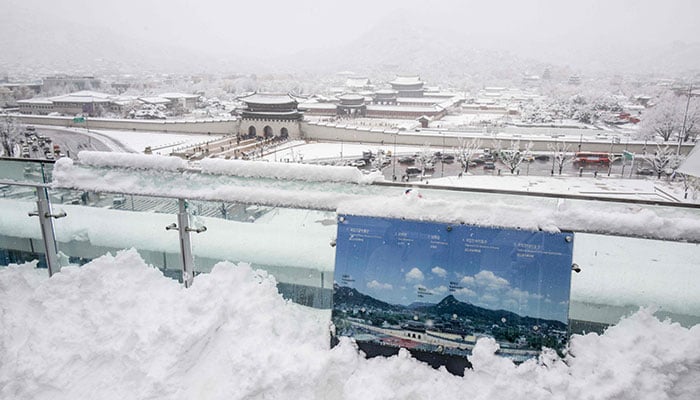
South Korea’s capital was blanketed on Wednesday by the heaviest November snowfall since records began a century ago, the weather service said.
The Korea Meteorological Administration said 16.5 centimeters (6.5 inches) of snow had fallen by 7:00 a.m. (22:00 GMT Tuesday), compared to Seoul’s previous record of 12.4 cm on November 28, 1972.
Coincidentally the first snowfall of the season in Seoul, it is the highest November rate since the agency established observation posts nationwide in 1907.
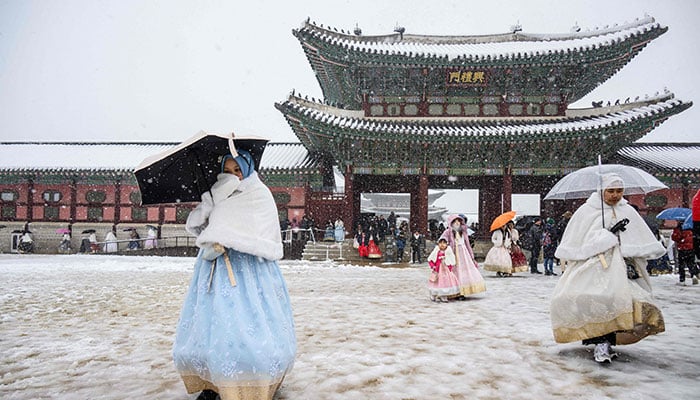
A heavy snow warning urged residents to “refrain from operating vehicles and engaging in outdoor activities” and “be aware of falling trees”.
Such warnings are issued when snowfall accumulates to 20 centimeters or more within 24 hours.
As heavy snow fell across the country, there were several accidents due to vehicles skidding on icy roads, although no serious injuries were reported.
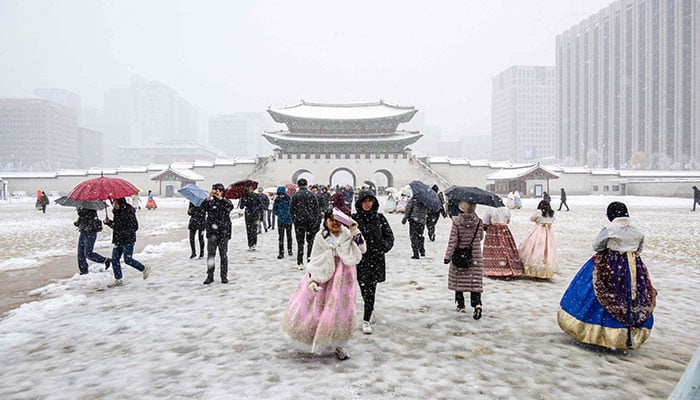
Falling trees caused power outages, affecting more than 150 households around Seoul in the morning.
Major roads were closed for maintenance, causing severe traffic congestion, while at least 22 domestic flights were canceled and several others were delayed, according to the transport ministry.
President Yoon Suk Yeol called on officials to “minimize the potential damage and inconvenience to the public caused by the snow,” as heavy snowfall is expected to continue until Thursday morning.
The heavy snowfall was caused by the “significant temperature difference between the sea surface and the cold air,” said Youn Ki-han, director of the Seoul Meteorological Forecasting Department. AFP.
“Over the Western Sea, moisture forms, and when the cold air from the north moves down as usual, if the Western Sea is also cold like in previous years, the temperature difference is smaller,” Youn said.
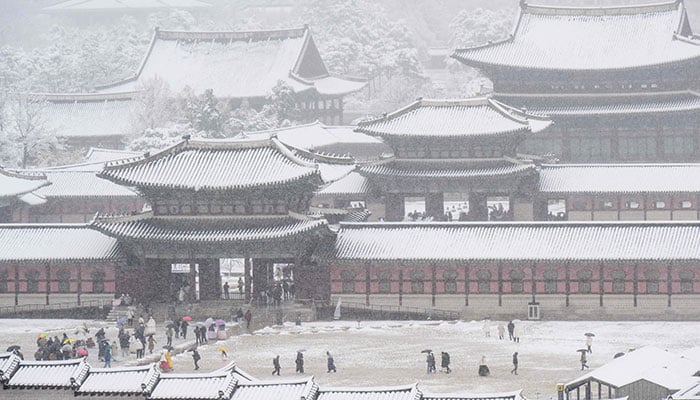
However, due to unusually warm temperatures in recent weeks, this difference has become more pronounced.
Another factor behind the heavy snowfall, Yoon added, is that “the heavy snow was consistently carried by westerly winds, pushing it into the Seoul metropolitan area.”
“Snow continued to fall in the same areas repeatedly, leading to more accumulation.”
Up to 20cm of extra snow is expected to fall around the capital, according to the weather service.
a href=”https://www.geo.tv/latest/576559-in-pictures-south-korean-capital-hit-by-record-november-snowfall”>Source link



