
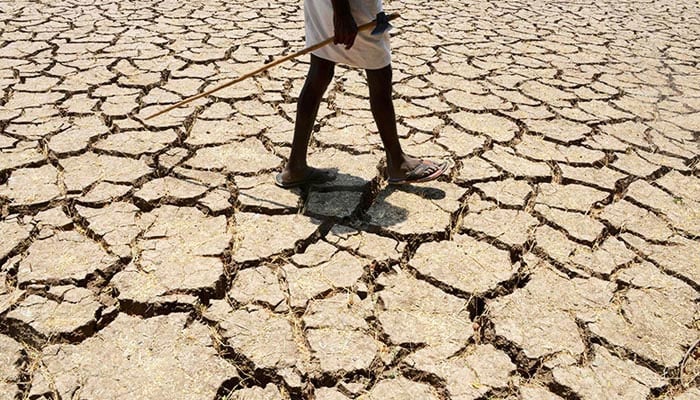
- Up to 739 million children face water scarcity worldwide: Unicef.
- The Agency predicts another 35 million children will be at risk by the year 2050.
- Climate change is affecting children’s mental health, says Unicef director.
The United Nations Children’s Fund (UNICEF) has warned that children living in South Asian countries are at risk due to worsening water scarcity in the region.
The majority of the most affected children live in South, Southeast Asia, Central Asia and some sub-Saharan African countries, according to the UN agency’s report: “The Climate Changed Child”.
The revelation is alarming, as South Asia, with its eight countries, is one of the regions most affected by climate change and accounts for a quarter of the world’s children.
According to the agency, up to 739 million children around the world face “high or very high” water scarcity – which is determined through the composite measurement of basal water stress, seasonal variability, interannual variability, groundwater drawdown and risk of drought.
A high Unicef Climate Risk Index for Children reflects increased exposure to risks associated with water scarcity.
The report also highlighted that 436 million children face “extreme water vulnerability”, which is categorized as the double burden of high or very high water scarcity.
Extreme vulnerability to water is a key factor in the deaths of children under five from ‘preventable diseases’.
Describing the adverse effects of climate change as “catastrophic” for children, Unicef executive director Catherine Russell said the phenomenon particularly affects children’s physical and mental health.
Meanwhile, Unicef’s head of South Asia, Sanjay Wijesekera, has also acknowledged that millions of children in the region face a lack of drinking water.
Designating investments in safe drinking water and sanitation services’ as the ‘first line of defense to protect children from the impacts of climate change’, the report further warns that 35 million children will be vulnerable to ‘high or very high levels of water stress’ — the ratio of total water demand to available surface, groundwater — by the year 2050 in the South Asia, Middle East and North Africa regions.
Unicef, at COP28, called on world leaders to integrate children into the Global Scoreboard (GST) and include “children and climate-resilient essential services in the final decision on the Global Adaptation Goal (GGA).
a href=”https://www.geo.tv/latest/518783-children-in-south-asia-at-risk-due-to-worlds-worst-water-scarcity-unicef”>Source link



