
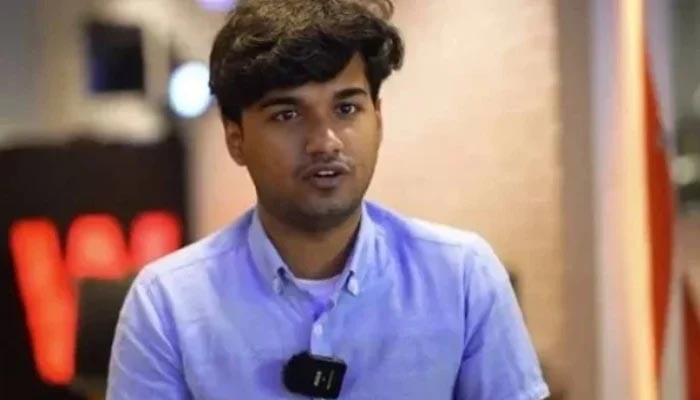
Update, August 11: The judicial commission has been deferred at the request of Mir Raza Ali’s parents, who told the authorities in writing that they have confidence in the newly formed police team and want the existing investigation to continue. Home Minister Zia Lanjar confirmed the deferral a day after announcing the commission. The original report follows.
Sindh Home Minister Zia Lanjar says the provincial government will constitute a judicial commission headed by high court judges to investigate the killing of Mir Raza Ali, following the exhumation of his body and a second post-mortem (Geo News).
Speaking on Geo News, Lanjar said the decision was taken at a meeting with Chief Minister Murad Ali Shah. “We will have this case investigated by high court judges,” he said, calling a judicial commission “a necessity of the time”. He said a letter would be sent to the Chief Justice of the Sindh High Court on Monday requesting its formation.
The commission would review the two conflicting medical reports, he said, leaving the question of the discrepancy between them to the commission or the court. It would also cooperate with and oversee the new police investigation team.
The most consequential thing he said was an admission. Lanjar acknowledged that the initial crime scene had not been preserved in the required manner — a failure that constrains what any subsequent investigation can establish, however it is constituted.
He also said that nothing had so far emerged to suggest a high-profile personality was behind the killing, and that neither the inspector general’s nor any other officer’s opinion was final while the investigation continued. “Even if there is 1% doubt in any case, the investigation should be 100%,” he said, urging Ali’s parents to trust the process and adding that the family had been told any police officer they recommended would be included in the team.
He was pointed about the police surgeon. Asked about Dr Summaiya Syed’s objections, Lanjar said she should have approached the government if she believed the first post-mortem had been conducted incorrectly. “The government was facing criticism because Dr Samia had failed to inform her superiors about the shortcomings,” he said.
A five-member investigation committee was constituted by notification after the exhumation, on the instructions of Sindh IGP Javed Alam Odho, replacing the dissolved previous team (Geo News). DIG Crime Branch Amir Farooqi heads it, with SSP Rapid Response Force Ali Raza as secretary, alongside SP Investigation Korangi Qais Khan, Central SP Investigation Anum Tajammul and an officer of the Special Investigation Unit Zaman Town. The committee was to hold its first meeting at 2pm on Monday at the DIG Crime Branch office, and has been tasked with reviewing the investigation conducted so far.
The initial report from the second post-mortem found that Ali was shot from the rear and bore marks of violence across his body, including fractured ribs, injuries to the head and face, a deep injury and fracture in the jaw area, a fracture and 12-centimetre injury to the right thigh, and blood stains on tissues in the lower part of the body. The News reported the findings as establishing that he was tortured before being shot, with multiple ante-mortem injuries.
Ali, an IBA graduate, went missing on the night of July 28 and his body was found the following day in Gulistan-e-Jauhar. Investigators had earlier pursued the possibility of suicide.
No arrests have been reported and no suspect has been named. The chemical analysis and DNA results are still pending.



