
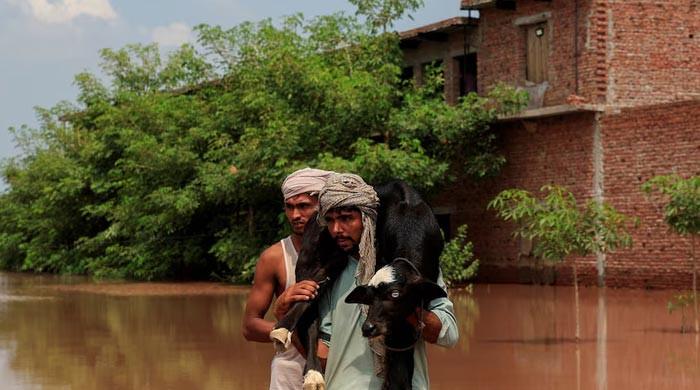

Throughout the fertile plains of Punjab, families are struggling to rebuild their lives after the worst floods in decades swept homes, destroyed crops and drowned animals.
“Thirteen of my 15 acres are gone,” said Muhammad Amjad, 45, a rice and potato farmer in Chiniot, as he stood by submerged fields. “Our rice is completely destroyed. Women and children have been evacuated.
The Disaster Management Authority said more than 2 million people have been affected, with more than 2,000 villages flooded. About 760,000 people and 516,000 animals have been evacuated and at least 33 people have died in less than a week.
Amish Sultan, 50, lost his only source of income.
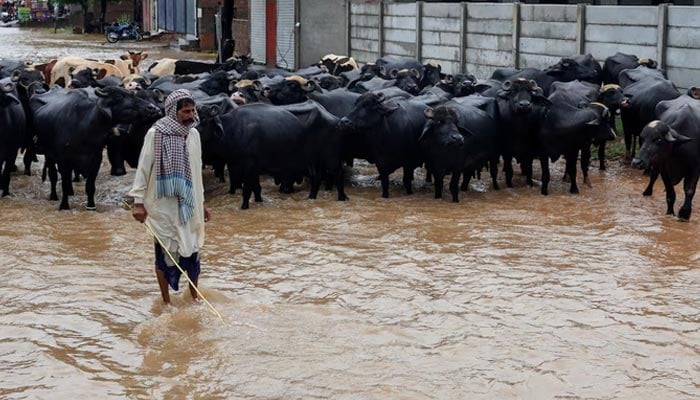
“I have 10 buffalo. They are so weak. There is no milk for my children, let alone sell.
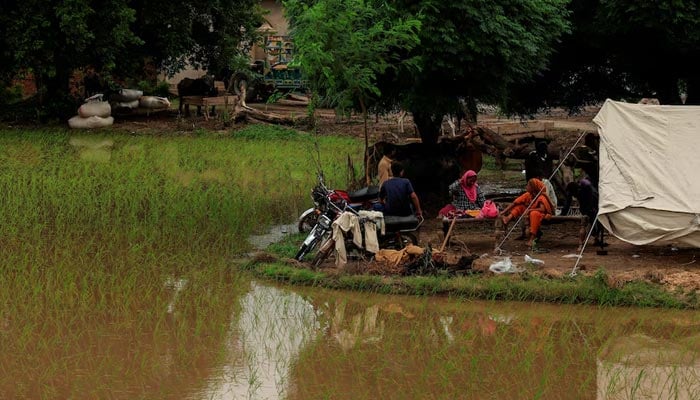
Mehdi Hassan, 40 -year -old Mehdi Hassan, said entire neighborhoods were flushed.
“My house is completely destroyed. We have stayed on the street with everything we could carry. We tried to build our own dams, but the water still got everything.”
Officials say floods have been the worst in decades, with large dams close to capacity and more rain is projected.
Bumper
“We were expecting a bumper rice cultivation this year,” said Ibrahim Shafiq, export manager at Latif Rice Mills.
“Paddy is projected to open at 3,200-3,600 rupees per 40kg, but with flood damage. Prices could reach 5,000-5,500.
Cotton losses also threaten the textile industry, which is more than half of Pakistan’s exports, at a time when the country faces a 19% of the US in its largest market.
Georgia’s technology company Farmdar said the damage is likely to be exponential, given the huge areas of agricultural land along the rivers that are now underwater.
Ghasharib Shoukat, co -founder of the commodities platform, Zarai Mandi, warned that shortages of wheat, vegetables and cotton would wave through supply chains, hurting the exports and budgets of households.
The disaster comes at a sensitive moment for the country’s fragile economy. Inflation had cooled to 4.1% in July from 11.1% in the previous year and food inflation, which increased more than 50% in 2023, had relaxed.
Officials now expect that reading August inflation, which will take over Monday, will come to 4-5%, with the lack of food driving prices higher. Analysts say they are delaying the sowing of wheat, shrinking rice exports and the need to import cotton will deepen the pressure.
Moments now, tomorrow unknown
The disaster extends beyond the fields. In Lahore, 38 -year -old driver Rickshaw Aslam said he fell through six feet (two meters) of water to pull the three -wheel drive vehicle.
“I have lived near Ravi all my life and never flooded my house before. This time came in hours. If I had not saved my rickshaw. We would have lost everything.
A muddy scene is erected near the Ravi River, where families accumulate under tarpaulins and scenes, some next to layers of drainage.
About 150 to 200 camps have been created for the displaced precisely in this area, said Dr. IJAZ Nazeer of the Al Khidmat Foundation. Each scene hosts about five to eight people.
With three of Pakistan’s main rivers in the flood, the authorities in Punjab created 511 relief camps, 351 medical sites and 321 veterinary facilities, eradicating about 481,000 people and 405,000 animals so far. More than 15,000 police officers have been developed as the monsoon rains continue.
Farmers and experts warn that the cost of recovery will run into billions of rupees to rebuild houses and restoring farms.
The farmer and activist Aamer Hayat Bhandara said unless the recovery is supported, food insecurity would deepen.
“Farmers cultivate foods that support us all, if they are left alone in times of disaster, the whole nation will suffer,” he said.
a href=”https://www.geo.tv/latest/621345-severe-flooding-in-punjab-poses-threat-to-pakistans-economy”>Source link



