
As US researchers face sweeping funding cuts, ideological repressions and growing political interference under the second term of President Donald Trump, a growing number of European universities offers what some have called “scientific asylum”.
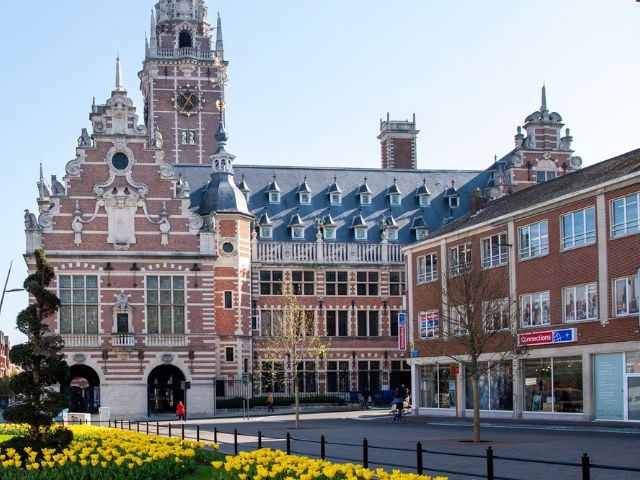
At the forefront is the Vrije Universiteit Brussel (Vub) in Belgium, which opened 12 postdoctoral positions specifically aimed at attracting international researchers, focusing on Americans. The initiative responds to what the university calls the “serious and gradual” suppression of research in the United States.
“We see it as our duty to help our American colleagues,” said Vub Rector Jan Danckaert. “They see millions in the funding of research disappear for ideological reasons. US universities and their researchers are the biggest victims of this political and ideological interference. “
Since Trump returned to power in January, US Federal Services, including NASA, CDC and National Oceanic and Atmospheric Administration, have faced budget freezing, recruitment cuts and re -evaluations of projects. Keywords such as “diversity”, “climate change” and “women’s health” are said to be examined in federal research applications.
The situation has worried about scientists worldwide – and opened a door to European institutions.
The famous Pasteur Institute of France has joined the effort. Its director, Yasmine Belkaid, said she is taking daily research from researchers – many of them Americans or European expatriates – looking to relocate. “You may call it a sad opportunity, but it’s an opportunity, all this,” he said.
The French government responded quickly. Higher Education Minister Philippe Baptiste urged national research institutions to send suggestions for attracting our talents. “Many well -known researchers are already questioning their future in the US,” Baptiste wrote in an open letter. “Of course, we want to welcome a certain number of them.”
In the Netherlands, Education Minister Eppo Bruins has announced plans to launch a special fund to attract international researchers, citing a “changing geopolitical climate” that leads top scientific talent to seek more stable environments.
France’s Aix-Marseille University has already launched a program of 15 million euros entitled Safe Place for Science, offering three years for more than two dozen US-based researchers. Within two weeks of the program announcement, the university received about 100 applications, including researchers in Yale, NASA and Stanford.
“We wish we should not do this,” said the president of the University of Éric Berton. “We don’t want to pull talent – but we felt that our colleagues in the US were going through a disaster.
Many candidates specialize in areas now under political control in the US, such as climate change, public health and social justice. Applications continue to arrive daily, according to Berton.
The trend reflects a broader shift. European institutions are not only seeking individuals, but can soon become a refuge for the campuses themselves. Dozens of American universities are already operating satellite campuses across Europe. Experts indicate that these institutions can extend businesses abroad if the domestic conditions worsen.
In Brussels, Vub’s initiative is symbolic. In 2016, Trump describes the Belgian capital as a “hell” in Fox News. “At that time, the statement sparked emotional reactions in Europe,” the university noted. “This gives additional symbolic importance to the Vub initiative.”
For many, these efforts represent more than academic opportunities – it is to protect the integrity of research. Christina Pagel, professor of Germany-Britain at College University, London, described the US situation as “no chaos, but coordinated”. He said that the actions of the administration aim to align science with state ideology, undermining independence and the suppression of disagreement.
As the United States is fighting the direction of fields of science and research, European universities are placed as shelters for open research and spiritual freedom. And for many American researchers, the message is clear: If you can’t work freely at home, Europe is ready to welcome you.
a href=”https://tribune.com.pk/story/2536319/scientific-asylum-offered-as-trump-era-policies-push-us-researchers-to-flee”>Source link



