
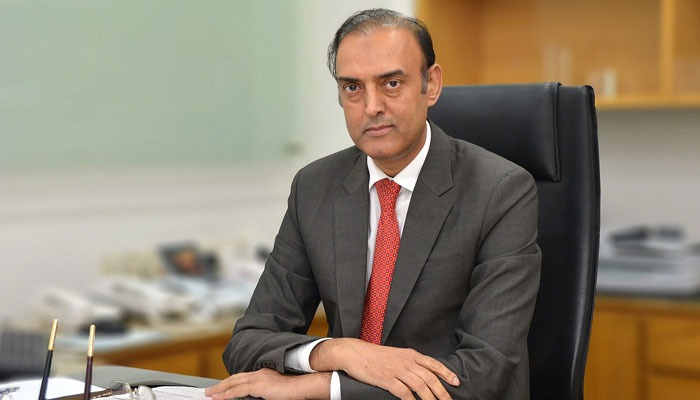
- Ahmed says the risk factors remained despite a decline in headline inflation.
- Adding the next rise in inflation would not be a concern.
- “It takes 4-6 quarters to see the full impact of policy rate changes.”
After the State Bank of Pakistan cut its key policy rate to 13 percent due to falling inflation, central bank governor Jameel Ahmed said on Monday that inflation is expected to pick up after remaining low for the next three to four months.
Ahmed, speaking of Geo News “Aaj Shahzeb Khanzada Kay Saath”, said the “end of base effect and some other things going on” were the reasons for an expected rise in inflation.
He clarified that the central bank should closely monitor a factor of concern to reduce core inflation.
He added that risk factors persisted despite a decline in headline inflation rate which he said would be closely monitored by the SBP.
However, he called the indicators positive for an end to economic uncertainty and a path to stability after the CPI fell to 4.9% last month from 38% in 1.5 years.
The SBP governor said the next rise in inflation would not be a concern as it would stabilize thereafter.
He said it would take another four to six quarters to fully realize the full impact of the key policy rate cut in terms of growth in economic activity and consumer sentiment.
The SBP chief also expressed optimism about achieving a medium-term inflation range by the end of the fiscal year in June 2025, which will bring inflation down to the target of 5-7%.
“We have been reducing the policy for the last six months, which is having an impact now. However, it will take another 4-6 quarters to see its full impact.”
Commenting on the foreign debt payments, the central bank governor said that Pakistan will not face any difficulty in repaying its debts with its current foreign exchange reserves.
He said the government will save Rs 1,500 billion after the rate cut.
Earlier today, the SBP cut its key interest rate by 200 basis points to 13%, the fifth straight cut since June, as the country continues efforts to revive a sluggish economy with easing inflation.
November’s consumer price index (CPI) came in at 4.9% in line with the Monetary Policy Committee’s (MPC) expectations — well below the general market consensus.
“This deceleration is mainly due to the continued decline in food inflation as well as the phasing out of the impact of the November 2023 gas tariff hike,” the MPC noted, adding that core inflation, at 9.7%, proved that it is sticky, while consumer and business inflation expectations remain volatile.
The committee, which met today, also noted that the current account remained in surplus for the third consecutive month in October 2024, which helped boost foreign exchange reserves to about $12 billion.
The release said that taking into account the aforementioned developments, the MPC considers the effective policy rate to remain appropriately positive to stabilize inflation within the target range of 5 to 7%.
Pakistan is on a rocky path to economic recovery and has been boosted by a $7 billion facility from the International Monetary Fund (IMF) in September.
The bank noted that “significant efforts and additional measures” will be required for Pakistan to meet its annual revenue target, a key focus of the IMF agreement.
Monday’s move follows cuts of 150bps in June, 100bps in July, 200bps in September and a record 250bps cut in November, which took the rate down from a record high of 22% set in June 2023 and left unchanged for one year.
It brings total cuts to 900 bps since June.
a href=”https://www.geo.tv/latest/579993-sbp-governor-sees-inflation-going-up-after-3-to-4-months”>Source link



