By
By 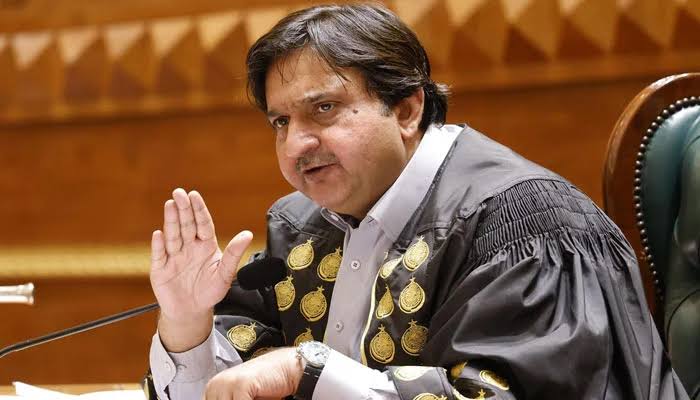
Punjab Assembly Speaker Malik Muhammad Ahmad Khan appeared surprised on Sunday after being informed that the Punjab Control of Habitual Offenders and Anti-Social Behaviour Bill, 2026 had been approved by the assembly’s Standing Committee on Law.
“It has been laid?” the speaker asked after PTI lawmaker Rana Aftab Ahmad Khan told the House that the standing committee had already approved the proposed legislation.
The bill proposes sweeping powers under which authorities could freeze bank accounts, seize property, remove online presence, confiscate mobile phones and place individuals under electronic monitoring on the basis of assessments made by intelligence committees.
Rana Aftab raised the matter during a Punjab Assembly session convened to discuss the province’s supplementary budget. He said the bill was against human rights and warned that, if passed, it could affect future generations.
He cautioned that the ruling PML-N could also become a victim of the proposed law in the future, saying no party remained in power forever.
Speaker Malik Muhammad Ahmad Khan said he was unaware that the bill had been introduced in the House and expressed annoyance with the assembly secretariat. He also warned of strict action over the matter.
The bill was introduced in the Punjab Assembly on June 8.
During the session, the speaker remarked that it was not possible to introduce a law “reminiscent of the colonial era,” adding that there could be some misunderstanding and that he would examine the matter.
He questioned whether deputy commissioners and district police officers would be empowered to take action against individuals under the proposed law.
The speaker also noted that even under the Goonda Act, courts had the authority to sentence a person if intelligence agencies reported involvement in hooliganism.
Opposition members expressed concern that the proposed law could be passed easily due to the treasury’s overwhelming majority in the House.
PTI MPA Ahmer Bhatti said the bill would allow officers to report against individuals and then act against them without first approaching a judicial forum. He feared the proposed law could be used for political victimisation.
According to the draft bill, the proposed law seeks to address public nuisance, financial and social exploitation and organised criminal activity.
The bill provides for the establishment of intelligence committees at provincial, divisional and district levels to enhance public safety, protect minorities, assess threats to foreigners and monitor misuse of social media platforms.
It lists several activities as anti-social behaviour, including gambling, illicit liquor manufacturing, running brothels, fraudulent charity collection, hate speech, online disinformation, impersonation of public servants, aerial firing, display of weapons on social media, online blackmailing and disruption of traffic through illegal barriers.
District Intelligence Committees would be empowered to initiate inquiries, demand surety bonds for up to six months and recommend administrative penalties. These could include blocking national identity cards and passports, freezing bank accounts, removing online presence and confiscating electronic devices for prosecution purposes.
For persons declared habitual offenders due to repeated arrests in cases such as vehicle theft, extortion, robbery, dacoity or narcotics offences, the bill proposes electronic monitoring. A magistrate may order attachment of a tracking device for at least three months on a police application routed through public prosecutors.
The proposed law also states that a habitual offender may face up to three years in prison for failing to comply with tracking requirements.
Anyone found tampering with or destroying a monitoring device could face at least one year in prison, a fine of Rs1 million and liability for the cost of the damaged equipment.
The bill also proposes a centralised Punjab Habitual Offenders Registry, where law enforcement agencies would maintain biometric data, fingerprints and DNA records of offenders.
Violating an order passed by an intelligence committee could lead to imprisonment of up to four years and a fine of up to Rs1.5 million. Penalties would increase for repeat violations.
Public servants found helping violators could also face criminal prosecution, including up to two years in prison and departmental disciplinary action.
All offences under the proposed law would be cognisable and non-bailable and would be tried by a section-30 magistrate.
The draft bill provides an appeals process under which aggrieved individuals may file representations before divisional and provincial intelligence committees, an executive appellate committee and, finally, an independent tribunal headed by a retired district and sessions judge.
The bill states that once enacted, it would repeal colonial-era laws, including the Restriction of Habitual Offenders (Punjab) Act, 1918 and the Punjab Control of Goondas Ordinance, 1959.
The proposed legislation has triggered concerns among opposition lawmakers over civil liberties, administrative powers and the possibility of political misuse.
This is a developing story.