
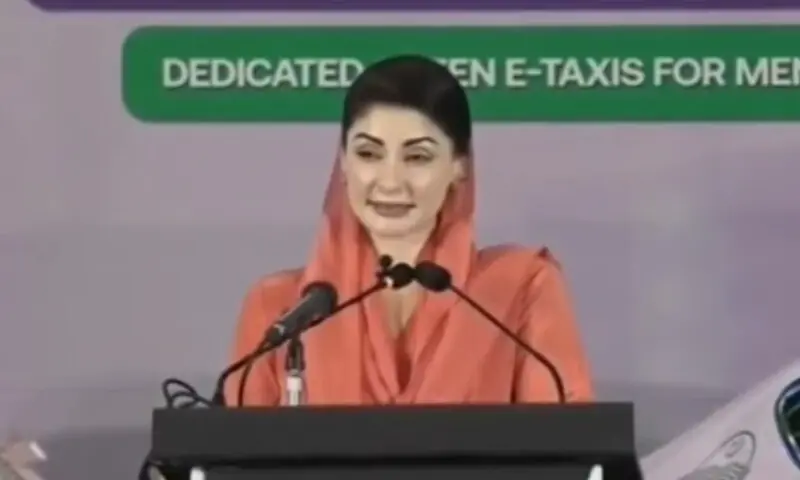
Punjab Chief Minister Maryam Nawaz on 26 February launched what the provincial government billed as Pakistan’s first electric-taxi scheme, describing it as part of a broader push to build an “e-mobility ecosystem” in the province. Addressing the inaugural ceremony in Lahore, she said Punjab “has become the first province to launch an e-taxi scheme, the first of its kind, not only for the environment, but it will also open up employment opportunities” (Dawn).
In its first phase, the scheme provides 1,100 electric taxis at subsidised rates, with a 30 per cent quota reserved for women. The Punjab government has allocated a subsidy of up to Rs4 billion for the vehicles, and will pay 50 per cent of the down payment for male drivers and 60 per cent for women. According to the same report, the government will also bear the cost of vehicle registration, fitness tests and token tax, with beneficiaries repaying the balance in easy instalments over five years.
Officials have framed the initiative around safety and women’s mobility. Each cab is equipped with a “panic button” linked to the Punjab Safe Cities Authority, and female-driven vehicles carry a distinct colour. The taxis have been registered with the In-Drive and Yango ride-hailing platforms, with the government projecting that drivers could earn between Rs150,000 and Rs200,000 per month. Appealing directly to prospective women drivers, the chief minister said: “I urge the women of Punjab to remove fear from their hearts. The government stands with every mother, sister and daughter”.
The launch follows the scheme’s approval at a special meeting chaired by Maryam Nawaz, at which the provincial cabinet greenlighted the pilot phase of 1,100 electric taxis alongside solar-powered charging stations. The Express Tribune reported that the vehicles are being imported from China, with 100 of the 1,100 cabs reserved for women, and that they are provided through five-year interest-free instalments, with the government covering all interest costs.
At the ceremony, the chief minister told the audience that a beneficiary “can take this car home for Rs690,000 today”, and said the rollout would extend to Lahore and other districts “within the next 48 hours”. She situated the e-taxi launch within a wider green-transport agenda, noting that the province already operates green buses that she called “an example for the rest of the country”.
The e-taxi programme is the newest addition to a string of subsidised-mobility initiatives the Punjab government has rolled out, following the chief minister’s students’ e-bike scheme, under which 27,200 students were selected through e-balloting from over 100,000 applications and the government covered Rs20,000 of the Rs40,000 down payment per bike.
Independent scrutiny of the e-taxi scheme remains limited at this early stage. The modest pilot size of 1,100 vehicles, the reliance on imported Chinese cars and the multi-billion-rupee subsidy leave open questions about whether the model can scale across a province of more than 120 million people. The government has indicated the pilot is a first step, with solar charging infrastructure approved alongside the taxis to support any future expansion.



